When stolen artifacts are returned
The long shadow of colonialism hangs over every part of the negotiations for the return of the Benin Bronzes.
The bronzes were looted from the ancient kingdom of Benin, now in modern day Nigeria, in 1897. At the time, Nigeria did not exist. It was created as a British protectorate in 1914. Now, countries are returning the bronzes to Nigeria, but the rightful owner is the current king, or oba, of Benin. It’s messy.
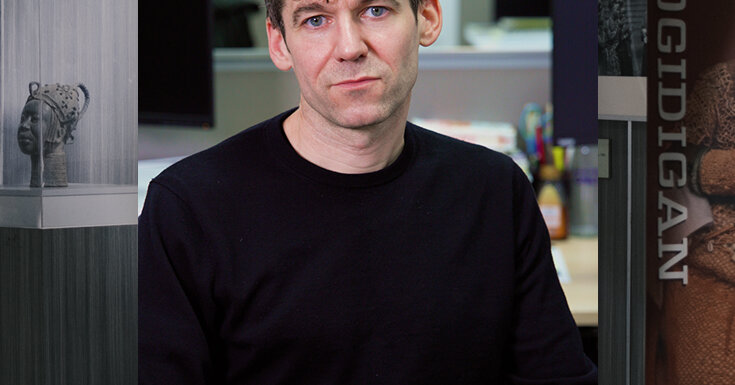
I talked to my colleague Alex Marshall, who has been writing on this for many years, to hear more on why some in the West aren’t happy about how the returned bronzes are being handled — and why some see traces of colonialism in that, too.
So Alex, what’s the big deal with the Benin Bronzes?
The Benin Bronzes are these absolutely amazing artifacts. I just think they are some of the most beautiful creations. They are also among the most blatant examples of colonial looting that exist.
In the 19th century, the British went to what was then the Kingdom of Benin, and ransacked the oba’s — the king’s — palace. Even the photos some officials took say “loot” on them. So if you’re trying to set an ethical benchmark for which artifacts should be returned to their home countries, the Benin Bronzes are pretty much where you should start. They are ground zero for restitution.
And some of them have now been returned.
Nigeria has been asking for them since the 1930s, and in recent years there have finally been some breakthroughs. This summer, the Netherlands sent back 119. German museums have sent back a handful and are in negotiations to physically return several hundred in the next few years. Sweden plans to return 39 in 2026, and Cambridge University over 100.
But not everyone is happy. Why not?
It’s a really complicated situation. To understand, you have to jump back a bit. Western museums first wanted to build a big new museum for the bronzes in Benin City, in southwest Nigeria. It was going to be state of the art, really modern, designed by a star architect.
But two years ago, the Nigerian government decreed that the bronzes should go back to the king whose family they were originally stolen from — the current oba. And he was not on board with sending them to this museum. And that caused a panic.
What was his objection?
Basically from the oba’s perspective, Western countries were trying to put the artifacts in this trendy, cool museum against his will. Now he thinks that everyone who gave money to that museum should give money to him to build a new museum instead and that should be the Benin Royal Museum, and house all these artifacts.
From the perspective of the Western museums, some clearly felt deeply uncomfortable with that. They were like: “We are public museums. We are not giving them to a private individual. How can we be sure that the artifacts are looked after?”
Now, the mood’s slightly changing because the oba has signed a five-year agreement with the Nigerian government asking it to look after the bronzes for him. That’s why Western museums are returning items again.
Still, the bronzes are being stored and displayed in a pretty bare-bones way. There aren’t any high-tech climate or security systems or anything like that. To some, that’s not enough.
Is there an objective answer to the question of what is best for this art in terms of the storage conditions?
I don’t think so, because these bronzes are ancient and for hundreds of years they were kept in environments nothing like today’s museums.
A lot of people see this as a continuation of colonialism: The West telling Nigeria how it should look after these objects, the standards it needs to meet to look after these objects, and putting conditions on returns. That’s seen as very patronizing.
So what’s the potential fallout from all this?
This has been such a roller-coaster ride that I can imagine it could put some museums off returning more artifacts to other countries, because they might be afraid they’ll get caught up in a similar dispute. They might worry they don’t understand the local context enough.
But the flip side of that is that the Dutch are still returning these artifacts. Sweden is still returning these artifacts. Maybe other countries will just decide: ‘Look, whatever countries want to do with artifacts is up to them. Let’s just hand them over. They belong there.’
MORE TOP NEWS
Political turmoil in Bulgaria
Bulgaria’s prime minister resigned yesterday after weeks of street demonstrations by protesters, including a large contingent of young people.
Opposition to the government of Prime Minister Rosen Zhelyazkov — the country’s sixth in five years — had been growing over increased taxes and social security contributions in a proposed budget, ahead of Bulgaria’s adoption of the euro on Jan. 1. But the criticism expanded to encompass broader issues, including corruption that many protesters believe is being perpetuated by politicians who favor alignment with Russia.
OTHER NEWS
-
The U.S. seizure of an oil tanker hit Venezuela’s economic lifeblood. Here’s what to know.
-
The Nobel Peace Prize winner María Corina Machado said the U.S. helped her leave Venezuela after more than a year in hiding.
-
A Pakistani military court sentenced Lt. Gen. Faiz Hameed, a former spy chief, to 14 years for corruption, political meddling and misuse of authority.
-
Mexico approved up to 50 percent tariffs on Chinese goods, following pressure from the U.S.
-
Disney said that it would buy a $1 billion stake in OpenAI and bring its characters to Sora, the company’s A.I. video platform.
-
President Volodymyr Zelensky said that a revised U.S.-backed peace plan still called for Ukraine to withdraw from the eastern Donbas, a concession that he rejected.
-
The Trump administration sided with Saudi Arabia, Russia and Iran to block part of a U.N. climate report that called for phasing out fossil fuels.
SPORTS
Football: Fans can now enter a lottery to buy 2026 World Cup tickets.
Formula 1: How McLaren’s unique team rules saw off the threat of Max Verstappen.
NUMBER OF THE DAY
400,000 years ago
That’s when Neanderthals were making fire, according to evidence in a new study. Previously, the oldest known evidence of humans making fires dated back just 50,000 years.
MORNING READ
A new memoir from Juan Carlos I, the former king of Spain, is giving his family a royal headache.
Juan Carlos set the country on a path to democracy after the Franco dictatorship, but he stepped aside in 2014 after a series of scandals and moved to the United Arab Emirates. In the memoir, packed with family grievances and mea culpas, the former king seems to be seeking reconsideration and resurrection. Read more.
AROUND THE WORLD
Hearing the call of nature in Japan
Walk into a public bathroom in Japan, and you’re likely to be met with the sounds of nature: maybe the babble of running water, or the cheerful tweets of birdsong. These soundscapes often come from a machine called Otohime, or “Sound Princess,” made by the Japanese toilet maker Toto.
In Japan, the devices have been commonplace in women’s bathrooms for years. But now, they’re becoming more popular across the gender spectrum in offices and other public spaces.
As the noise-masking devices spread across Japan, enthusiasts think it’s only a matter of time before the rest of the world catches on. “People just don’t know they need it until someone shows them,” said one Sound Princess superfan. Read more.
RECIPE
These Hanukkah treats popular in Israel are known as sufganiyot, or jelly doughnuts. Fragrant with sugar and jam, they have become a sweet symbol of the holiday, especially for children.
WHERE IS THIS?
The writer Daphne du Maurier spent decades in this town. Where is it?
BEFORE YOU GO …
When a friend told me about a recent campaign to paint Taylor Swift as a closeted neo-Nazi, I almost laughed. How could people possibly believe this?
They may have believed it, it turns out, because bad actors wanted them to. According to a new report produced by the behavior intelligence start-up GUDEA, there are signs that the fake allegations were not the outgrowth of organic fan discussion. Instead, they were a coordinated attack that began as claims circulated by a small number of accounts in niche online spaces like 4chan, and then migrated to mainstream social media, spread by both algorithms and, yes, the fans who tried to defend her. (You can read GUDEA’s analysis of how things spiraled here.)
It made me think of “The Age of Surveillance Capitalism” by Shoshana Zuboff. It’s the best book I’ve read on the business model of big digital platforms. One of the central points is that outrage and disinformation are not bugs of social media. Since false and outrageous content often generates more emotional responses — and more engagement — algorithms are incentivized to amplify it.
But take a break from the outrage, and listen to some Taylor instead. This week, “A Place in This World.” She was only 13 when she wrote it — before the iPhone and YouTube were invented and before she became a mega star. Enjoy!
Have a great weekend! — Katrin
TIME TO PLAY
Here are today’s Spelling Bee, Mini Crossword, Wordle and Sudoku. Find all our games here.
We welcome your feedback. Send us your suggestions at [email protected].
Katrin Bennhold is the host of The World, the flagship global newsletter of The New York Times.
The post African Treasures Return Home appeared first on New York Times.