BOGLAND: The Secret World That Defies Death and Protects Life, by Merritt R. Turetsky
In folklore, boglands are often places of magic and dread, mist-shrouded realms where supernatural creatures lurk. The facts of the matter are more prosaic, but arguably just as astonishing. Amid the serious science of “Bogland” is a story that may lack goblins or pixies, but is full of enchantment and drama.
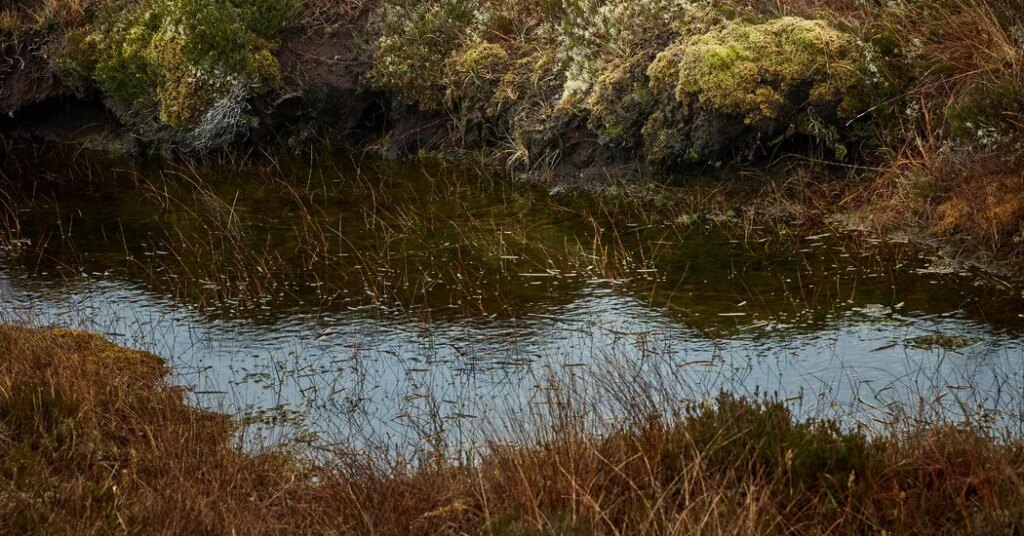
“Bog” is a term for a freshwater wetland, sodden grounds where layers of decayed organic matter (peat) accumulate over centuries or millenniums. A bog is not to be confused with a fen, or a marsh, or a swamp, each of which has its own distinct water source, chemistry and vegetation.
The ecologist Merritt Turetsky — a bog expert and a bog superfan — makes the case for bogs as protective forces against climate change, as repositories of human and natural history, as zones of freedom and safety for oppressed peoples. She also revels in the sheer wonder of bogs: their textures, their sounds and smells, their carnivorous plants and carpets of moss.
Turetsky outlines how, in the 19th century, some Native Americans avoided being pushed west by making homes in the treacherous Florida Everglades; the United States government saw the land as undesirable, and looked the other way. Before Emancipation, enslaved people throughout the South hid in boglands to elude the patrols that hunted them.
During the Troubles, the Irish Republican Army “relied on the remoteness and obscurity of the bogs in Northern Ireland to evade British security forces, move undetected across rural borders and conceal weapons.” And during the Vietnam War, the Vietcong turned their country’s real-life quagmires — narrow, winding channels of “tangled roots and thick canopy” — into the figurative one that stymied the American military.
“Because they do not decay, bogs remember,” Turetsky writes. The cold, acidic, oxygen-poor environment of a bog drastically slows decomposition. Objects and bodies buried in bogs are so well preserved that they are often assumed by discoverers to be of recent vintage. When the 2,500-year-old Tollund Man was unearthed in Denmark in 1950, his eyelashes were intact, the stubble on his chin still visible. This eerie effect seems to have contributed to a view of bogs as “sacred thresholds between worlds,” even “portals where gods listened and where the fortunate could cross in peace to their afterlife.”
Turetsky explains that bogs play a crucial role in mitigating planetary warming and extreme weather events. Boglands sequester carbon, a key component of the gases most responsible for rising temperatures. Sphagnum mosses on a bog’s surface pull carbon dioxide from the atmosphere. Carbon is trapped in a bog’s layers of peat. “Though they cover only about 3 percent of Earth’s land surface,” Turetsky writes, bogs “store roughly 30 percent of the world’s soil carbon. That’s about twice as much as the carbon in all the world’s forests combined.”
Boglands blunt the impact of wildfires and protect landscapes from drought and flooding. When a bogland is drained to make way for development or burned in today’s longer and more intense fire seasons, an ecosystem that was a bulwark against warming instead becomes an accelerant. Carbon and methane pour into the atmosphere. “Where lush bogs once stored carbon for millenniums, we now see thawed ground, scorched earth, smoke carried across continents. And if we fail to act in time, these ecosystems could become runaway emitters, pushing our climate beyond the thresholds we have fought to contain.”
We accompany the author to the far-flung sites of her fieldwork — to Saskatchewan, where a previously fertile bog is bleached and afflicted by drought, and to Borneo, where ancient painted caves are encircled by peatlands just as old. We travel to Scotland’s Isle of Skye, where locally distilled whisky owes its distinctive flavor to bogland peat, and to Greenland, where Turetsky sees hopeful signs of “the bogs of tomorrow.”
Occasionally the book itself becomes, well, bogged down in repetition. We are reminded numerous times that bogs are sites of tension and contradiction, that they are “liminal spaces,” “thresholds,” that they are “neither familiar nor completely uncanny,” “neither liquid nor solid,” “neither alive nor dead.”
Yet “Bogland” is a transporting book and a persuasive call to action. “To lose a bog is to lose a system of staggering complexity, cradle of innovative and rare biodiversity, regulator of water, and unmatched carbon sink,” Turetsky writes. She evokes the sensory world of bogs. She describes their aromas: “Earthy. Sweet. Metallic. Dense and cloying.” She renders the soundscape: the slurping and squelching of the wet ground, the buzzing and whirring of mosquitoes and black flies, the haunting yodel of a loon. She writes about the “will-o’-the-wisps,” glimmering lights that have been observed in bogs at night and that have never been fully explained.
These phantasms lure “wanderers off safe paths, and into ‘drowning grounds.’” Some speculate that the lights are bioluminescent fungi or electrical charges emitted by bubbling methane, but no one has a proven theory yet. For now, “the mystery lingers.”
BOGLAND: The Secret World That Defies Death and Protects Life | By Merritt R. Turetsky | Norton | 219 pp. | $29.99
The post ‘Neither Alive Nor Dead’: The Staggering Complexity of Bogs appeared first on New York Times.