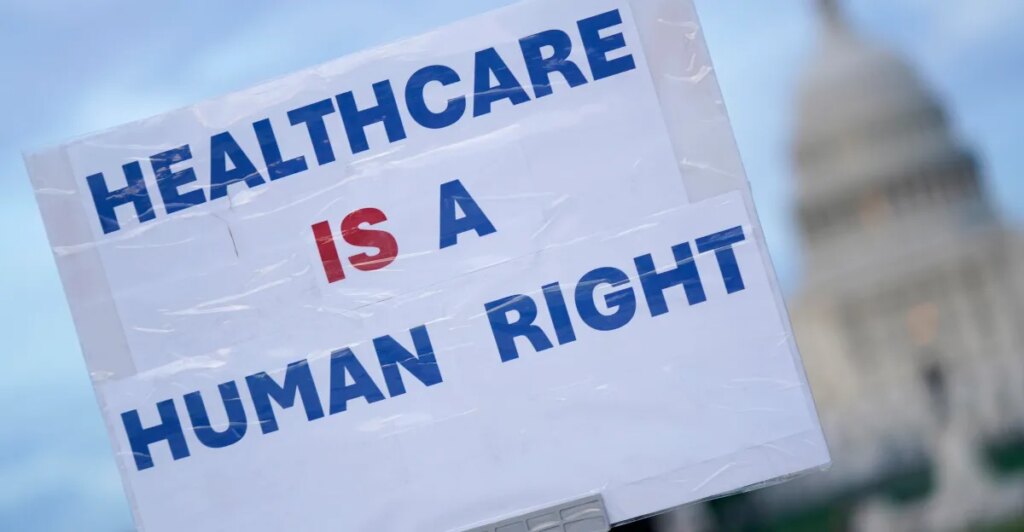
Twelve years ago, Vermont Democrats tried to make their state the first in the nation to have a single-payer government-financed healthcare system — a bold experiment to push the limits of American health coverage when Obamacare was just being launched.
Their plan failed, and rebooting it became politically impossible, even in Vermont: The Democrats lost the governorship to Republican Phil Scott for what turned out to be a decade.
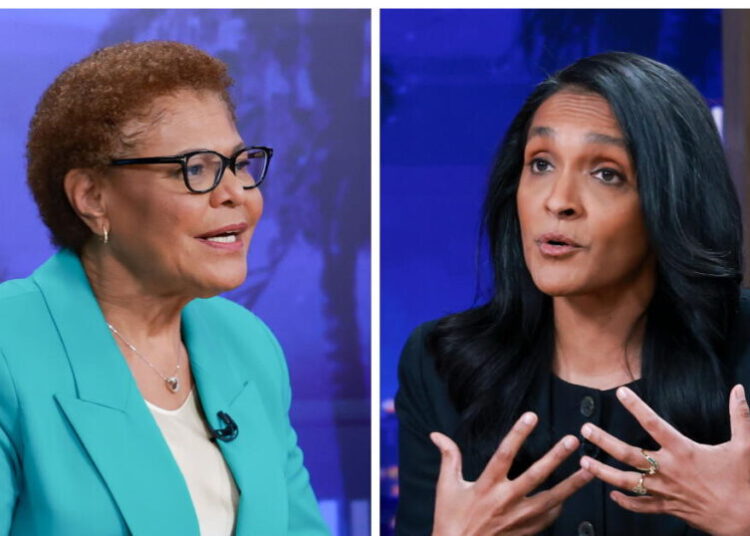
This year, that could finally change. A progressive political newcomer named Amanda Janoo is taking on Scott in what polls show is a tight governor’s race.
And if she wins, the state could be poised to try a whole new national experiment: one of Janoo’s central campaign promises is to create a pioneering health system where the state pays the full tab for primary and preventive care, while leaving the rest to the existing system.
Key takeaways
- Amanda Janoo, the Democratic nominee for governor of Vermont, wants to move primary and preventive healthcare to a single-payer system — where the state would pay providers for such care, make it free for patients, and cut insurers out.
- Previous attempts to pass or enact full single-payer systems have failed at the state level, including in Vermont in 2014.
- Janoo is trying to focus first on this one relatively smaller slice of the health system, but hopes it could be a starting point to full single-payer reform eventually.
- Yet even this more limited reform faces difficult political and practical challenges.
Janoo’s candidacy is an example of the policy experiments that are becoming possible nationwide in a projected “blue wave” year, when Democrats could sweep into power in a number of states. But in the healthcare universe, her plan is also an example of how even progressive policy idealists are trying to learn from past failures and focus on what they think can actually be achieved.
Compared to the sweeping ambition of Vermont’s 2014 effort, or Bernie Sanders’s signature “Medicare-for-All” idea, Janoo’s proposal for single-payer has very specific limits. Under Janoo’s proposal for “universal primary and preventive care” (she typically avoids the term “single-payer”), the state government would pay for Vermonters seeing primary care providers such as doctors and nurse practitioners. This government coverage would be universal and free for patients, and insurance companies would be cut out.
However, other parts of the health system – such as hospitals, specialists, and prescription drug companies – would remain under the existing insurance system, for now.
Every effort so far to enact full single-payer at the state level has failed — even in blue states, bills and ballot initiatives have regularly gone down to defeat. Vermont’s previous single-payer experiment made it the furthest — it was signed into law but abandoned before being implemented, when the governor concluded it was unworkable. Wherever it’s gained steam, politicians and voters have blanched at the high costs of moving their health systems onto state budgets, and the high taxes that would be necessary to fund them.
Now, Janoo is making an attempt to refurbish single-payer as something more achievable, by cutting off a smaller slice of it.
“I think it’s clear at this point that a profit-oriented healthcare system is a terrible idea,” Janoo told me in an interview Monday. But after assessing that the state budget made it “unrealistic” to do single-payer immediately, she concluded, “we could do universal primary and preventive care,” financed by a tax on the wealthiest.
Indeed, single-payer for primary care seems more achievable precisely because primary care is a relatively less expensive part of the healthcare system. But Janoo hopes it will pay major dividends — that better preventive care will improve Vermonters’ health, reducing costs elsewhere in the system by, for instance, making some hospital visits unnecessary.
In speaking to health policy experts about this idea, I heard much sympathy for the goal of universal primary care, but many questions about the details. Would Janoo’s plan be sufficient to bring more primary care doctors to Vermont — and, not unrelatedly, would it pay them more? Would her hoped-for cost savings from preventive care actually materialize? Is picking up the tab for a relatively less expensive part of the healthcare system the best use of sparse state funding?
These questions are becoming national ones, as healthcare gains traction as a political issue again. It isn’t just Vermont where primary care reform ideas are gaining steam: Democrats in Minnesota, Washington state, and elsewhere have discussed them. “There is growing interest in a number of states across the country in doing a universal primary care for all program,” Kevin Grumbach, a family physician and a professor of family and community medicine at the University of California San Francisco, told me. Even Gov. Scott, Janoo’s opponent, signed a law calling for a study of universal primary care.
One dividing line emerging, though, is whether to keep insurers involved, or to clear them out with a single-payer system, as Janoo wants. Insurers are unpopular with the public, but they can be a formidable political opponent when they argue that the benefits voters currently enjoy might be lost. Scott has said that the idea of universal primary care is appealing — but that if universal is “just code for single payer, I’m not interested. We’ve already been through that.”
Yet Janoo is hoping that single-payer for primary care will be a stepping stone – a trial run for eventually making the rest of the state’s health system single-payer down the road.
“I think about this often,” Janoo told me. “How do you build the new system as you transition the old — or hospice the old?”
Amanda Janoo is tired of “corporate neoliberal bullshit”
Janoo has long been an unorthodox economic policy thinker. Her rise is part of a broader trend in which progressives and leftists are winning primaries and gaining influence in the Democratic Party – but she doesn’t fit the prototype of the democratic socialist candidates in New York City, Colorado and elsewhere who’ve gotten much attention this year. Instead, she comes from a different strand of the left, a movement based on a dissident strain of economics and openly skeptical of the benefits of economic growth.
Dating back to when she graduated from college in 2010, in the aftermath of the financial crisis, she was part of a younger cohort rebelling against what seemed the glaring failures of the economic establishment. “The one thing coming out of university I was clear on was that neoliberalism was the worst,” Janoo said on a podcast last year. “This whole idea that governments should just take a hands-off approach to the economy and trust in sort of the disciplinary powers of the global free market to lead them to infinite growth seemed highly problematic and very anti-democratic.”
So for graduate school, Janoo attended Cambridge to study development economics under the “heterodox” economist Ha-Joon Chang. She then spent several years working abroad in international development for the United Nations and other organizations, before moving back to Vermont and working as an economic policy consultant.
In recent years, Janoo became deeply involved with the “well-being economy” movement: an international group of advocates, academics, and experts who criticize what they deem modern capitalism’s obsession with economic growth, and say the “well-being” of humans and the environment should be prioritized instead. They overlap with the “degrowth” movement, which outright argues economic growth should be reduced; last year, Janoo led a workshop at a DeGrowth Institute event on “Degrowth Policy Design.”
Trump’s return to power horrified Janoo. “I’m feeling angry about the rise of fascism and the growing threat of world war, because I feel like we don’t have time for this shit,” she said in a speech at an environmental event last year. ”The planet is on fire and ecosystems are collapsing, and that should really be the focus of all of our attention.” But, she said, “I believe I was born in this moment of history for a reason” and vowed “to fight for democracy – for life.”
So Janoo decided to jump in the race for governor of Vermont. While she is not running on a degrowth platform, her campaign is deeply informed by aspects of the movement’s thought: skepticism about growth’s benefits, a sense that untrammeled capitalism is leading the world to disaster, and that localism provides a better way. For instance, candidates for governor typically pledge that they’d help bring business investment in, but Janoo said in a July debate: “A lot of the problems we’re facing is because we focus so much on attracting external business.”
“Our economy is not super-diversified, and it is not really centered in the most essential kinds of goods and services you want to make sure people have access to no matter what happens — because honestly, things are bad now and they’re going to get worse,” Janoo told me. “I feel a little bit like a collective prepper right now. My motto is, protect what we love, produce what we need.”
In the Democratic primary, Janoo’s opponent, Aly Richards, had closer ties to the party establishment and led in fundraising. But Janoo ran as a progressive outsider; she promised to advance a “more economically populist vision” instead of “corporate neoliberal bullshit.” Her health plan became a point of contrast with Richards, who said she wouldn’t run on “magical thinking,” and that she wanted a version of universal primary care that would keep insurance companies involved. Janoo won the primary by 2.5 percentage points.
Now, she’s facing Governor Scott, who’s long been viewed as politically untouchable in the state – in 2024, he won his fifth two-year term by a margin of 52 points. But polls show a much closer race this time around, and Janoo could have a national blue wave at her back. If that wave helps carry her into the governor’s mansion. And if she makes it there, Vermont will have its first Democratic trifecta in a decade – and with it, the opportunity for major progressive policy change.
Amanda Janoo’s plan: single-payer for primary care
Advocates for primary care reform argue that it should be at the top of Democrats’ agenda, in Vermont and elsewhere, because the system is in crisis.
Primary care providers are overwhelmed and underfunded, they say – and, as a result, there aren’t enough. Grumbach, the family physician and UCSF professor, said “the workload, the lack of resources, and the gap in compensation” — as compared to more highly paid specialists — “has made it very hard to recruit people coming out of medical school to want to be family doctors like me.”
Patients, then, are having trouble finding doctors they like, and aren’t getting sufficient access to preventive care that could help them be healthier. “The emergency rooms are functioning and doing a lot of the work that normally primary care would do,” Janoo told me. “People are waiting a really long time to see anyone, and so often health issues that could have been caught sooner become more serious and dangerous.”
Finally, both providers and patients complain that insurance companies make the preceding problems worse, by adding administrative burdens and bureaucratic hassle.
So what would Janoo’s plan do?
First, her plan would guarantee free, government-paid primary and preventive healthcare for all in the state, by cutting insurers out of that part of the system.
Second, she wants to phase out the “fee-for-service” model of care, where primary care providers are paid based on specific services. She’s suggested, instead, either government-paid annual salaries, or per-patient per-month payments.
Third, she wants to try and try and make sure there are more primary care providers in the state, via more spending. “We would need some relocation incentives, so maybe $100 grand if you want to move here, or a student loan repayment program,” she told me. “My hope would also be that we could be a place for foreign-trained medical professionals to come here and be safe and accepted and to bring some cultural diversity,” she added.
As for how it would be paid for, Janoo proposes an income tax increase on the wealthiest Vermonters that, she said, would be comparable to the tax break they got in President Trump’s “One Big Beautiful Bill Act” last year. Though she hasn’t settled on a final amount, she hopes these new taxes would raise hundreds of millions of dollars.
Would Janoo’s plan work in practice?
In speaking with health policy experts both inside and outside Vermont, though, I heard various questions and doubts about Janoo’s plan.
Some of the problems mix the practical and political. For instance, under this plan, primary care visits would be free, but tests such as MRIs would likely still require the existing insurance system, as would most prescription drugs. Janoo acknowledged to me that deciding how many things the government should pay for would “always be a challenge,” but said her first priority was access to getting people at least some healthcare.
There are also questions about whether this primary spending is really targeted at patients’ most urgent problems. Erasing the copay for your doctor visit might be nice, but those copays weren’t driving people into medical bankruptcy. Janoo’s reform plan leaves the bulk of hefty health spending from hospitals and treatments for very sick people untouched.
Other questions are about whether Janoo’s hoped-for benefits from better preventive care — she’s said the state could save as much as $300 million a year — will materialize.
“There’s no question that better access to primary and preventive care makes people healthier in the end,” Larry Levitt, executive vice president of the health policy nonprofit KFF, told me. “But advocates have long tried to sell prevention as saving money. I think it’s more likely that it costs money, but keeps people healthier.” One reason for this, he said, is that better preventive care could help identify more underlying illnesses and conditions in patients, and spur more spending to try and address them.
The shift to a salaried model for providers could bring other practical challenges. Though Janoo hopes that ditching fee-for-service will free up providers to see more patients, others suspect a guaranteed salary might incentivize them to see fewer, and wonder what role the government would play in trying to hold such providers accountable.
Finally, I also heard some disconnect between what providers said they wanted, and what Janoo thought they wanted. When we talked, she told me her impression was that primary care providers were most eager for changes in their work environment. “I’ve asked them, ‘If you could get paid a good annual salary – like, average for the nation – and you didn’t have to deal with insurance and the fee-for-service structure, would you do that?’ They say, ‘Absolutely.’”
Yet Grumbach told me that, for the primary care system, “Problem number one is not enough money, problem two is not enough money, and problem three is not enough money.” In his telling, it’s more money that’s the real key to incentivize more new doctors to practice primary care, and help pay other staff and health workers who could actually deliver good preventive care.
If so, the core challenge to Janoo’s reform will be the one that has dogged single-payer reform attempts everywhere: money.
If the government takes on the responsibility of paying primary care providers and setting salaries for them, providers will want those salaries to be high. If they aren’t high enough, the shortfall in primary care providers will worsen. But the higher such salaries are, the higher the taxes the state would need to raise to pay them. Essentially, taxpayers would be asked to shore up doctors’ salaries to keep them in the state — turning the healthcare argument from one kind of difficult political issue to another.
Getting the balance right would be a challenge for the government, with much at stake. But Janoo says her background in industrial policy has convinced her that it’s possible. Furthermore, she hopes, it will be just a starting point for the full single-payer system she still thinks is urgently needed.
“My hope is, when I’m governor, that I can start to work with some of our neighboring states. Because if we could create a New England-wide system, we could move to universal healthcare really quickly,” Janoo said. “I think it’s a moment where people recognize we need a universal healthcare system.”
And, she added, “If we had done it previously, it would be much cheaper than it is now.”
The post Can this Democrat crack the code for universal healthcare? appeared first on Vox.