Every week, the critics and editors at The New York Times Book Review pick the most interesting and notable new releases, from literary fiction and serious nonfiction to thrillers, romance novels, fantasies, mysteries and everything in between.
You can save the books you’re most excited to read on a personal reading list, and find even more recommendations from our book experts.
Literary Fiction
Luna, Phoenix, Queen
by Julie Orringer
A purloined manuscript not only reveals the intimate details of an infidelity, it also becomes in its own right the basis of a major betrayal for Barr and Dava, the married writers in Orringer’s new novel. After Dava receives a diagnosis of early-onset Alzheimer’s, Barr makes a discovery that confirms his rawest suspicions about her and offers a clue to the emotional distance that has long characterized their marriage. Lonely and spiteful, he encounters a shelter dog who can talk, offering him the grace to tell his own story. Read our review.
MEMOIR
Kolkhoz
by Emmanuel Carrère
The word “kolkhoz” — the Soviet term for a small collective farm — provided Carrère’s Russian-Georgian mother with a metaphor for the family’s cozy bedtime ritual when he and his siblings were small. She is the center of his new work, translated by John Lambert, in which Carrère unspools lines of ancestral history and examines the influence of his mother’s emotional abandonment in the wake of an affair. As with many of Carrère’s books, the slippery nature of truth is one of his chief preoccupations here; the result is an account that balances tenderness and resentment for a formidable woman. Read our review.
historical fiction
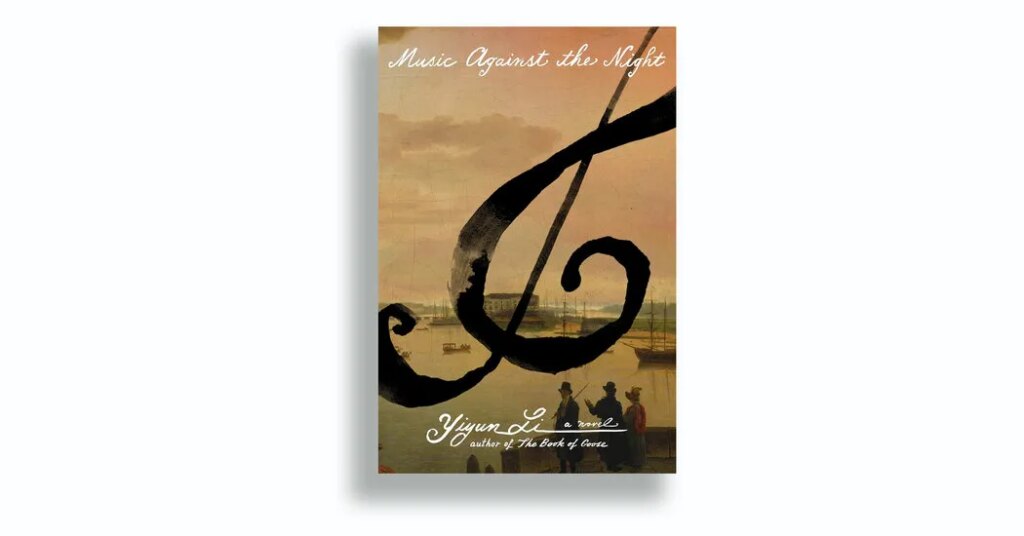
Music Against the Night
by Yiyun Li
Two real-life classical musicians, John Field and Adelaide Percheron, come to life in this stunning historical novel set at the turn of the 19th century. In the story, “classical music is not a highbrow calling that floats above market forces,” our reviewer wrote. “It’s a cutthroat vocation, governed by strategy, rivalry, scandal and survival.” Yet their love of music, and undeniable ambitions, bring the pair together. Li’s last book, “Things in Nature Merely Grow,” a memoir of her two sons’ suicides, received the Pulitzer Prize this spring. Read our review.
Literary Fiction
Passengers
by Alexander Maksik
An interminable flight delay at LAX is the backdrop of Maksik’s new novel, which follows a father and his adult daughter waiting, and waiting, to travel to Paris, where he once lived. The situation is both highly inconvenient and seemingly dire — phones aren’t working and the sky has turned yellow. What better excuse to throw back shots at an airport bar with a loved one, and unload emotional baggage from your past? Read our review.
history
The Best Kind of American
by Kim Ghattas
What might the 1984 assassination of Malcolm Kerr, the widely respected president of the American University of Beirut, tell us about Lebanese politics today? Ghattas has covered the Middle East for years, and offers a cleareyed account of the region’s internecine loyalties and proxies and their resonance four decades later. “If the best kind of American is one whose view of the Middle East is disinterested, benevolent and untainted by thoughts of commercial or strategic hegemony,” our reviewer wrote, “Ghattas’s excellent book commemorates a breed that is all but extinct.” Read our review.
Investigative Journalism
The Havana Syndrome
by Michael Rey and Oriana Zill de Granados
First coined in 2017, the term “Havana syndrome” refers to a mysterious cluster of symptoms, typically afflicting U.S. intelligence and diplomatic officials, with no readily evident physical cause. It’s become one of the best-known stories in contemporary espionage but one of the least understood, though the authors here reveal a good deal of fascinating, maddening detail and suggest the American government is desperate to conceal the extent of the damage. Read our review.
Literary Fiction
Brother of the More Famous Jack
by Barbara Trapido
A cult classic first published in 1982, Trapido’s novel follows a young woman who falls in with her philosophy professor’s bohemian family. The book is a raucous satire of English society and bursts with memorable, occasionally hirsute, characters. Newly reissued, it promises to bring Trapido to a broader readership — an outcome that our critic Dwight Garner endorses. As he wrote in his review: “We should have been talking about Barbara Trapido all along.” Read our review.
The post 7 New Books We Love This Week appeared first on New York Times.