The future is blue-collar, if you ask Gen Z.
Nearly half of young people are either learning a skilled trade or seriously considering one, according to Thumbtack’s third annual Future of the Skilled Trades Report, which surveyed 1,000 Americans ages 16 to 30. Some 30% of respondents said the rise of AI has made them more interested in the trades. More than 80% said it’s harder for young people to build a stable career than it was just a few years ago, and four in five believe AI will eliminate many traditional entry-level jobs. Against that backdrop, three in four said the trades may become one of the smartest career choices for their generation.
Fortune has tracked this shift for years, as more Gen Zers choose trade school over college and employers struggle to build pathways into blue-collar work. Just last month, Ford CEO Jim Farley said Gen Z needs its own “Smokey Bear” moment to cut through AI job anxiety and steer young people toward the skilled trades.
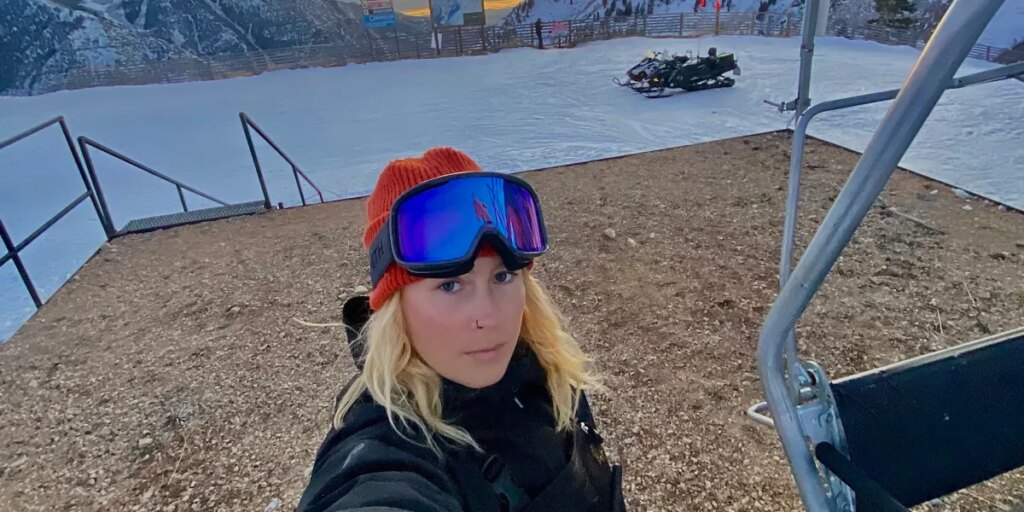
One Gen Zer is already convinced she made the right call. At the crack of dawn on the slopes of Mount Timpanogos, about 13 miles northeast of Provo, Utah, Victoria Madsen, 25, arrives to start up the ski lifts. She has worked as a lift mechanic at Sundance Mountain Resort for about five years.
“I’m really proud of the job that I have,” Madsen told Fortune. “I love telling people that I’m a mechanic.”
From aspiring lawyer to lift mechanic
Being a mechanic wasn’t always the plan. Madsen originally wanted to be a lawyer and was studying English at Utah Valley University when, during her junior year, she took a seasonal job at Sundance. When ski season ended, she was asked whether she’d stay on as a mechanic during the off-season.
“I was like, ‘I appreciate the offer. I definitely need another job, but I don’t have any mechanical skills at all. I don’t even change the oil in my car. So, I don’t want to drag you guys down,’” Madsen said.
She was assured she’d be trained on the job, and the offer came with perks. Madsen had skied at Sundance as a child and was excited about the free ski pass employees receive. Most important, she said, the job paid $3 more an hour than her previous position. She ultimately dropped out of school after realizing she was already earning more than she expected to make after graduating.
A workforce in flux
Blue-collar work has long been male-dominated, and the broader labor market is shifting. Women now hold more U.S. payroll jobs than men—only the third time that’s happened—according to an Indeed Hiring Lab analysis of Bureau of Labor Statistics data. Of the 1.2 million jobs added between February 2024 and February 2026, two-thirds went to women. Much of that growth has come in female-dominated fields like health care, even as fewer men enter the workforce—and women still earn far less than men.
When Madsen started as a lift mechanic, nearly all of her colleagues were men.
“I think I was privileged because they were very encouraging,” Madsen said. “It was an all-male crew. I was the only girl in the crew. They were all super nice to me. They were so willing to teach me things.”
Over the past few years, she said, more women have joined the crew, and she has noticed more female mechanics at the industry conferences she attends.
The job has also given Madsen more financial security and helped her hit milestones she once thought were far off.
“I was able to move out on my own. I was able to have my own apartment for the first time. I bought a new car,” Madsen said. “It just seemed like life flipped around, like I was an adult all of a sudden.”
Thumbtack also surveyed nearly 1,500 skilled-trades professionals on its platform. Among those with less than two years in the field, 38% previously worked in a corporate or white-collar career, and 26% entered the trades after burnout. Nearly eight in 10 pros said they would recommend the trades to a young person, and nearly half reported higher demand and income than a year earlier.
‘I’ll buy the first round’
Madsen recently got the chance to make that recommendation herself, staffing Sundance’s booth at a career fair at UVU.
“It made me feel really good, to be honest. It made me feel a lot more attached to my position,” Madsen said. “I also met a ton of people who were about to graduate, and they had these resumes, they had all these internships, and they were still just like, ‘I can’t find a job.’”
Madsen still has concerns about her financial future. She’s unsure whether she’ll ever be able to buy a house or have children. But she’s happy with her career choice and knows mechanic jobs are plentiful.
She worries about her peers. Madsen said she makes more money than most of her friends.
“All my friends that are also my age, if we go out, I’ll buy the first round because I just know that I’m making more money than everybody,” she said.
The post ‘I love telling people that I’m a mechanic’: This Gen Z woman ditched her law aspirations for blue-collar work—and now outearns her friends appeared first on Fortune.