A building owned by the energy giant Aramco was set ablaze late Tuesday in a strike on the Saudi city housing its headquarters, the kingdom’s energy ministry said, as war spiked between the Houthi militia in Yemen and Saudi Arabia.
The Houthis had threatened earlier in the day to attack the Aramco headquarters in the eastern city of Dhahran, but did not immediately take responsibility for the strike. It came after the Iranian-backed militia reported that two major oil facilities in Yemen had been attacked by Saudi forces on Tuesday.
The Saudi energy ministry said in a statement that the strike in Dhahran had hit an Aramco administrative building and caused “a limited fire” and no injuries.
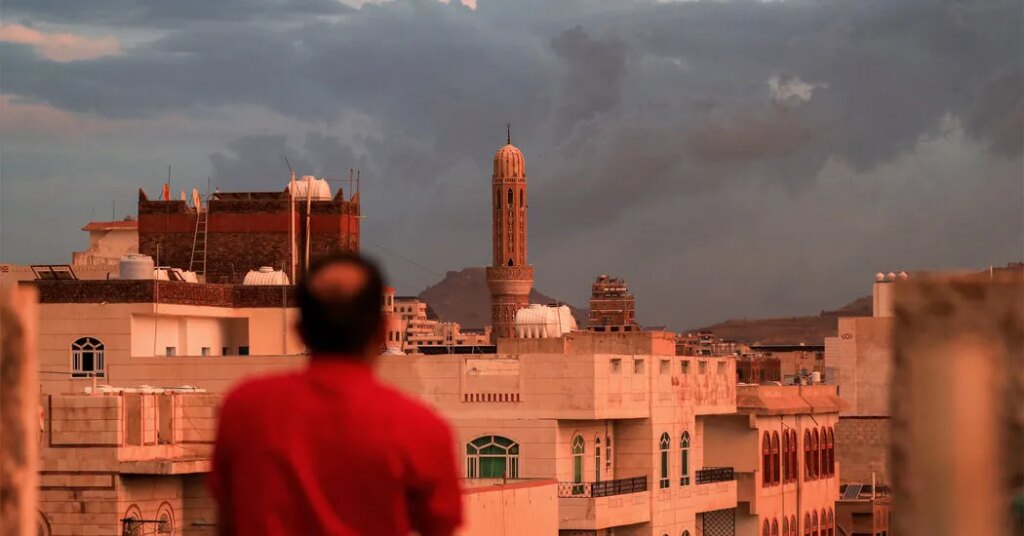
By late Tuesday, residents of both countries were on edge as explosions were repeatedly heard in their capital cities. A Saudi-led coalition said it was targeting Yemeni facilities that support the Houthi war effort, while the Houthis vowed to retaliate against comparable sites in Saudi Arabia.
The Saudi authorities issued warnings of an aerial threat in the Saudi capital, Riyadh. And Maj. Gen. Turki al-Maliki, a spokesman for the Saudi-led coalition, said four cruise missiles fired toward Riyadh and southern Saudi Arabia had been intercepted, along with two drones.
Mr. al-Maliki also reported that a ballistic missile launched toward the city of Damman in the eastern part of the kingdom by the Houthis had been intercepted, and that shrapnel fell in a residential area of neighboring Dhahran.
The Houthis have struck Aramco’s facilities before and have frequently hit Saudi oil tankers in the Red Sea since tensions escalated between the two sides in July.
Yahya Saree, a military spokesman for the Houthis, had warned in a post on social media that, if Saudi forces were to attack Yemeni oil facilities, the militia would retaliate against Aramco’s headquarters, the company’s refinery in Riyadh and King Khalid International Airport, also in Riyadh.
The Houthis’ threat against Aramco came soon after Mr. al-Maliki urged civilians in Yemen to evacuate the vicinity of the al-Sabaha Central Station in Sanaa. Later on Tuesday, the Houthi-run television network al-Masirah reported that a Saudi airstrike had targeted that oil site.
Saudi strikes on the other oil facility, in port city of Hodeidah, killed at least two people, Anis al-Asbahi, a spokesman for the Houthi-run health ministry, said on Tuesday.
Shortly after the two oil facilities were reportedly struck, the Saudi-led coalition fighting the Houthis in Yemen said it had targeted the Houthis’ military capabilities. In recent days, Houthi attacks have rocked Saudi Arabia, inflicting one of the highest death tolls there in years.
While the Saudis said they were “neutralizing the capabilities” of the militia, they did not confirm their targets. The coalition said in a statement that one oil complex in Sanaa, the Yemeni capital, and another in Hodeidah,were examples of civilian infrastructure that the Houthis were using to support their war effort.
Saudi warplanes have been bombing Houthi positions in Yemen in support of the internationally recognized Yemeni government, which is fighting to retake territory seized by the Houthis last month.
Over the weekend, the Houthis carried out the deadliest attack on the kingdom in more than a decade, striking King Khalid International Airport and killing at least 13 people. More than 300 people were wounded in the Saturday attack, the Saudi authorities said.
On Tuesday, Saudi officials, during a cabinet meeting led by Crown Prince Mohammed bin Salman, vowed that the Houthis would bear the consequences for the “heinous attacks” on the kingdom’s airport.
The Houthis on Sunday accused Saudi Arabia of bombing an airport in the Yemeni capital, according to statements carried by the Saba news agency, which is run by the militia. The Saudi authorities have not commented on that assertion.
President Trump, in a social media post after the exchange of threats on Tuesday, wrote that the “Houthis are behaving very badly.” He said that he thought the militia had “learned their lesson a year ago when we bombed the HELL out of them.”
Though Mr. Trump condemned the Houthi attacks on Saudi Arabia over the weekend, he has so far rebuffed the kingdom’s requests for U.S. support in the fight.
The Houthi militia has been fighting the internationally recognized, Saudi-backed government in Yemen since 2014. Saudi Arabia pledged to restore the government, declaring war on the Houthis and initiating a bombing campaign that set off one of the world’s worst humanitarian crises. A fragile truce agreed to in 2022 has unraveled in recent months.
Emboldened by regional instability, the battle-hardened Houthis have far less to lose against their more powerful, wealthier enemies, even as they imperil Saudi Arabia’s ambitions to transform itself into a global hub of business and tourism.
The Red Cross called for the urgent de-escalation of the conflict on Tuesday, warning that further escalation would be disastrous for tens of millions of civilians. “Civilians are paying an unacceptable price as a result of military operations in the Middle East,” said Mirjana Spoljaric, the president of the International Committee of the Red Cross.
Shuaib Almosawa contributed reporting from Sanaa, Yemen.
The post Saudi Energy Giant Struck as War Spikes Between Houthis and Saudi Arabia appeared first on New York Times.