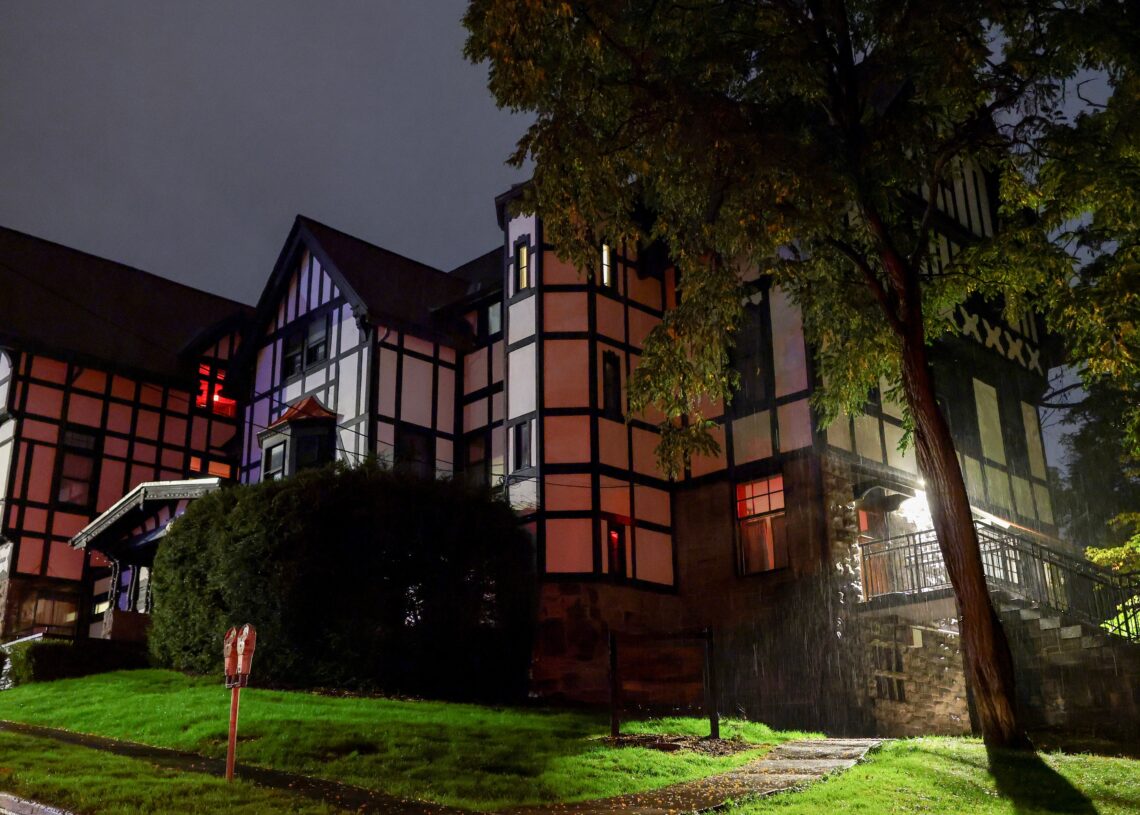
Cornell University has banned its fraternity houses from hosting parties and social events for the remainder of the school year as the institution continues to grapple with allegations that a female student was gang-raped by several men at a fraternity house in 2024.
Cornell President Michael Kotlikoff announced the ban and other measures in a directive Tuesday.
“It is clear that women on our campus continue to question whether they are safe,” Kotlikoff said. “We must meet this moment by acknowledging where we have fallen short and taking meaningful action.”
The directive, which bars any fraternity on the university’s Interfraternity Council from hosting parties and social events at their houses for the rest of the 2026-2027 school year, is the latest effort at the Ivy League university in Ithaca, New York, to limit social events while administrators try to address concerns about campus culture and women’s safety.
The student-run Cornell Concert Commission has canceled a homecoming concert planned for Saturday, and the Ithaca Common Council has declared a moratorium on event permits for Cornell and affiliated student organizations through Nov. 4.
Cornell closed the Chi Phi chapter, where the student alleges she was raped, in 2024, university officials say. It remains barred from campus.
The student, who identifies herself as Jane Doe in a lawsuit she filed last month against seven men, the fraternity and the university, alleges she was drugged and assaulted at the fraternity house in October 2024.
Kotlikoff’s directive does not address off-campus gatherings.
The measures, he said, are aimed at addressing the concerns of community members who feel unsafe and have demanded the university better support survivors of sexual assault.
In addition to banning fraternity house parties, he said, the university will add staff to the university’s Office of Civil Rights, including a case manager to help individuals who report sexual misconduct navigate the process, and allowing the New York State Police’s “experienced, trauma-informed criminal investigators” to investigate alleged sexual assaults on campus.
Doe made a sworn statement within a month of the alleged assault to Cornell University Police. University police forwarded the statement to Tompkins County, New York, District Attorney Matthew Van Houten, whose office reviewed it but declined to pursue charges.
After Doe filed the civil suit, Van Houten announced an investigation. But New York Gov. Kathy Hochul (D) has appointed state Attorney General Letitia James (D) as special prosecutor, saying she had lost faith in the Tompkins County district attorney’s ability to fairly oversee the case.
An attorney for one of the defendants in Doe’s lawsuit described the measures announced by Kotlikoff on Tuesday as ineffectual.
“Shutting down Greek social events doesn’t mean students will stop getting together,” attorney Andrew Miltenberg said in a statement. “Some gatherings may simply move off campus, where there’s even less oversight.”
“If Cornell wants to make students safer,” he said, “it needs to do the harder work: establish consistent safety standards across campus, educate students about alcohol and consent, enforce the rules, improve reporting, and investigate allegations fairly.”
Kotlikoff described the measures as “first steps toward systemic change on our campus.”
“We will take all necessary steps to address the conditions that led to Jane Doe’s experiences, and those of other survivors,” he said. “Cornell must be a place where safety is not an open question.”
The post Cornell bans fraternity houses from hosting parties as rape investigation continues appeared first on Washington Post.