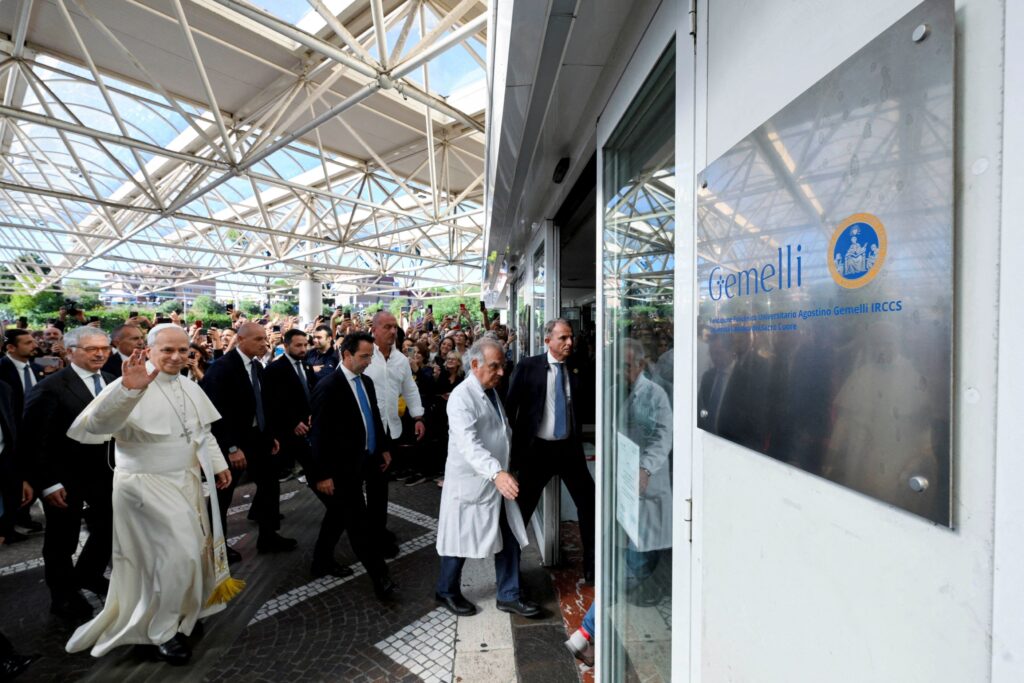
The Vatican raised new concerns about the state of Pope Leo XIV’s health early in his papacy when it announced Tuesday that doctors had discoveredthe pope has pulmonary adenocarcinoma, a type of lung cancer.
The pope underwent surgery to remove a portion of his lung, the Vatican said. While lung cancer is common and a leading cause of cancer deaths in the United States, experts said it is usually treatable if caught early. Here’s what to know about the condition.
What is pulmonary adenocarcinoma?
Adenocarcinoma is a type of cancer that can affect various organs. It is the most common subtype of lung cancer. It is often found in smokers but can also occur in people who have never smoked. Other risk factors for lung cancer include exposure to radon gas, asbestos or second-hand smoke.
Symptoms of the cancer can include a chronic cough, coughing up blood or mucus, shortness of breath and chest pain. However, the cancer can often develop without any symptoms.
How is it treated?
If detected at an early stage, a lung cancer tumor can be removed surgically, and long-term survival rates for the disease are good, said Raja Flores, chairman of the Department of Thoracic Surgery at Mount Sinai Health System in New York. Doctors may remove a portion of the lung — which is the kind of operation Pope Leo underwent — to ensure they’ve caught all of the cancer.
If a patient is in good health, they should still be able to exercise and live a normal life after the lung surgery, Flores said.
“I’ve had patients run marathons afterwards,” he said.
There’s always a possibility of recurrence — the cancer returning — and patients generally get a CT scan every six months after surgery, Flores said. The odds of the cancer returning are linked to the size of the tumor and how early the cancer is detected.
Treatments such as immunotherapy or chemotherapy may be used to shrink the cancer before surgery or after an operation to attack any cancer that remains. Surgery may not be an option if the cancer has spread too far in the body.
Around 128,000 people in the United States died from lung cancer in 2024, according to the Centers for Disease Control and Prevention. Outcomes vary greatly depending on when it’s detected: The overall five-year relative survival rate for lung cancer is around 30 percent, according to the CDC, but for those with localized lung cancer, it is around 60 percent.
“The numbers that you see … in terms of survival in five years are all historical data which may not reflect what the situation is for any individual patient,” said Edward Chan, chief of Thoracic Surgery at MedStar Washington Hospital Center.
What can people do to avoid it?
Experts said quitting smoking and staying up to date on cancer screenings are the most important preventative steps people can take to avoid lung cancer.
Lung cancer screening guidelines are complex. The U.S. Preventive Services Task Force recommends screening for people who are 50 to 80 years old and have a history of heavy smoking, either actively or in the past 15 years. For people who meet this criteria, the screening, a low-dose CT scan, is usually covered by insurance.
Some experts have advocated for lung cancer screening guidelines to be loosened. The American Cancer Society recommends anyone aged 50 to 80 with a history of heavy smoking get screened.
Patients should also discuss any symptoms or a family history of cancer with their doctors.
But because lung cancer can often develop without symptoms, screenings are the most important tool for fighting the disease, Chan said.
“The earlier you find it, the greater your chance of a complete [recovery],” Chan added.
The post What to know about pulmonary adenocarcinoma appeared first on Washington Post.