Ecuador’s experience with dollarization matters beyond Quito. The possibility of mothballing local currencies and replacing them with the dollar is a hot topic in Latin America. It’s also on the agenda in Washington, D.C., where there is renewed interest in promoting the use of the greenback.
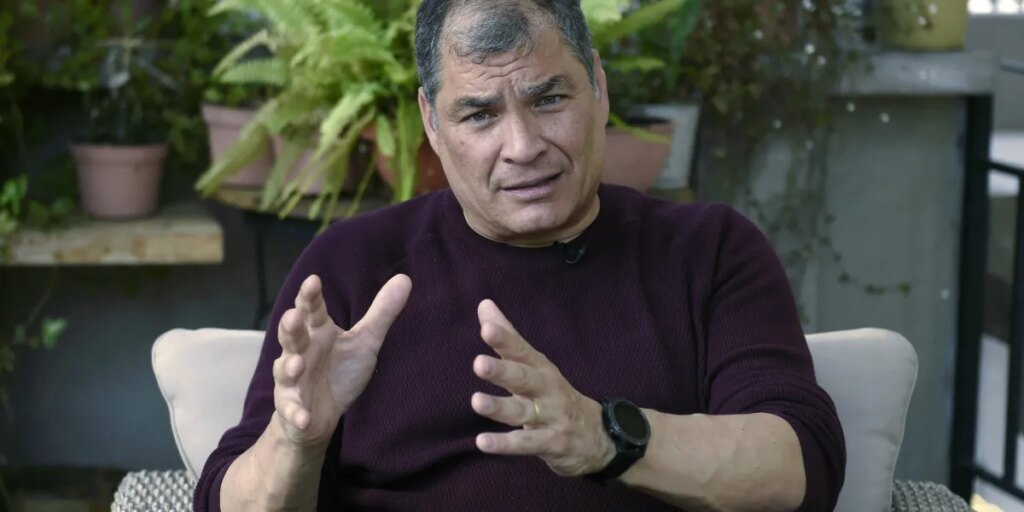
Ecuador is an ideal natural experiment in how a dollarized system holds up against a hostile government. Rafael Correa, who holds a PhD in economics from the University of Illinois, opposed dollarization before it was adopted in Ecuador and before he became president. He led the country for a decade but could not dismantle Ecuador’s dollarized system because it produced excellent results and garnered widespread public support.
The collapse
In 1999, Ecuador’s sucre began a catastrophic plunge. At the end of 1998, it traded at 6,825 sucres to the U.S. dollar. By the end of 1999, it had plunged to 20,243 sucres to the dollar, losing two-thirds of its value against the greenback in one year. The losses did not stop there. During the first week of 2000, the sucre shed another 27.7% and hit an all-time low of 28,000 to the dollar.
Faced with a currency in free fall, a banking crisis, and an imploding economy, President Jamil Mahuad announced on January 9, 2000, that Ecuador would replace the sucre with the dollar at 25,000 sucres to the dollar. President Bill Clinton and Treasury Secretary Lawrence Summers had encouraged the move.
Dollarization worked. Inflation dropped sharply, deposits flowed back into the banking system, and the economy switched from negative to positive growth with a surge in exports leading the way. With a system immune to currency crises, stability was established in Ecuador, and while stability might not be everything, everything is nothing without stability.
A durable regime
Today, dollarization enjoys roughly 90% approval. It is the longest-lived Ecuadorian currency regime since independence in May 1830, and it has lasted longer than any constitution. Its resilience is all the more notable because it survived Correa’s presidency (January 2007 to May 2017).
Before entering politics, Correa published papers denouncing dollarization and sketched a plan to unwind it. As president, he called it “an immense error” and “monetary suicide.” Yet he knew an open attempt to dedollarize would trigger bank runs, economic collapse, and perhaps his impeachment. So, Correa repeatedly assured voters that abandoning the dollar would be catastrophic and was not on his agenda.
What Correa did instead
Below the surface, his actions told a different story. In his first year in office, he dismantled one of dollarization’s natural complements, a fiscal anchor. Ecuador had built an oil reserve fund, which, together with the dollar, had delivered the country’s first run of concurrent fiscal surpluses since it began pumping oil. Correa scrapped the fund.
That same year, Correa introduced a series of economic policies that cut against dollarization’s logic. He closed the economy to foreign capital, which runs contrary to the principles of a dollarized system. He selectively defaulted on Ecuador’s foreign debt despite record oil revenues. He imposed an exit tax on every dollar leaving the country and sharply raised import tariffs. To exert control over private banks, he forced them to repatriate 45% of their liquidity and park it at the central bank.
Correa also introduced a central bank electronic money program. It was billed as a tool for financial inclusion, since it let Ecuadorians pay by mobile phone. But because the central bank, not private banks, issued the balances, the government could have used it to pay its bills in digital credits not fully backed by dollars. The public wanted nothing to do with it, and the program was shut down.
Most egregiously, the central bank began lending directly to the treasury. In effect, this allowed Correa to print unbacked “ecuadollars.” Central bank financing of the government peaked at about 10% of GDP, according to the IMF, with the heaviest lending in 2009–2014. The loans were of questionable legality and ran contrary to the tenets of a dollarized system.
The legacy
Correa was convicted of bribery in the Sobornos case and sentenced to eight years in prison. He lives in Belgium, outside the reach of that sentence. His legacy lingers. The full benefits of dollarization are not realized in Ecuador today because the central bank still sets interest rates and directs bank lending toward favored sectors. In addition, remaining capital controls restrict Ecuador’s access to the world’s deepest pool of international dollar liquidity.
For countries weighing dollarization, the lesson is clear: the dollar does its job. For 26 years, Ecuador has remained immune from the plague of a currency crisis and has sustained respectable economic growth, low inflation, and surging exports.
The opinions expressed in Fortune.com commentary pieces are solely the views of their authors and do not necessarily reflect the opinions and beliefs of Fortune.
The post Ecuador’s president tried to kill the dollar. Here’s what that means for Venezuela, Argentina and the Rest of Latin America appeared first on Fortune.