California has always hidden the true price of progress somewhere beyond the horizon.
The water arrives from a distant river. The electricity crosses a mountain range. By the time the benefits reach us, the damage has been assigned elsewhere.
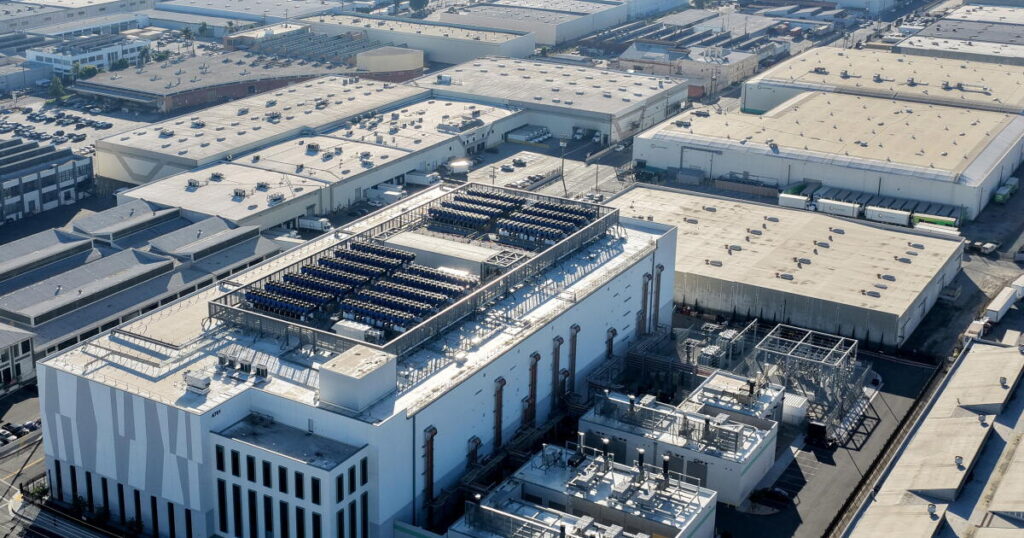
Now the future is arriving in windowless buildings.
Data centers are rising from industrial corridors and farmland with the appetite of cities. They pull electricity by the hundreds of megawatts. Inside, servers build fortunes. Outside, residents open their utility bills and wonder what will remain.
Before California approves another facility, every host community deserves an answer: What will this project make better here?
Gov. Gavin Newsom recently signed seven laws that begin to make the hidden costs visible. Until those are in effect, a company could arrive with the appetite of a city and quietly leave its bill for wires and water with people who never asked for it.
Now utility regulators must reckon with what it takes to serve that appetite. The rates and connection terms are meant to make new users shoulder their share of the grid and the electricity it must supply, instead of loading those costs onto a family studying its bill. Regulators must now make that promise real.
The water, too, must come into the open. Data centers are water guzzlers, using huge volumes for cooling. Before construction, a developer must show where that water will come from, how the facility will fare in drought and who will pay for the new pipes. After the servers begin to hum, estimates must give way to actual water use. State planners will gain an account of energy consumption and efficiency. A town needs numbers it can see.
And the project can no longer pass under a blanket environmental exemption. A quicker path through court is reserved for facilities that meet demanding conditions on clean power, water and protection of ratepayers. In California, speed must be earned.
These laws draw a floor beneath the bargain. They do not guarantee that a neighborhood gains something lasting from the land, power and water it commits. California should establish a “community benefit standard” for every new data center and major expansion. Protect the resources of the place. Pay every cost the project creates. Then deliver a public benefit that residents can see, measure and enforce.
The first requirements are obligations, not generosity. Developers must disclose projected electricity demand, water consumption, emissions, noise and infrastructure needs. That includes drought, extreme heat and nearby projects. Households cannot pay for capacity reserved by a corporation that may never use it.
No company should receive applause for obeying environmental law. Efficient cooling is not a community gift when the machinery is necessary to run the servers. A research grant cannot excuse an unacceptable water plan. Public benefits cannot purchase permission to pollute a neighborhood or drain an aquifer.
Only after those tests are met does the additional bargain begin.
Each major project should fund at least one substantial technology program tied to an identified public need. Residents and public agencies would help choose the priority. California should measure what changes, not what gets announced.
One developer might finance advanced water reuse with a local district beyond what is required to address its own demand. The compact would state how much freshwater demand must be eliminated, how savings will be verified and who will operate the system. Buying equipment would not count. Producing verified water savings would.
Another facility might guarantee computing capacity to California hospitals and universities studying rare diseases, cancer or wildfire behavior. The agreement would specify secure access, support and computing hours, and bind the tenant. Researchers would receive usable capacity, not whatever remains after commercial customers finish.
A third project could finance batteries and controls that keep a clinic, cooling center or water system operating during an outage. The equipment must serve the public in an emergency. Backup power reserved for company servers would not qualify.
Every project must still provide a direct local benefit. A statewide research program may supplement that commitment, but it cannot replace it.
The compact would name beneficiaries, funding, responsible parties, milestones and penalties for failure. Its duties would survive a sale or tenant change. Independent verification would report delivery, not spending.
If one method underperforms, the agreements between data centers and communities should permit another. The obligation itself remains.
Contribution levels should reflect project size. Small facilities could pool resources. Large campuses could not divide themselves into smaller applications to escape responsibility. Broader innovation contributions should be legally sound and separate from required mitigation.
Projects with unacceptable impacts should be rejected or relocated. Those meeting environmental standards and securing credible, enforceable benefits deserve coordinated reviews and clear timelines.
The Legislature has drawn the line against making families pay for the servers that power someone else’s fortune. The industry can meet that line by showing, in public and before construction, how it will protect the grid and water system. Then it can show what it will build for the people living outside its walls.
For too long, California has sent the rewards of progress in one direction and the damage in another. If our communities are asked to power the future, that future must also power them.
Dean Florez is a former California Senate majority leader, representing portions of the Central Valley.
The post Data centers consume like cities. They should contribute like cities as well appeared first on Los Angeles Times.