When the U.S. Forest Service opened 947 acres in a remote section of western Colorado to commercial logging in July, officials expected at least a few companies to jump at the opportunity.
Not one did. None had bid a year earlier, either. Surging fuel costs and plummeting prices for Ponderosa pine made it impossible for them to turn a profit from the sale, so they all skipped it.
That isn’t just a problem for the loggers. Timber sales are an important tool for preventing catastrophic wildfires, helping to thin dense underbrush and other vegetation that builds up over decades.
President Trump has taken steps to promote the American timber industry, increasing access for logging companies to federal lands and deploying executive orders and tariffs to boost their competitiveness.
Yet loggers are passing up on timber sales across federal lands because of an accelerating downturn in the industry. Demand has been cratering for some wood products, especially pulpwood used to make paper.
“It doesn’t matter what wood is available for sale if we don’t have a viable economic market,” said Scott Dane, executive director of the American Loggers Council. “Without markets, there is no forest management.”
Each failed sale leaves national forests thick with fuel for fires.
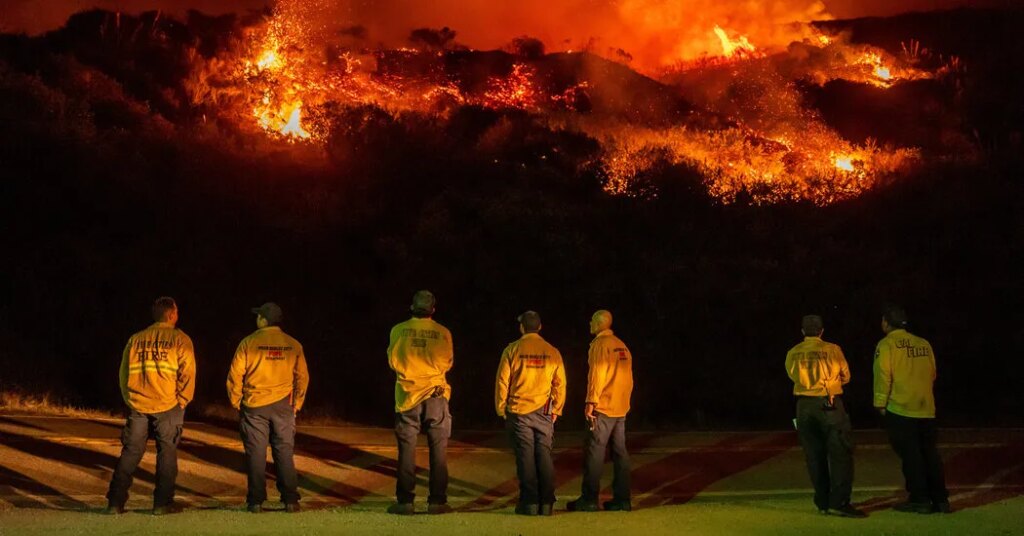
As climate change heats the planet and dries out forests, wildfires are becoming bigger and more destructive. Fires have burned more than 9 million acres across the country this year, the largest area since 2015. The Forest Service, meanwhile, thinned about 30 percent fewer acres in 2025 than in 2024, when it handled a record four million acres, independent analyses found. There was no significant increase in the number of acres thinned in the fiscal year that ended Sept. 30, according to a preliminary review of Forest Service data by Grassroots Wildland Firefighters, an advocacy group.
“We need loggers to do this work,” said Michael Schaedel, Western Montana forest restoration director for The Nature Conservancy.
Forest Service officials declined to be interviewed. But Tom Schultz, the agency’s chief, said in a statement that the agency is meeting its forest treatment and timber sale goals. The agency sold 3.3 billion board feet of timber — enough to build more than 110,000 homes — in fiscal 2026 and expects to remove dense vegetation from 3.6 million acres of forest, he said.
“Forest Service staff and partners remain focused on implementing forest plans, boosting domestic timber production, and improving forest health,” Mr. Schultz said.
For decades, the federal government tried to extinguish all wildfires in national forests as quickly as possible, instead of allowing fires to burn themselves out. That policy let kindling, like smaller trees and other vegetation close to the ground, build up. When that thick underbrush catches fire, flames can climb up into the forest canopy. The resulting blazes are much harder for firefighters to contain and can kill even the largest trees.
Thinning helps reduce the risk, cutting potential wildfire intensity by more than half if followed by controlled burns that mimic natural fires, research has shown.
A crisis in the timber industry is slowing those efforts.
Logging has been declining for decades in the United States, but the slide accelerated over the past few years as costs for fuel and equipment rose and the prices for many types of forest products dropped, Mr. Dane said.
Demand has all but vanished for the smaller tree trunks and wood scraps that are most important to remove. Loggers could once sell that material for paper pulp or to be burned for energy at biomass power plants. But digital media is shrinking the paper industry, and biomass companies are struggling after losing federal renewable energy tax credits.
Sawmills have shut down rapidly, including recently in Alabama, California, Colorado and Louisiana. Each closure forces loggers to drive farther to sell timber. With diesel costs at record highs, any extra distance can turn a profitable sale into a losing endeavor.
“We’ve kind of seen the writing on the wall,” said Nathan Thayn, a logger from Cedaredge, Colo., who recently ventured to South Dakota in search of work.
In any timber sale, the Forest Service asks loggers to bid for the right to remove wood. The agency received zero bids from loggers for the sale of some 267 million board feet of timber in the first three quarters of fiscal 2026, federal records show.
The timber industry wants access to more valuable mature trees and hardwoods across federal land and the Trump administration is taking steps to accommodate it.
“The trees that cause us trouble fighting a fire are not the same trees that the sawmills want to come in,” said Bobbie Scopa, a veteran Forest Service firefighter who is now vice president of Grassroots Wildland Firefighters.
Forest Service officials said it is not unusual to get zero bids for a timber sale; about 15 percent of sales do not attract bidders.
The fact that the Forest Service shed about 15 percent of its work force in 2025 could be making sales harder. Workers plan and appraise sales, review endangered species impacts and then monitor logging to ensure the right trees are being felled, said Tucker Herbert, a researcher at Northern Arizona University’s Ecological Restoration Institute.
When no loggers bid on a sale, that creates more work for the Forest Service, Mr. Herbert said. As it did with the July timber sale in Colorado’s Uncompahgre National Forest, the agency often goes back to the drawing board to revise the terms and try again.
While the Forest Service was preparing for the Uncompahgre sale this summer, a firefighter trying to contain a fire in another section of the forest died in a helicopter crash about 50 miles away. The blaze, known as the Gold Mountain Fire, went on to burn about 40,000 acres.
The fire was still burning in September when the closest sawmill, Colorado’s largest, announced it expected to close soon.
The post Fewer Buyers for Timber on Federal Land Raises Risk of Wildfires appeared first on New York Times.