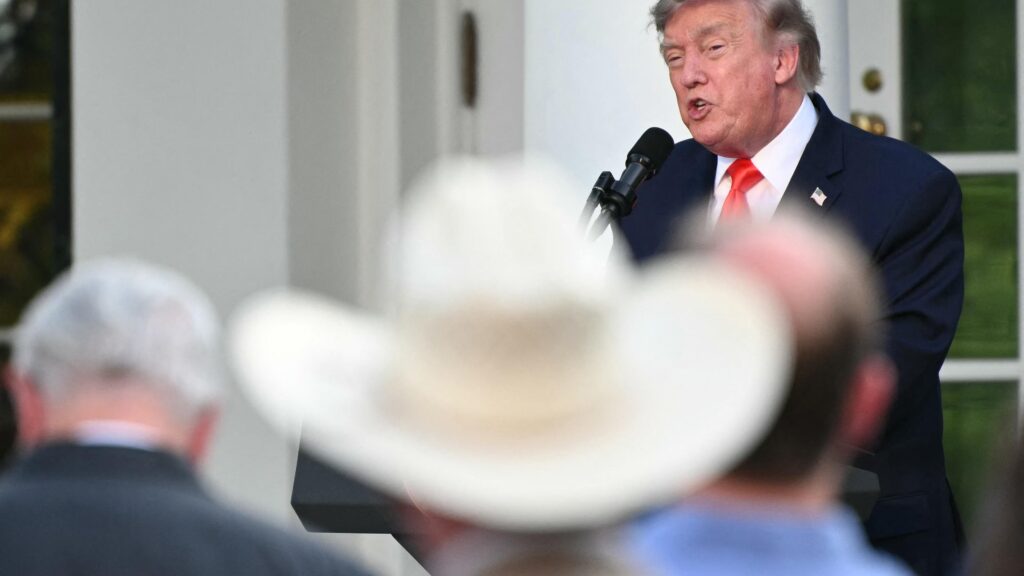
Rising diesel and fertilizer costs, coupled with President Donald Trump’s shifting tariff policies, have made it harder for Oklahoma farmer Brent Rendel to plan future crops. Over the past few months, he says, the political mood among fellow farmers—traditionally some of the President’s most reliable supporters—has begun to shift.
“From my discussions with other farmers, there is a higher level of dissatisfaction with what’s going on with the [Trump] Administration,” says Rendel. “You didn’t used to really see that, but now we’re seeing it and hearing it.”
That dissatisfaction could pose a political problem for Trump and Republicans ahead of the pivotal midterm elections. Trump won 69% of the rural vote in 2024, but an AP-KFF poll, conducted in August, found that 57% of rural voters disapprove of Trump’s handling of the economy. Among rural Republican voters, around one-quarter (27%) disapproved of his handling of the economy—and that group was “substantially less likely” than those who approved to say they were certain to vote in November.
Three-quarters of rural voters described the cost of living in their communities as “fair” or “poor.” A Reuters/Ipsos poll, conducted in June, had already put Trump’s approval rating among rural Americans dropped at a new low of 50%, with just 31% approving of his handling of economic issues.
The findings come as Democrats poll competitively in some traditionally Republican states such as Texas, Iowa, and Kansas. Democratic leaders are also addressing farmers’ economic frustrations in their policy proposals. Senate Minority Leader Chuck Schumer and Sen. Amy Klobuchar, ranking member of the Senate Agriculture Committee, last month unveiled a bill intended to lay the groundwork for “America’s first-ever fertilizer reserve.” American farmers are “getting crushed from all sides by this Administration,” Schumer saidas he introduced the Strategic Fertilizer Reserve Act with endorsements from the National Farmers Union and New York Farm Bureau.
Farmers and agricultural experts interviewed by TIME described four overlapping pressures: Trump’s expansion of low-tariff beef imports, rising fertilizer and diesel costs stemming from a global energy crisis triggered by the Iran war, and tariffs that have increased some production costs while provoking retaliation against American exports.
The impact has been felt by consumers, who have seen a steady climb in grocery prices. In one September AP-NORC poll, 64% of Americans said Trump has “gone too far” on imposing new tariffs on other countries. Trump’s latest tariff row with Canada has prompted further economic concern, particularly in rural states such as Montana, which listed Canada as its largest export market in 2025.
In response, White House spokesperson Olivia Wales told TIME that Trump “has repeatedly affirmed his support for America’s great farmers and ranchers.”
She added: “While the President has been clear about temporary disruptions as a result of the conflict in Iran, the Administration continues to implement the proven Trump agenda of tax cuts, deregulation, and energy abundance to keep America on a solid economic trajectory.”
Trump campaigned on promises to keep the U.S. out of foreign wars and focus on prosperity at home.
The farmers who spoke to TIME say the economic consequences of his policies are now reaching their day-to-day operations.
Beef imports
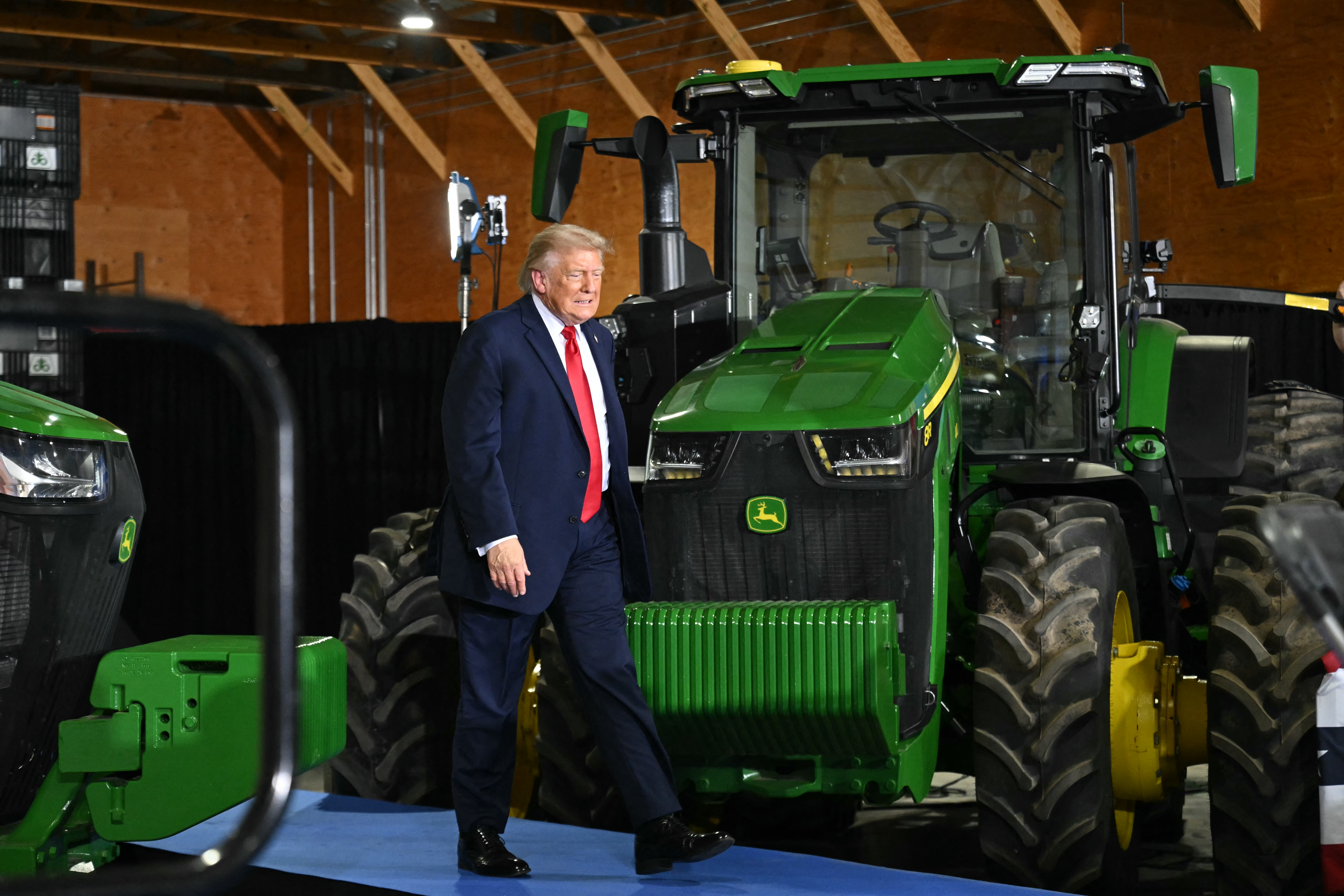
The average price of ground beef in the U.S. has risen sharply since the end of 2020. It climbed from $5.58 per pound in August 2024 to $6.92 in August 2026, according to U.S. Bureau of Labor Statistics data. Shrinking cattle herds sizes, drought and strong demand have all contributed to the increases. At the start of this year, the U.S. cattle inventory hit a 75-year low.
The price surge has created a political challenge for Trump.
“A major part of [Trump’s] campaign to households around the U.S. two years ago, was the fact that they could keep inflation low,” says Joe Glauber, a research fellow at the International Food Policy Research Institute, noting that many rural Americans and farmers are concerned that this hasn’t materialized.
Trump’s 90-day scheme to suspend tariffs on 300,000 metric tons of imported foreign beef to ease the strain on grocery bills went into effect on Sept. 1. The stated intention was for the imported beef to be sold at 25% lower than market price.
But the American Farm Bureau Federation (AFBF), an agriculture lobbying group, has urged Trump to reverse course, citing its own analysis that found the increased imports have not lowered prices for consumers. The AFBF tracked daily prices of 80% lean ground beef at 41 grocery stores in 22 states, starting the day after the proclamation went into effect. In 30 of those 41 stores, ground beef prices cost relatively the same on Sep. 23 as they did on Sep. 2.
Incumbent Texas Commissioner for Agriculture Sid Miller, an eighth-generation farmer and rancher, says farmers have felt the effects of the fallout of the beef import scheme.
“I haven’t talked to one rancher that’s not upset about it,” says Miller. “Just the packers and the processors are reaping the benefits, not the consumer or the cattle rancher. Calves that are going to market now are bringing $300-500 a head less.”
Derrell Peel, a professor of agricultural economics at Oklahoma State University who specializes in livestock and cattle markets, says ground beef has become the “poster child for higher food prices,” making it a focus of the political debate.
“Cattle producers increasingly feel that Trump is willing to throw them under the bus to try to get lower beef prices before the election,” Peel tells TIME. “None of the political actions have had any significant impact on beef prices and there is no quick solution to high beef prices.”
In Florida, Kansas, Kentucky, Missouri, Montana, Nebraska, North Dakota, Oklahoma, South Dakota, and Texas—10 major beef-producing states—Trump has seen a decline in approval rating, according to Civiqs polling data collected between Aug. 21-Sep. 21.
“For Republicans, as a rule, our strongest voting bloc is the rural areas of the United States,” says Miller.
“I think we’re going to lose some statewide races in Texas because of multiple things,” he adds, listing tariffs, diesel fuel costs, and fertilizer prices as other key concerns. “It’s like death from 1000 cuts.”
Recent ICE raids targeting meatpacking plants across Kansas, Oklahoma, and Texas are also causing concern and placing further strain on the U.S. beef supply chain.
“ICE [recently] raided workers from packing plants in Kansas, shutting the packing plants down,” says Miller. “That lowers prices for the cattlemen because the cattle back up, they can’t get processed, and it raises prices for the consumer, because there’s less beef on the market.”
Homeland Security Secretary Markwayne Mullin on Sept. 25 disputed the nature of the raids and said “ICE is not conducting worksite operations in Kansas.” Industry groups said worker absences nevertheless forced some plants to close temporarily.
Fertilizer
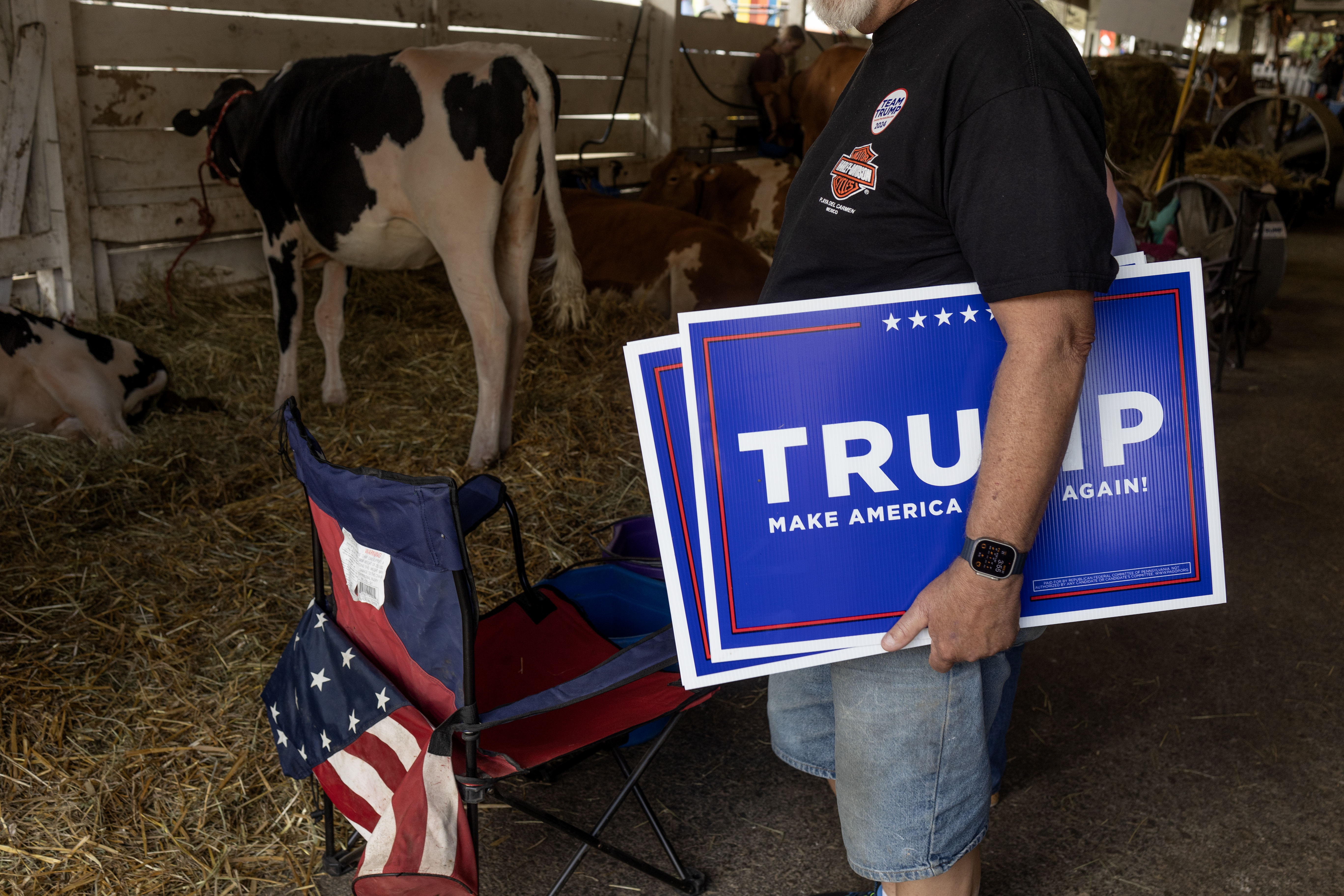
Steve Sheffels, a wheat farmer who serves as president of the Montana Grain Growers Association, says that around 40% of his expenses go towards buying fertilizer. He says that outlook could become “dire” if prices continue to rise.
Rising fertilizer costs, combined with extreme weather in Montana over the past year, has led Sheffels to conclude that “we are not able to produce our crops and make money doing it.”
Sheffels highlights a specific example of how his costs have risen since the onset of the Iran war.
“We just got done seeding this fall, and the cost of starter fertilizer, which has a lot of potassium in it, was just under $1,000 a ton,” he says. “Last year, it was $600 a ton.”
The rise of fertilizer costs is a major concern as crops such as corn and wheat heavily rely on nitrogen fertilizer. Natural gas is key in the production of nitrogen-based fertilizers, including urea and anhydrous ammonia. Exports of liquified natural gas from Gulf countries have been severely disrupted by the war and shipping disruptions have continued.
The shipping of natural gas exports via the Strait of Hormuz “remained effectively suspended” through August, according to data publishedlast month, while other fertilizer product exports “remained sporadic and subdued” across the month.
In April, 94% of farmers responding to a Farmer & Rancher Policy Sentiment survey said the Iran war had impacted their business by raising fertilizer costs, energy costs, or both. While the survey came amid a sharp spike in fertilizer prices across April to June, concerns remain.
The price of anhydrous ammonia was up 9.3% as of late September compared to late February, before the onset of the war. The price of urea is up 7.9% for the same period, according to data from analytics company DTN.

Diesel fuel
In the U.S., the price of diesel hit record highs last month, sitting at a national average of over $6.52 per gallon on Sept. 22, according to the American Automobile Association.
Trump signed an Executive Order last week to waive the off-road requirement for a specific type of tax-free diesel fuel primarily used by the agriculture industry. Temporarily allowing highway use of red-dyed diesel “will put money directly back in the pockets of American farmers, truckers, and workers,” the White House said. While it may help lessen the costs associated with the transportation of harvested goods, Rendel says it “won’t be the solution for our farm economy woes.”
Days later, the President also announced that Russia had agreed to supply over 300,000 tons of diesel fuel to the American and global marketplace.
Prior to these efforts, Trump floated the possibility of a diesel export ban. But he ruled out the idea on Oct. 2 as the G7 group of nations committed to a co-ordinated release of 100 million barrels of diesel alongside other reserves through the International Energy Agency (IEA), in an effort to stabilise world energy markets.
In the meantime, farmers continue to grapple with increased prices.
“Diesel directly affects farm production costs for field operations, planting, harvesting, and for shipping both inputs and outputs,” says Peel. “The impact [when prices are increased] is very immediate.”
In the August AP/KFF poll, 67% of rural voters said they were “very or somewhat” worried about gasoline or other transportation costs.
Rendel is already feeling the impact. Last month, he explains, he had diesel delivered to his farm that cost him over $5 a gallon.
“I know in a lot of the world, that’s probably not ridiculous, but for farm diesel, which is subjected to a lower tax rate in the U.S., that is ridiculous,” he says. “Anytime it goes over $4, it gets painful, and now we’re already over five.”
“Fuel is a real strong pain point for everyone. As long as the war is going on, there’s really not going to be any significant relief available,” he adds.
Crop farmers in particular rely on heavy, diesel-fueled machinery to sow and harvest.
“If fertilizer prices rise, which they have risen over the past year or so, you can really look at your soil fertility and make decisions that can save you some money. When seed prices go up, you can shop around and maybe find less expensive seed or reduce your seeding rates,” Rendel says. “But fuel’s not that way. My combine, when I’m harvesting soybeans, uses about 200 gallons of fuel per day, and that doesn’t change.”
Diesel is also essential for transporting goods once they are harvested. “I’ve got to deliver the grain to the buyer. The fuel is a very inflexible expense,” Rendel says, citing a lack of alternatives.
Sheffels is feeling the impact of transport costs as a result of diesel fuel prices, too. “We’re having to pay more to get our grain moved around in the short term,” he says. “In the long term, it’s going to have a huge [financial] impact because of the distances.”
Tariffs
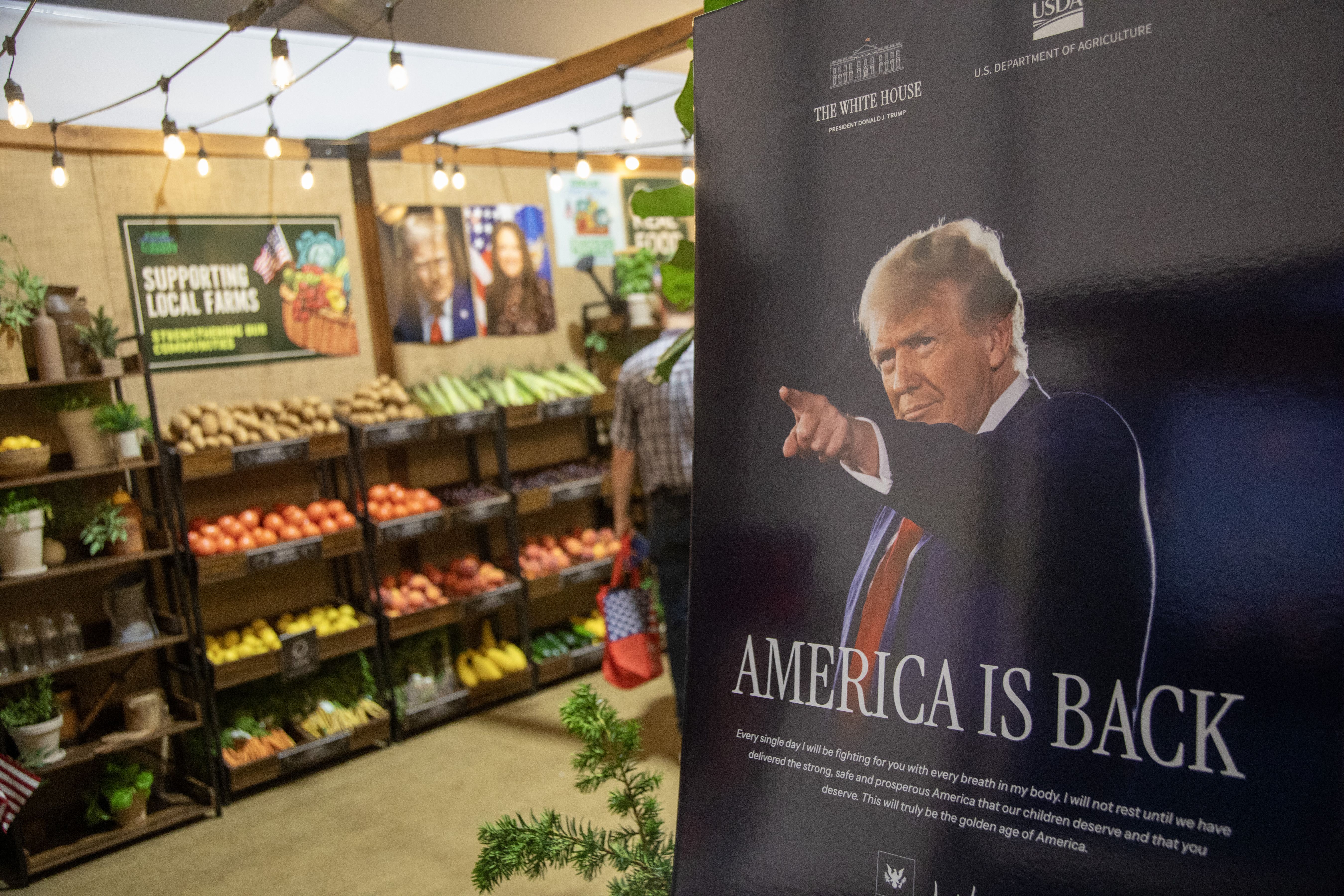
Trump has imposed rounds of tariffs since returning to the White House, prompting retaliatory measures from countries including China and Canada.
The renewed trade war with Canada has added to concerns for farmers in the U.S., after negotiations between the two countries collapsed in August. Canada’s retaliatory tariffs on U.S. goods took effect last month, with Canadian Prime Minister Mark Carney matching the levies imposed by the Trump Administration. Canada’s counter tariffs apply to products covering $27.6 billion in imports from the U.S., focusing on sectors such as steel, dairy, appliances, agricultural equipment, pulp and paper, among other products.
“The U.S. and Canadian economies are highly integrated,” says Peel. “There are no winners in trade wars in general and especially in this one with so many components that will be impacted.”
Overall, tariffs on key production inputs have imposed roughly $2.6 billion in additional costs on crop farmers from February 2025 through July 2026, according to data from the Association of Equipment Manufacturers.
Following Chinese President Xi Jinping’s visit to the White House in late September, Beijing agreed to drop tariffs on various U.S. agricultural products. However, soybeans were excluded from the list, and will remain subjected to 10% tariffs, offering little relief to farmers like Rendel.
Soybeans remained the top U.S. agricultural export to China in 2025, even as shipments fell by roughly three-quarters between 2024 and 2025 amid Trump’s implementation of wide ranging tariffs on Beijing.
For farmers already facing higher diesel and fertilizer costs, shrinking export markets create pressure at both ends of the supply chain. “You’re hitting people at both levels, at the input level, and then look at the prices they get for their commodity if they’re not able to export it,” says Glauber, from the International Food Policy Research Institute.
Sheffels says the repeated policy shifts are disruptive for farmers across America.
“The level of uncertainty that we’ve had to live with is completely unacceptable,” he says. “It’s impossible to make investment decisions when you don’t know what the rules are going to be five minutes from now, let alone in six months.”
With the midterms fast approaching, the question for Republicans is whether that frustration will change how some farmers vote—or whether they vote at all.
The post How Trump’s Policies Are Testing Farmers’ Loyalty Ahead of Midterms appeared first on TIME.