It was a bright blue Thanksgiving Day. I was standing in a park listening to my kids play when I opened a TikTok video of a woman I had never met. She showed my faculty profile picture and contact information, and said that I had orchestrated the murders of four students at the college where I work, the University of Idaho. She claimed I was covering up an inappropriate romantic relationship with one of the victims.
I didn’t know any of the students, who had been killed only 11 days before I saw the video. The accuser knew nothing about me, lived in Texas and used tarot card readings as the only basis for her claims.
Over the next several weeks, while I was grieving with the rest of my community, this TikTok influencer uploaded over a hundred videos declaring that I had committed a quadruple homicide. The videos got millions of views. I was overwhelmed with calls, messages, comments and emails, many of which were disturbing or threatening. And I could have been anyone.
You cannot stand in digital spaces. I was not hit by a bus or punched in the face. Yet I saw up close how the online world can come to feel more real than the physical one. Even after the actual murderer was arrested and convicted, the accusations against me continued. And even though these outrageous claims were made online by someone I had never met, they were amplified by unsuspecting viewers and algorithm-driven platforms, and the harm seeped into every aspect of my life. I came to realize that all of us are responsible for the online world we inhabit, and all of us must fight its tendency to propagate lies.
Of course, the people around me knew these claims were ridiculous. Yet the gap between my knowledge of the truth and the falsehoods people were willing to entertain created a kind of purgatory. I desperately wanted to spend time with my colleagues, students and friends as we grieved, but I became isolated. I stopped going to campus, moved my course online and ceased using social media. I stopped sleeping well, and instead, I walked the hallway outside my children’s rooms, utterly terrified that they would be harmed by the person hyperfixated on me, any of her believers or the person actually responsible for the murders.
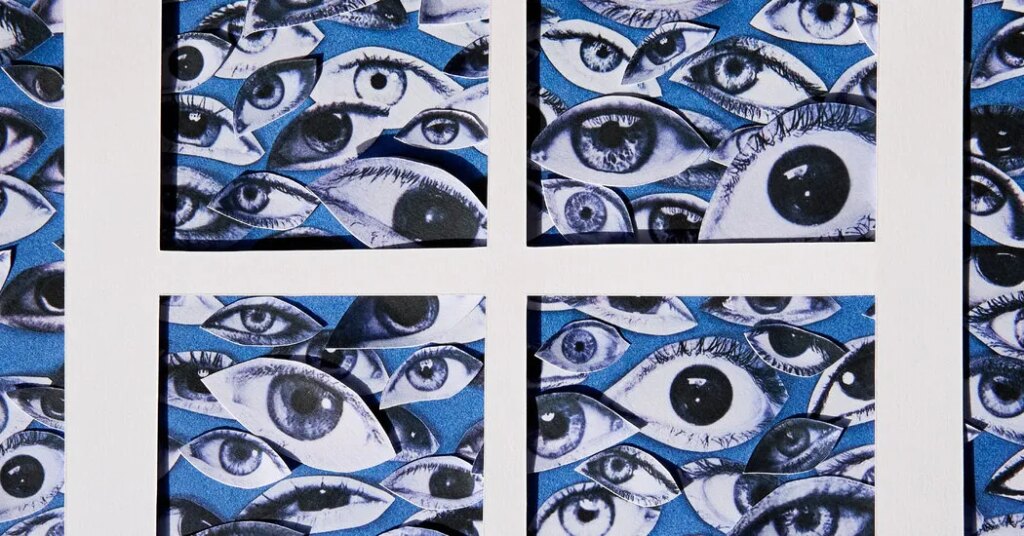
With the increased media attention, my relationship to my house shifted. It was as if our walls had been removed and anyone could peer inside. Doors and windows had new and frightening meanings. I sensed that perhaps I was unraveling, disintegrating — that I was no longer a real person. If my face and name were not my own, who was I?
As a professor of history, I know that technologies that disseminate speech have always reshaped truth. The printing press allowed the words of revolutionary religious leaders like Martin Luther to splinter the power of the Catholic Church by convincing people they had a right to read the word of God. The radio helped fuel the rise of fascism across the U.S. and Europe.
Digital platforms rewrite our reality in a much more profound way. It takes a long time to uncover the truth through historical analysis, and even then, it’s often at best partial. Social media destroys that process. Even though many content creators hold themselves to high standards of research, they are not professionally beholden to official codes of conduct or review. Stories that should be handled with care and respect become entertainment. Perhaps that’s why — despite an arrest, guilty plea and conviction in the students’ murders — the years passed and the accusations against me persisted.
No one needed to search for the accusations against me — the words were simply fed to them by TikTok’s algorithm. Endless scroll, autoplay videos and predatory algorithms give viewers the same levels of dopamine as other addictive substances. And with every view, a creator gets closer to securing sponsors or getting paid by the platform.
Against these incentives to distort truth, we need a countermovement. One option is to opt out of digital spaces. After decades of unregulated experimentation, many people — particularly younger people — are choosing digital detoxes, landlines and MP3 players. We can choose to scroll past stories that cannot be verified and only follow creators who are transparent about their research.
We can try to hold platforms accountable for the harmful content they spread. A federal law, Section 230, protects online platforms from many defamation lawsuits, meaning that only individuals are liable for misinformation, even if a platform helped spread it. Proposals that would reform Section 230 range from adding exceptions for extreme cases to revoking immunity for social media companies altogether. If the companies making billions of dollars off these platforms won’t protect us, what other recourse do we have?
We can sue. Defamation law exists to remind people that the freedom to speak includes the duty to speak responsibly. Having successfully sued my accuser, I will not pretend this is an easy or simple path. But it is necessary as a warning to other bad actors.
We can also share our stories. To anyone who has been targeted with ugly or untruthful words on these platforms: Do not feel ashamed. You are not alone. There are more and more people among us every day. Do not bear this injustice in silence.
It takes commitment to defend the truth, but then again, it always has. In 1892, a white mob descended on the offices of the Black anti-lynching activist and suffragist Ida B. Wells to destroy her printing press, thinking that might silence her. They did not succeed. She instead published her most famous anti-lynching pamphlet the same year.
A little over a decade later, in 1903, Annie Oakley, the famed sharpshooter, fought 55 libel cases to defend her reputation when newspapers ran a false story that she was caught stealing to support a cocaine habit. She would spend years fighting one of the most powerful men in American media to clear her name. Ida B. Wells and Annie Oakley probably did not agree on many issues. But they believed in the power of their own voice and the right to set the record straight.
We are all responsible for the world we create. I had many goals for my life. Being publicly accused of heinous crimes I did not commit was not one of them. I still manage the ongoing consequences of those accusations every day. Years of sleeplessness and stress have resulted in physical and psychological issues that will shape the rest of my life.
But those who have been subjected to unchecked online harm need to speak, to scream and to rage. If we cannot publicly endure the pain and humiliation that comes with being split open for all to see and comment on, then we cannot fight back, and our children will inherit a world designed for misinformation. I want my children, my nieces and nephews and my students to live in a world of hope and truth.
So, before you, too, are accused of murder on the internet, question the content you are consuming or creating. Ask yourself if the platforms that profit from enabling the spread of unverified information should continue to remain insulated from accountability. And remember that what seems like harmless entertainment could shape not only individual lives, but the course of history.
Rebecca Scofield is a professor of history and chair of the Department of History at the University of Idaho.
The Times is committed to publishing a diversity of letters to the editor. We’d like to hear what you think about this or any of our articles. Here are some tips. And here’s our email: [email protected].
Follow the New York Times Opinion section on Facebook, Instagram, TikTok, Bluesky, WhatsApp and Threads.
The post A TikTok Tarot Reader Accused Me of Murder. My Reality Unraveled. appeared first on New York Times.