THE CASE OF THE AUTOGRAPHED CORPSE: A Medicine Man and a Mystery Writer in Pursuit of Justice, by Jack El-Hai
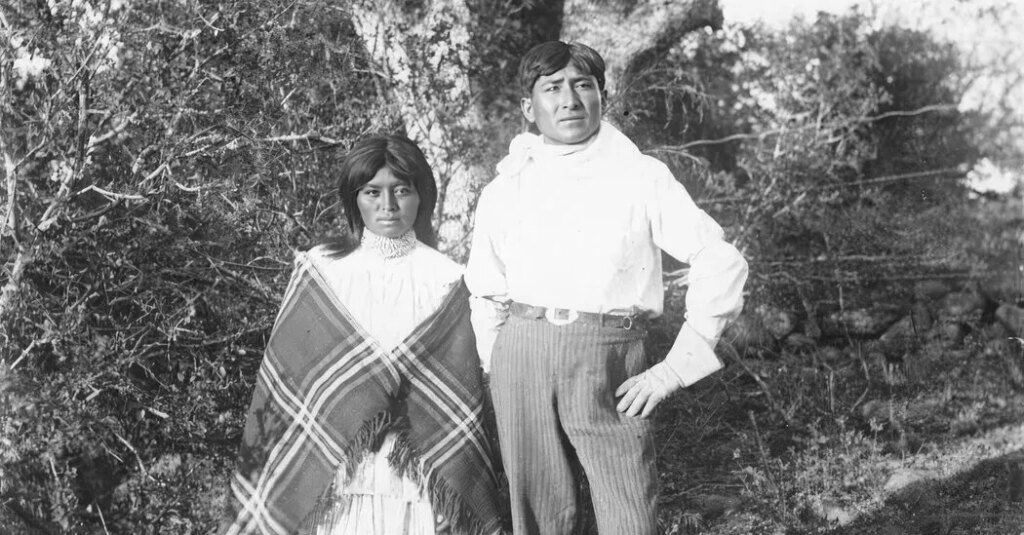
On Feb. 18, 1933, an Apache leader named Silas John Edwards ventured out for an evening on his Arizona reservation. A charismatic faith healer, bootlegger and womanizer, Edwards was seen arguing with his wife, Margaret, over an indiscreet affair he was carrying on with her teenage cousin.
The next afternoon, children discovered Margaret’s bludgeoned corpse in a ravine; blood-smeared rocks lay nearby, including several etched with the initials “S.J.E.” Convicted of murder, Edwards was dispatched to a bleak federal penitentiary in Washington State.
And there he might have languished had it not been for Erle Stanley Gardner, the lawyer turned author whose signature creation, Perry Mason, specialized in defending the wrongly accused.
In “The Case of the Autographed Corpse,” Jack El-Hai, who first wrote about the case in 2020, grippingly recounts the story of the murder and Gardner’s efforts to exonerate Edwards.
Here, El-Hai reveals how a series of intense encounters between the celebrity author and the healer reopened a closed case, turning a standard legal crusade into a deeply personal rescue mission.
Most of the tale unfolds on the starkly beautiful terrain of eastern Arizona. After helping the U.S. government defeat Geronimo in 1886, the White Mountain Apache, to which Edwards’s family belonged, had received permission to remain on part of their ancestral territory.
But reservation life brought its own devastation. Authorities pressed the Apache to assimilate into white society, forcing them to take on Anglicized names and abandon their cultural practices. And diseases such as whooping cough and influenza swept through the settlement’s cramped brush shelters, claiming lives with terrifying regularity.
The son of a medicine man, or “diyiin,” Edwards attracted a large following across Apache land in the early 1900s by introducing a syncretic blend of animism and Christianity. Ceremonies sometimes involved coiling live rattlesnakes around the bodies of the sick and the lame and sprinkling them with a sacred pollen gathered from cattail rushes, while the congregation recited prayers Edwards claimed he received in a vision. Some white officials feared that his movement, “Holy Ground,” could slow Native American assimilation and even encourage a revolt against the U.S. government.
Edwards was hardly a pristine character — he had assaulted his wives in drunken rages and had many extramarital liaisons, and was jailed repeatedly. Yet many saw his conviction as an attempt to silence a voice of defiance and Apache identity.
Edwards’s defense attorney, Daniel Rienhardt, took the case pro bono. He ridiculed the canard that Apache criminals made a habit of carving their names at crime scenes to ward off vengeful spirits. And he argued that blood found on Edwards’s clothing came from grasping his wife’s body in grief after it was carried home. Even so, an all-white jury deliberated for just two days before finding the shaman guilty of first-degree murder.
El-Hai draws a vivid portrait of Gardner, a combative lawyer who had developed a reputation for clever courtroom tactics and fighting for the underdog. In the 1920s, Gardner began churning out potboilers for U.S. detective magazines, and earning the equivalent of half a million dollars a year in the depths of the Depression.
Perry Mason, introduced in 1933, made him famous. He bought a ranch near the Pechanga Indian Reservation east of San Diego and, in the late 1940s, took on a new project: championing the wrongly convicted in a column for Argosy magazine called “The Court of Last Resort,” traveling the country with a team of forensic experts to investigate the cases firsthand.
El-Hai’s early chapters linger a bit too long on rattlesnake rituals and pollen sprinkling, but the story gathers momentum after Edwards, at his lawyer’s suggestion, dispatched a poignant letter to Gardner: “Up ’til now you have never heard of me,” he wrote, but he had been “convicted of a crime I did not commit.”
The directness of Edwards’s plea — and Gardner’s fascination with Native American culture — prompted the writer to take a closer look. Meeting Edwards at the Arizona prison camp to which he’d been moved, Gardner received a ceremonial dusting of pollen and came away impressed by Edwards’s stoicism.
Between novels, Gardner visited Arizona twice more, retracing Edwards’s steps the night of the murder, re-interviewing witnesses, bolstering his alibi, even identifying the likely killer. Faced with the certainty of Edwards’s innocence, the government released him after 18 years.
Edwards returned to the reservation, where he gathered his remaining followers and continued practicing his religion until the end of his life. Gardner’s work would serve as an inspiration for the Innocence Project, the legal organization that uses DNA evidence to overturn wrongful convictions.
In chronicling their unlikely alliance, El-Hai movingly shows how a real-life story of prejudice and perseverance provided the pulp-fiction master with his ultimate plot.
THE CASE OF THE AUTOGRAPHED CORPSE: A Medicine Man and a Mystery Writer in Pursuit of Justice | By Jack El-Hai | Pegasus Crime | 224 pp. | $32
The post How a Pulp Fiction Master Found the Ultimate Real-Life Plot appeared first on New York Times.