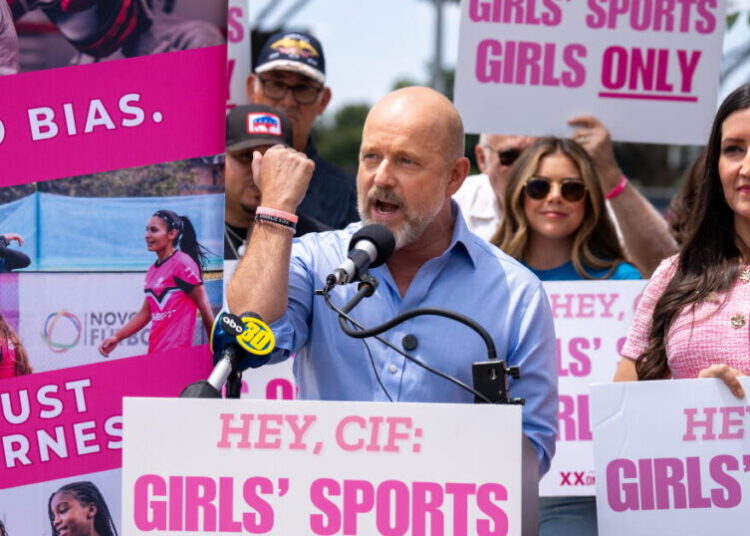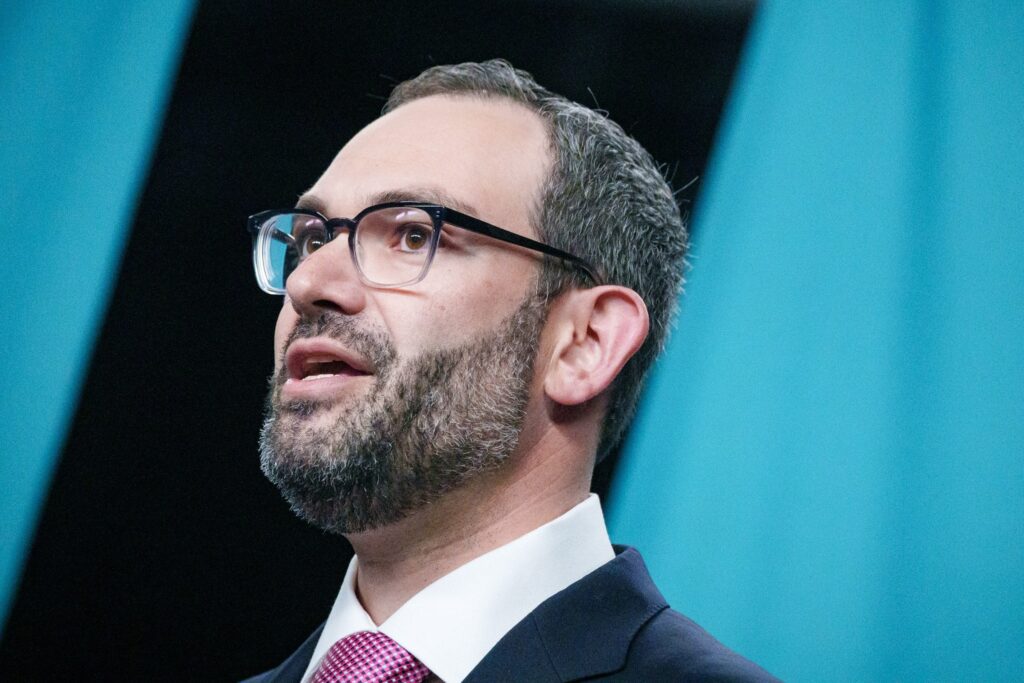
Election Day 2020 was fast approaching, and Alexander Kolodin wanted a spot inside the Arizona Republican Party’s war room.
Kolodin, an attorney who had lost a GOP primary for the state Senate that summer, was seen as something of a gadfly by some in the state GOP and hardly seen at all by others. But the Republicans running the show allowed him into an auxiliary war room on another floor of the hotel, distanced from the real action, one party leader recalled. People there “could say they were in the war room,” he said. “If we needed something, then we’d call.”
Kolodin didn’t wait to be summoned. On Election Day, complaints began flooding in about ballots marked with Sharpie markers. Soon, supporters of President Donald Trump were blaming Sharpies for what looked like a loss in Arizona.
The Arizona Republican Party had investigated the matter and determined that Sharpies had not in fact caused problems. So its leaders were surprised when they learned that Kolodin was filing a lawsuit demanding that voters who used Sharpies be given a chance to vote again.
The suit was filed the day after the election, the first of several challenges Kolodin championed over the 2020 results. Each failed in court, and they led to sanctionsfrom the state bar association. But Kolodin’s embrace of these claims catapulted him from a little-known attorney who badly lost his first campaign for office to a leading figure in Arizona politics and this year’s Republican nominee for secretary of state.
If he wins, he will be responsible for running the state’s elections in 2028, when Arizona is expected to once again be a battleground in the presidential and Senate contests. Other election conspiracy theorists hold high office, but a victory here would mark the first time someone actively involved in attempting to subvert election results would be elected to run a state’s elections.
Arizona was a reliably Republican state just a decade ago, and then seen as a competitive battleground. But in recent years, the state GOP has repeatedly nominated candidates who have promoted Trump’s false claims, only to see them lose in the general election. That includes Blake Master, who lost a Senate race in 2022, and Kari Lake, who lost races for governor in 2022 and Senate in 2024, even as Trump won the state.
This fall, besides Kolodin, two other Republicans who acted to subvert the 2020 election results are also on the ballot: Andy Biggs for governor and Warren Petersen for attorney general.
Some in the party predict a wipeout is coming and worry Democrats will consolidate and expand their power for years to come if Republicans continue this pattern.
“The election denialists have dominated this party for six years,” said one GOP strategist. “If we keep doing this, we will keep losing.”
Kolodin is not the only person who has advanced the lie that the 2020 election was stolen and is now running to oversee elections in a presidential battleground state. In Nevada, former state lawmaker Jim Marchant, the GOP nomineefor secretary of state, claimed that both he and Trump were victims of election fraud in 2020 and says being called an election denier is a “badge of honor.” In a recent interview, Anthony Forlini, Michigan’s GOP nominee for secretary of state, wouldn’t say who won the presidential election in 2020. “Everyone wants to trip up people on that whole question,” he said.
In Arizona, endorsing and promoting Trump’s conspiracy theories were essential to Kolodin’s rise. They brought him to the center of the action, drew admirers in the GOP base and won allies in powerful places.
“Alex definitely stepped up when there were very few who could or would,” said Tyler Bowyer, CEO of Turning Point USA. “He easily could have been, ‘Nah, I’m not going to help.’ No one would know who he was and he certainly wouldn’t be running for secretary of state now.”
The cases increased Kolodin’s public profile, but it came with a price, said Tyler Montague, president of the Arizona Public Integrity Alliance, a conservative think tank, who has known Kolodin for more than a decade and sometimes worked with him.
“He found a path to notoriety and surrendered some of his political thinking to Trump, and that combination led him to where he’s at,” he said. “It’s a cultlike mentality — uncritical acceptance of what the leader says. It’s hard for him to get out of it because it’s also the source of his status.”
After fighting for Trump following his 2020 loss, Kolodin was elected to the Arizona House in 2022. There, he earned a reputation as a fighter for ultraconservative principles, but also as an obstructionist who has incensed fellow Republicans as well as Democrats. Two GOP committee chairmen asked for him to be removed from their committees, three people familiar with the situation said, speaking on the condition of anonymity to candidly discuss a personnel matter.
Kolodin did not respond to requests for comment or to a list of detailed questions.
In other interviews, he has emphasized his support for election integrity, attacked his opponent’s record and tried to downplay the events of 2020.
“Election integrity has become the defining civil rights issue of our time,” he wrote in a post on Xthanking Trump for his endorsement. “We must protect the sanctity of every lawful vote, and we must restore confidence in our elections for every lawful voter, regardless of political party.”
Losses fuel a rising star
Kolodin was raised in Arizona and returned to the state after earning a law degree at the University of Pennsylvania in2013. He set up his own small law practice, taking a series of cases where he challenged government and election procedures, often on hot-button topics of public interest that landed in the news.
Among them: He demanded public records in a sports arena deal. He triedto kill mask requirements in a public school district during the pandemic. And he worked to kick a congressional candidate off the ballot because of an error on her nominating petitions.
Kolodin made his first run for political office in 2020, mounting a mostly self-funded primary campaign against a Republican incumbent for a state Senate seat. During that campaign, his opponent latched on to Kolodin’s involvement in a 2014 defamation lawsuit where he represented a liberal activist who had collected and mailed a huge pile of filled-out ballots. Kolodin lost the case, and also badly lost the GOP primary.
But he continued his work on election issues. That fall, he scored a victoryin a dispute with Adrian Fontes, who at the time was running elections in Maricopa County, home to Phoenix and the state’s largest county. Fontes had told voters that if they made a mistake marking their ballot, they could cross it out and fill in the proper oval. Kolodin’s suit argued that this would open the door to allowing people who handle ballots to change votes after the fact. His suit forced a reversal by Fontes, a Democrat who is the current secretary of state and Kolodin’s opponent this fall.
But when Election Day arrived, his profile began to climb with his Sharpie lawsuit. The allegations, first voiced in remote corners of Twitter, were soon amplified by conservative mega-voices such as Charlie Kirk of Turning Point USA. By 10 a.m. the next day, there were 1,200 tweets per minute on Sharpies, one analysis found.
Kolodin asked Montague, the conservative think tank president, if he would be a plaintiff in his Sharpie suit, Montague said. He declined, telling Kolodin there was nothing to these claims. The rumor was based on concerns that using a Sharpie marker would invalidate a ballot because the ink could bleed through and interfere with ballot marks on the other side of the paper. In fact, as the state GOP had discovered, the columns on the other side of the paper were aligned so that any bleed through would not impact other votes.
Nonetheless, Kolodin “charged forward,” Montague recalled. “He seemed to genuinely believe in the various conspiracy theories going on.”
One Republican attorney active in the party said Kolodin pursued the suit despite widespread opposition among Republican strategists in D.C. and Arizona. “It felt like he was trying to elbow his way into the conversation and, frankly, the limelight,” he said.
The case was quickly dismissed, but within weeks, Kolodin was back with another, more sweeping lawsuit, demanding that the election results be set aside due to “massive election fraud.”
The suit — one of several filed in states Joe Biden won — was conceived by national figures including Trump ally Sidney Powell, who promised these challenges would “release the kraken” and prove Trump actually won the election. She needed an attorney to carry the case, but no prominent Arizona election lawyer, including those who had worked for the Trump campaign and the Republican Party, would take the case, said three people familiar with the conversations inside GOP circles. Kolodin stepped in.
“Most of the Republican attorneys saw the need to be as far away from this dumpster fire as you could possible get,” said one of these people. “Were you to continue to pursue these cases you could be jeopardizing your law license.”
A federal judge found the allegations “sorely wanting of relevant or reliable evidence” and in December 2020, dismissed the case.
Despite the courtroom setbacks, Kolodin was establishing himself as Arizona’s go-to attorney when someone wanted to challenge election results. He represented Cyber Ninjas, which in 2021 ran a chaotic auditof 2020 ballots in Maricopa County (and ultimately found Biden’s marginslightly bigger than official results indicated). In 2022, he representeda group that monitored ballot drop boxes and filmed people voting, claiming to be hunting for fraud. And his client list included people who falsely presented themselves as 2020 electors.
In 2023, the State Bar of Arizona cited three lawsuits Kolodin filed, including the Sharpie suit, as it formally admonished him for violating his duty to the legal profession, the legal system and the public. The state bar sentenced him to 18 months of probation and required him to take five legal ethics courses.
But while Kolodin was accumulating one loss after the next, his public profile was rising. In 2022, he again ran for the legislature, seeking a House seat representing Scottsdale, a suburb of Phoenix. His campaign material highlighted his role in many of these actions.
And unlike in summer 2020, this time he won.
‘Outrageous lies’
Kolodin immediately made his mark in the Capitol, irritating people in both parties with unpredictable personal and legislative behavior, according to current and former lawmakers and others familiar with the situation.
He became known for filing voluminous numbers of bills — 74 last year — and also for a proposal last year that would bar any legislator from introducing more than 10 bills per year. He backed a repeal of the ban on machine guns, silencers, sawed-off shotguns and pipe bombs. He was the only legislator of either party to vote against a “stolen valor” bill making it a crime to impersonate a veteran. (He said it would criminalize alleged lies by politicians, setting a dangerous precedent.)
Several current and former GOP lawmakers described him as disruptive, unwilling to work with others and insistent on having things his way. Last year, he called any legislator, including some Republicans, who supported a particular version of a budget bill “an enemy of the people of Arizona.”
“He says things out loud that are nonsensical — objecting to motions, attempting to change procedure in a nonsensical way, outbursts in a heated debate on the floor,” said one Republican who worked closely with Kolodin. His style, he said, is to “fly off the handle” and “shoot from the hip.”
On the campaign trail, Kolodin touts bipartisan successes, and in 2024, he helped reach a bipartisan elections reform package, which aligned post-election timelines for steps such as certification with new federal deadlines.
But last year, he blew up chances for a bipartisan agreement with Democratic Gov. Katie Hobbs’s office on another elections measure by insisting on elements that the governor would never agree to — such as requirements making mail voting harder — and being unwilling to compromise, according to two people involved in the process.
“He has particular views on certain issues and it’s challenging to reason with him or find common ground,” said Bo Dul, an Arizona election attorney who served as general counsel to Hobbs. “Often, those views are not grounded in fact or how election administration actually works and, as a result, he would often insist on positions that are just nonstarters.”
No deal was reached. Instead, the GOP legislature voted to put its proposal before voters this fall. If approved, it would, among other things, require mail-in voters — who make up about 80 percent of all voters in the state — to show identification. It’s unclear how or where people voting by mail would be able to show ID.
Kolodin has bemoaned failure to advance another election priority: requiring every voter to repeatedly verify their address to vote by mail. In an interview last year, he said that this reform could have helped increase Republican vote share in Arizona.
“It could have flipped this state red for a generation. So I was just so incredibly disappointed to see it get killed,” he told“The Jeff Oravits Show.”
Kolodin’s panache for irritating his party and for advancing Trump’s unfounded claims collided when a group of Arizona Republicans was criminally investigated, and then charged with conspiracy and fraud, for declaring themselves to be the state’s representatives to the electoral college in 2020 when Biden actually won Arizona.
In 2024, Kolodin, who represented some of these so-called fake electors, argued that the Arizona Republican Party’s insurance policy should cover some of the electors’ legal fees. He wrote the company that these people were officials of the Arizona Republican Party, according to a letter viewed by The Washington Post.
The insurance company wound up paying out the policy’s $1 million maximum toward their legal defense, documents show, some of which went to a law firm where Kolodin worked.
In January 2026, then-Arizona Republican Party Chairwoman Gina Swoboda informed the party’s executive committee that he had done this without consulting her or other party officers and that the result was a 10-fold hike in premiums.
“We became aware of this matter in October 2025 when we inquired why our renewal premium was so high,” she wrote. She said the party then made the “difficult but necessary decision” to drop coverage for 2026. That meant the officers of the party were vulnerable if they faced damages claims or lawsuits.
This summer, Kolodin easily won the GOP primary for secretary of state, beating Swoboda, who had left her position as party chair earlier this year. He is running on election integrity, promising to implement “robust security protocols” and restore confidence in the elections system.
But some in his party worry Kolodin’s history of questioning election results could harm Republicans. “He is making outrageous lies about very important things related to the office that he is seeking,” said Ken Bennett, a former Republican secretary of state and state senator in Arizona.
“As long as the Republican Party nominates people who are too far to the right of the mainstream … those nominees are going to have trouble in the general election,” Bennett said of Kolodin.
The events of 2020 loom large in Kolodin’s race. During a spirited “candidates in conversation” on Arizona public television with his opponent, Kolodin was asked directly if he was an “election denier.”
“That’s absurd,” he replied. “I have one of the greatest bipartisan track records of working on elections issues of anybody in recent Arizona history.”
Pressed again as to whether he was an election denier, Kolodin answered, “No.”
Followed by reporters into the hallway after the event, he was asked directly if Trump won Arizona in 2020.
“I think I answered that question,” Kolodin replied.
Asked again, Kolodin said, “Look, Joe Biden was the president. Congress said that Joe Biden won. Congress called the race.”
As for who won Arizona, Kolodin refused to say, asserting that he had already answered the question. After about a minute of this back and forth, the elevator arrived and Kolodin stepped in. Reporters kept pressing: Was the ballot count in Maricopa County accurate?
“It’s time for us to go,” Kolodin replied. He insisted again that he had already answered, and the elevator doors closed.
The post Arizona’s GOP keeps embracing election deniers who lose. It could happen again. appeared first on Washington Post.