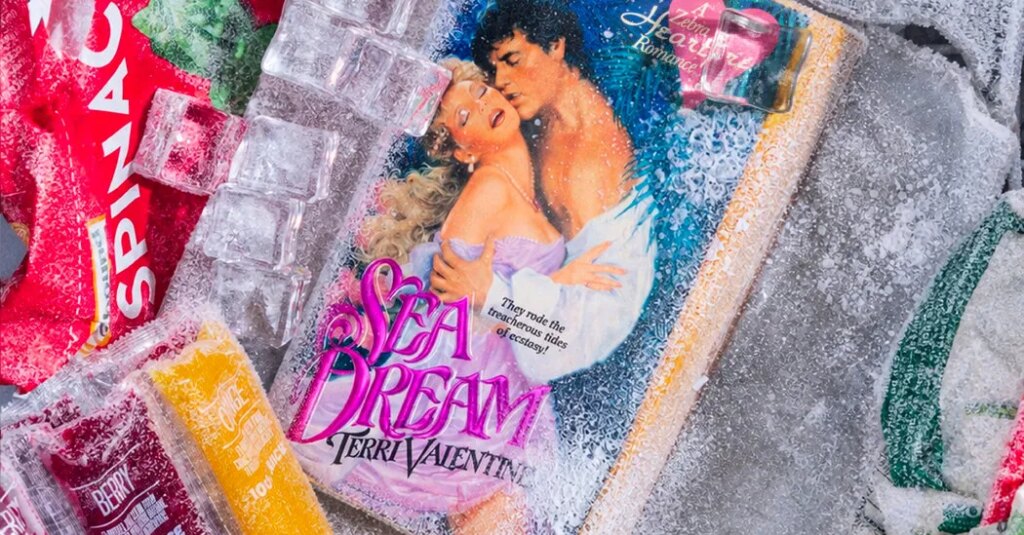
Maybe it’s been a while since you revisited that favorite novel. Or there’s a book you’ve always wanted to read, and you finally have time. You settle in, flip open the cover, and there it is: a tiny critter skittering across the page. Then another. Or, you spot distressing signs that something has been eating — and living in — the pages.
Book lice are a thing. So are silverfish — those small, slithering insects attracted to starchy materials found in books and their bindings. Mold can move in. So if you buy a book at a garage sale or secondhand store, or pluck one off a stoop or from a Little Free Library, you may want to take some preventive measures.
Which brings us to the freezer.
Logan Spurgeon, the author of “Hinterland” and “Sourwood,” started freezing his books after bringing several home from a thrift store with a noticeable smell. While researching ways to deodorize them, he found advice on examining and freezing books to get rid of pests.
“They recommended checking between the pages and near the binding for evidence of book lice and freezing the books in order to kill any pests, which happened to be the remedy for odors as well,” Spurgeon said. “So into the freezer they went.”
He later posted a video about the practice, and was surprised at the attention it received. Some viewers were encountering the idea of book lice for the first time. Others debated whether freezing would actually work.
The answer is yes. Kristi Westberg, interim head of preservation and conservation at the Huntington Library, Art Museum and Botanical Gardens in San Marino, Calif., confirms that freezing is an effective way to deal with bugs in books.
We tend to think of caring for a book as simple: Read it, shelve it, don’t spill a drink on it. But there’s much more to know about keeping your books in good shape.
There’s more to freezing a book than just tossing it next to the ice cream.
Books should be placed in a sealed bag before freezing. That keeps insects away from food and prevents condensation from forming on the book as it thaws.
Westberg recommends leaving books in the freezer for at least three days, and up to six days for extra caution. For serious infestations, a second round of freezing can be worthwhile, because eggs laid by certain insects may survive the first freezing session and hatch later.
But freezing solves only one part of the problem. “Freezing addresses the pests, but if you don’t fix the source of the problem, they could return,” Westberg said.
Don’t keep your books in the garage!
Humidity is a particular concern because moisture can encourage mold growth, and mold and fungi can, in turn, provide food for book lice.
Westberg’s advice is simple: Avoid storing books in attics, basements or garages, where temperature and humidity can fluctuate. Instead, aim for a stable environment — roughly 60 to 77 degrees Fahrenheit and 40 to 60 percent relative humidity.
For books that are especially meaningful or valuable, take an extra step: Put them in a box. Boxing a book is an easy way to extend its life, said the book conservator Jeff Peachey, owner of Peachey Conservation in New York.
“You can send in your measurements for the book, and they basically ship you a flat, archival, custom-made pizza box,” said Peachey, who recommends ArchivalBoxes.com. The boxes can be folded and don’t require adhesive.
“It’s a really great way to insulate your books from the light, mitigate some environmental changes and also just give it some physical protection all in one,” he said. “Two thumbs up for protective enclosures.”
Before you buy a thrifted book, give it a sniff.
At Housing Works Bookstore in downtown New York, where secondhand book sales help fund the nonprofit agency’s services, the quality and innovation manager Mike Savage oversees volunteers who assess every donated book.
Books with obvious water or mold damage — in the form of discoloration, swelling or stuck-together pages — are recycled rather than put on the shelves, Savage said. But he’s careful to distinguish books damaged by mold from those with fading from sun damage or that give off the characteristic smell of an older book.
For readers trying to tell the difference themselves, a musty or mildew-like smell is worth noting, particularly if it comes with visible spotting or evidence of water damage. Smell alone isn’t a definitive test, but it can signal moisture exposure. If a used book smells distinctly musty, separate it from your other books.
Not every secondhand find comes with a hidden problem. But for those that do, well, the solution is as near as your kitchen.
The post Should You Put Your Books in the Freezer? appeared first on New York Times.