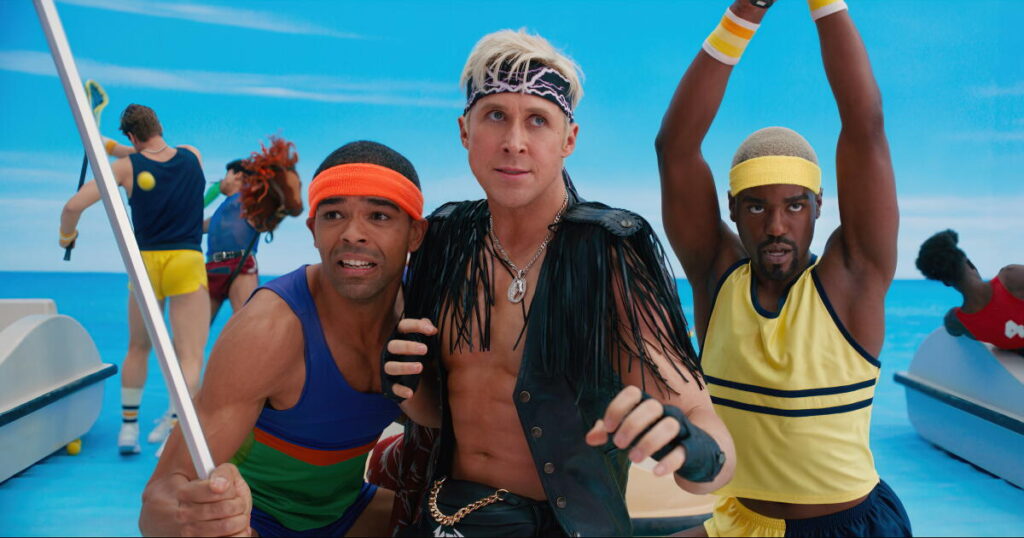
With Barbie sales slipping, Mattel is looking to its characters and games to build a new revenue stream: water parks.
The El Segundo company has been trying to find more ways to turn its roster of beloved toys into bigger moneymakers. Former Chief Executive Ynon Kreiz, who spearheaded a campaign to upgrade earnings from Mattel’s intellectual properties, just stepped down amid investor disappointment.
As Roger Lynch, the former CEO of Condé Nast, takes over as Mattel’s chief, he inherits a struggling strategy to turn Mattel’s portfolio of toys and games into entertainment franchises and experiences that generate revenue away from the toy aisles.
One of the latest bets to reduce dependence on Barbie is Mattel’s first Wonder Indoor Waterpark, which is slated to open at the end of 2027 in Bellevue, Neb.
The park is expected to cover roughly 100,000 square feet and have a retractable roof for year-round operation. Construction is underway in a mixed-use area designed to boost tourism in Omaha’s southern suburbs.
Some planned attractions include a Barbie activity pool and a Hot Wheels slide tower. It will also feature a lazy river that floats past scenery inspired by Mattel Games, including UNO, Rock ‘Em Sock ‘Em Robots, and Magic 8 Ball.
A Mattel spokesperson said the company is exploring opportunities to bring such interactive experiences “beyond traditional destination markets.”
Outside Nebraska, the company is planning water parks in Florida, Illinois and North Carolina.
“We see a real opportunity to take the kind of immersive entertainment traditionally concentrated in major markets and bring it to more communities in a scalable, year-round format,” Natalia Premovic, Mattel’s chief consumer products and experiences officer, said in a news release.
Mattel’s other park ambitions have had rocky starts.
In Arizona, the original developer for the first Mattel Adventure Park exited the project and a neighboring resort took over. In Kansas, a theme park was originally slated to debut in 2026 but received a formal operating deadline extension to May 2031.
The toy company is trying different things in hopes of repeating the huge success of the 2023 “Barbie” film.
The movie that was the fun half of the “Barbenheimer” summer took in close to $1.5 billion at the box office and revitalized excitement around the 60-something Barbie, sparking more than $150 million in sales from dolls and other related products.
This year, the company hoped for another revenue rush from a movie tied to its buff action figures, “Masters of the Universe.”
The movie failed to dominate the summer like “Barbie.” It generated less than $120 million worldwide despite a production budget of about $170 million.
In the second quarter, Mattel reported a net loss of $18 million, compared with net income of $53.4 million a year earlier, even as sales rose. Net sales were up 10%, but toy performance was mixed.
Dolls billings dipped 5%, with Barbie gross billings falling 16%. Infant, toddler and preschool billings dropped 11% on lower Fisher-Price demand.
Hot Wheels, games and action figures sales grew.
Kreiz’s departure came as investors grew increasingly impatient with the company’s strategy and wider performance.
Mattel shares had fallen more than 35% this year on concerns about how it planned to drive growth, before rebounding more than 30% recently amid reports of a potential takeover bid.
The stock price climbed around 1% Friday to trade near $17.
The post Mattel’s latest play to counter slowing Barbie sales: Water parks appeared first on Los Angeles Times.