High earners love influencers and are more likely to trust the products they recommend.
That’s the core takeaway of new research conducted exclusively for Business Insider by Morning Consult.
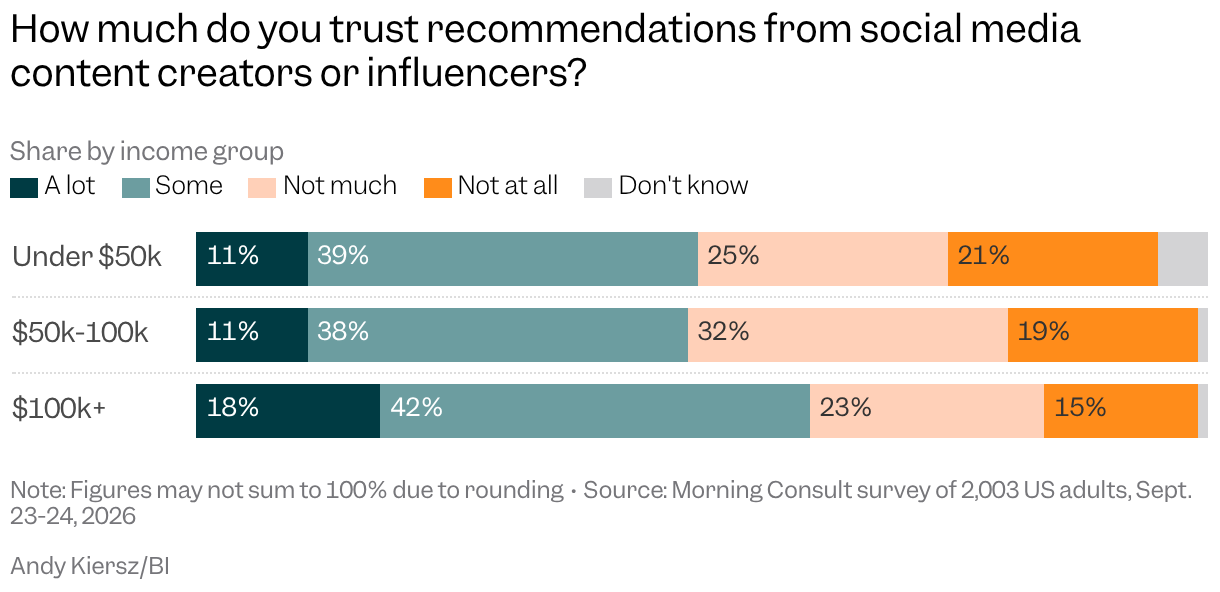
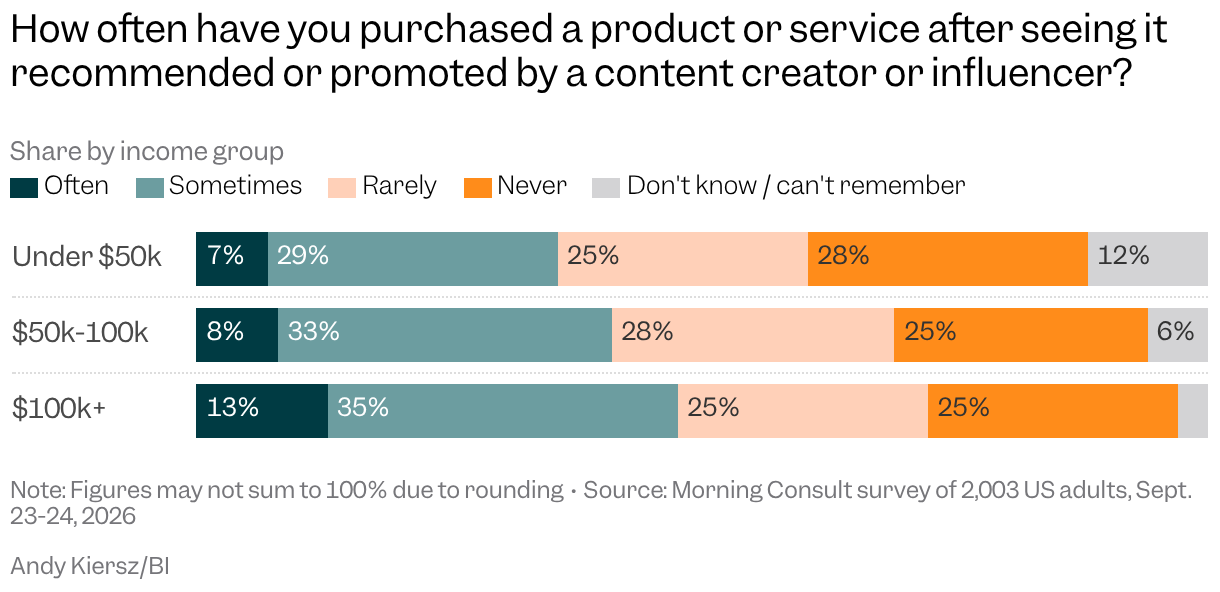
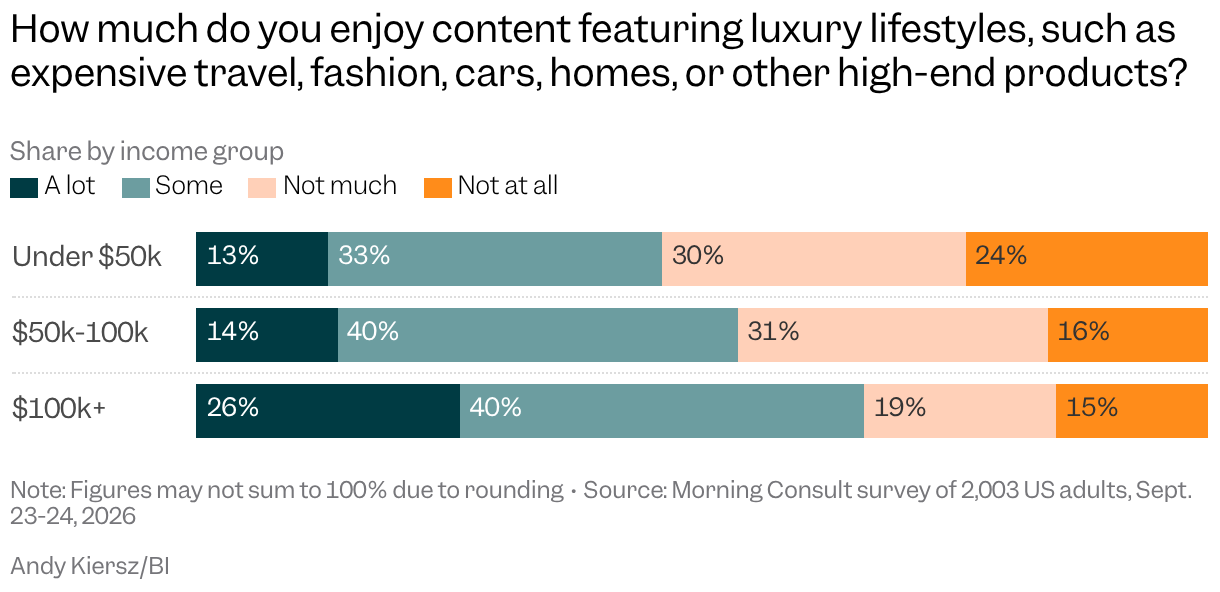
Those earning over $100,000 a year were more likely to trust influencers, be politically swayed by them, and want to become influencers themselves, according to a survey of about 2,000 US adults in September. That’s compared to those earning $50,000 to $100,000, and less than $50,000.
Amanda Acevedo, director of talent at G&B Digital Management, pointed to a simple dynamic: Influencers feel more relatable to those with disposable income.
“The general population online knows creators make good money for themselves,” Acevedo said. “I think it’s hard if you don’t see yourself in them, or you don’t feel like they’re having the same life experience.”
Relatability is core to trust in the creator economy.
“When you are making more money, you don’t view them as out of touch because you can relate to it a bit more — you have more spending power,” said Natalie Barbu, founder of Rella and a former lifestyle influencer.
In the Morning Consult survey, 61% of high earners trusted influencer product recommendations, compared with about half of those in lower-income brackets. They were also more likely than their lower-income peers to say they trusted influencers more now than they did a few years ago.
It’s easy to envy the glamorous influencer lifestyle. In reality, many influencers aren’t rolling in money — though even those in the creator middle class often seek to project a luxurious existence.
Still, creators and marketers said lower-income people may feel increasingly disconnected from influencers.
Gild Creative Group CEO Tiffany Hardin said she had to take that dynamic into consideration when partnering with a brand at the Cannes Lions ad bash.
“We were really careful not to be like, ‘We’re on the boat, and you’re not,'” she said.
Fans are feeling the economic squeeze
Influencers are responding to the economic jitters of some of their audiences.
“People are getting drained of being sold to and things that aren’t authentic,” Acevedo said. “There’s an urge to go back to simplicity.”
Acevedo and Grace Murray-Vazquez, an EVP at influencer marketing platform Fohr, said they’d noticed a decline in brands pushing for hauls, unboxings, and brand trips.
“Brands are increasingly aware of the fact that they’re not just wanting attention, they’re wanting trust and consideration and relevance,” Murray-Vazquez said.
For influencer content to land — especially if it’s promoting a brand — it needs to feel real.
Lifestyle influencer Jen Worman said in her 15 years of posting, she’s learned that opening up about her personal life has helped her sell to her followers, who she said have an average income of around $100,000.
“I do think people who are more able to relate to you are more willing to add to cart,” she said.
Murray-Vazquez said content in which the creator comes off as an older-sister figure or shares wisdom is resonating right now.
Creators start out feeling relatable, but as their careers grow, their lifestyles can change, Murray-Vazquez said. There’s a difference between making content that isolates an audience and giving them “something to look up to,” she added. Creators successfully retaining their fans “don’t lose touch with the lived reality of their audience,” she said.
What influencers don’t want, Hardin said, is content that makes followers shudder and say “ew.” And for creators, that “ew” moment can be worse than a momentary embarrassment.
“Once that creator loses trustworthiness, no matter the topic, then they lose their audience,” Hardin said. “As a creator, you’re no longer viable to a brand that wants to leverage you as the proxy to reach an audience.”
Read the original article on Business Insider
The post High earners are more likely to trust influencers, buy from them, and want their jobs appeared first on Business Insider.