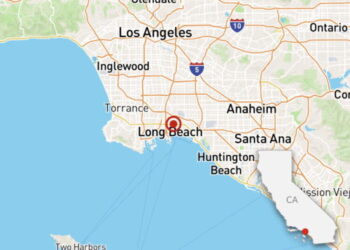
Pacific Coast Highway in Malibu is one of Southern California’s most breathtaking drives — but also one of its deadliest.
The 21-mile stretch of winding coastal road has claimed more than 60 lives since 2010, and repeated efforts to improve safety have yielded mixed results.
Recently, the city turned to a new tactic: installing speed cameras along the highway. The early findings have been dramatic.
Even though the cameras aren’t yet issuing official tickets — the program must undergo a 60-day warning period in November — preliminary testing data captured approximately 100,000 speeding violations over the course of nine days last month.
The eye-popping number underscores what residents and city leaders say is a major speeding problem on the twisting roadway. There’s hope the cameras could improve the situation, but also doubt that simply mailing out a slew of tickets will make a difference.
It also might offer a window into what other communities might see as speed cameras pop up around the region. Los Angeles is expected to unveil a network of 125 cameras by the end of the month. Long Beach turned on its speed cameras Wednesday; there are a total of 16 camera locations with two more on the way.
From her office off Pacific Coast Highway and Carbon Beach, Felicia Daffara says she can hear the sirens as ambulances and sheriff’s deputies race by when there’s an accident in the area.
“The highway is dangerous right now,” Daffara said.
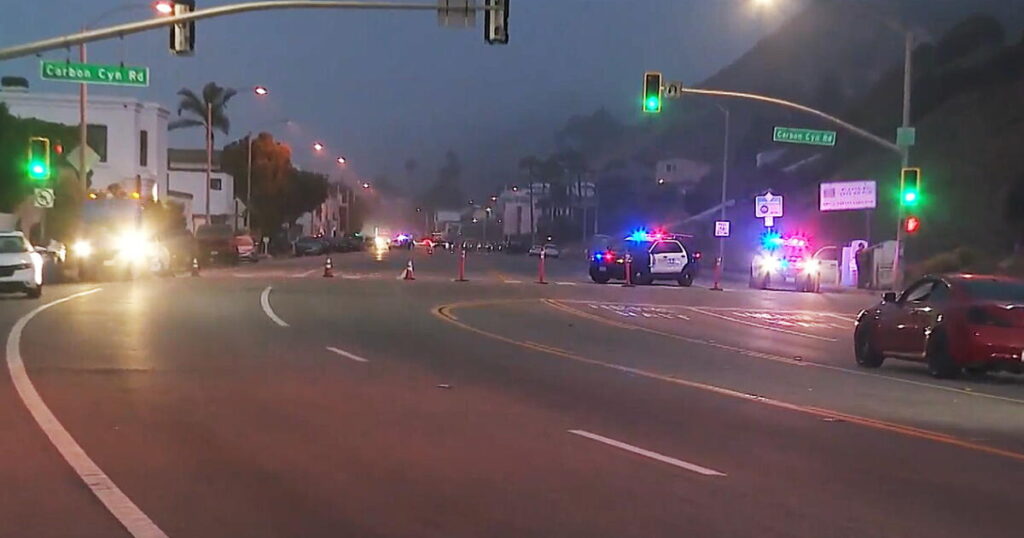
The latest crash to generate headlines occurred the morning of Oct. 3, when authorities say a 16-year-old boy who appeared to be speeding struck a parked vehicle, killing 51-year-old Nobu Malibu restaurant employee Ryo Uchimiya.
Daffara posted a video of the crash scene to her Facebook group, Real Malibu Residents, where it elicited outrage.
The speeding violations were recorded between Sept. 16 and Sept. 24 across four speed camera locations along Pacific Coast Highway, with approximately 86% occurring in eastern Malibu, according to the city.
The cameras were at Tuna Canyon, Latigo Canyon, Decker Canyon roads and the Zuma Beach area.
Malibu’s speed camera program, called the Speed Safety System, uses lidar technology and advanced camera equipment to detect vehicles traveling at least 11 mph above the posted speed limit.
When a motorist is caught traveling at such speeds, a camera captures an image of the vehicle’s rear license plate and automatically generates a citation for review and processing.
Violating the speed limit will result in fines that start at $50 and can go up to $500, depending on how fast someone is driving.
Steve Uhring, Malibu’s mayor pro tem, believes the cameras will slow down some speeding drivers, but “the impact is going to be somewhat diluted.”
Uhring argues that penalties stemming from the speed cameras should be harsher, such as taking away someone’s license on a second or third offense.
“You make the penalties significant enough and people will start paying attention,” he said. “If the penalties are a little slap on the wrist, people will say, ‘Don’t bother me.’”
The number of recent observed violations comes with a caveat, however. When the California Department of Transportation reopened Pacific Coast Highway for essential travel after the Palisades fire, it placed several restrictions on the roadway — including reducing the speed limit so that residents, repair crews and first responders could simultaneously navigate the road.
The area between Sunset Boulevard and Las Flores Canyon Road remains an active work zone, and is subject to single-lane closures and a 25 mph speed limit, according to Caltrans.
“The city, law enforcement and the community have known that it is rare for any vehicles to adhere to the lowered, temporary 25 mph speed limit in the Palisades fire burn area construction zone,” Malibu spokesperson Matt Myerhoff wrote in an email.
The lowered speed limit has remained because Caltrans “is conducting a speed survey in the burn scar region to determine the appropriate speed limit for this segment of PCH,” Myerhoff said.
Whatever the enforceable speed limit ultimately winds up being, the recent tally of 100,000 speeding vehicles, “is still surprising, and underscores the need for the speed safety system to help break the culture of speeding on PCH,” Myerhoff said.
Damian Kevitt, founder of Streets Are for Everyone, said a more robust report would have included data captured from all the speed camera locations, including sections with a higher speed limit.
“Most people are doing 35 to 45 mph, which is still slower than other parts of PCH, which is great, but that means most people would get a speeding ticket,” Kevitt said.
The previous speed limit on PCH through eastern Malibu was 45 mph.
“I would be more interested to see, based off of previous speeds, how many people would have been ticketed,” he said.
Before the cameras can begin citing speeding drivers there must be a 60-day warning period that was originally slated for September but has been rescheduled for November to “allow for necessary installation adjustments to be made and ensure the program is ready to operate as needed,” according to city officials.
The speed cameras aren’t the ultimate solution, Uhring said, but are “another tool in the toolbox.”
The desire to make one of California’s deadliest roads safer was always there, but Malibu and its partners — including Caltrans, local and state elected leaders, law enforcement officials and the community — were catapulted into action after four Pepperdine University students were fatally struck by a motorist driving up to 104 mph on Oct. 17, 2023.
Previously, Kevitt said, neither Caltrans nor the city worked well together.
“What changed was both sides had an impetus,” he said. “They stopped doing the blame game and just got to work … and they worked more collaboratively.”
At the time, public outcry from the Malibu community also motivated Caltrans and the city to find solutions.
“In my experience, speeding is the number one cause of collisions on PCH, with unsafe turning movements as a close second,” said Sgt. James Arens of the Los Angeles County Sheriff’s Department Malibu/Lost Hills Station.
In 2023 there were 220 reported crashes on PCH, resulting in 93 injuries and seven deaths, according to city officials.
The city has authorized sheriff’s deputies to work overtime to conduct additional traffic enforcement on top of their regular patrol shifts.
Since November 2023, deputies have written more than 20,000 citations, including 10,600 for speeding, Arens said.
“Over the years, driver behavior has become more reckless,” he said. “Traffic Enforcement by peace officers is only one piece of the puzzle to address the problem on PCH.”
Another effort was the Pacific Coast Highway Signal Synchronization Project aimed at improving traffic flow, congestion and safety on the roadway.
By synchronizing 12 traffic signals between Topanga Canyon Boulevard and John Tyler Drive, Caltrans can now adjust signals in real time.
These larger projects that deal with the infrastructure of the road take a long time — requiring surveys, studies, public comment and funding, Kevitt said.
Caltrans doesn’t “work off of speed because of urgency, and this is something that we’re really pushing hard to change that ethos when public safety is a factor,” he said.
Kevitt said changing driver behavior isn’t impossible, but it’s a heavier lift and requires robust education.
Things are changing, though. According to Kevitt’s rough data there have been two fatalities on Pacific Coast Highway this year: one on the west end of the road and the recent tragedy on the eastern end.
“If those are the only two, not that it makes it acceptable, that is below average for PCH,” he said. “There is an [improvement seen], there is so much more that could and should be done.”
It’s unclear how many cars passed the speed cameras during this nine-day window. According to Caltrans data from 2024, the most recent available, an average of 67,000 vehicles passed Malibu Canyon Road on PCH per day.
Revenue from the speed camera program will be used to recover the cost of implementing the cameras, and any remaining funds may be used to implement additional traffic safety measures, according to the city.
Once the speed cameras are in operation, Uhring said, there will still be discussions on what the city can do to discourage speeding on the roadway.
“We’re not going to stop trying,” Uhring said.
The post Speed camera shocker: 100,000 violators seen in nine days on Pacific Coast Highway in Malibu appeared first on Los Angeles Times.