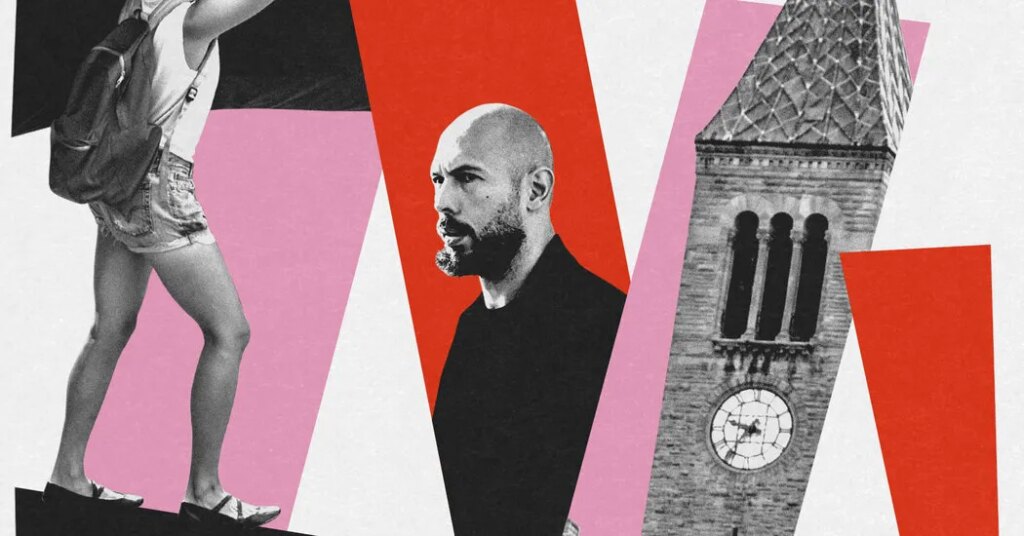
Reading the flood of coverage about the accusations of sexual assault at Cornell University, you might feel a terrible familiarity. Some of that sense of déjà vu lies in certain details, those stalwart standbys in stories of sexual violence on campus: the wash of drugs and alcohol, the setting in some room upstairs in a fraternity house, a tragedy unfolding while other students are enjoying what feels like just another Saturday night with Solo cups and heavy bass in the background. Some of those details have the feel of nightmarish cliché, as familiar as the phone line that goes dead in the horror movie, the sliding glass doors where — the viewer knows — the killer will inevitably appear as the victim moves through the house unaware. “Get out,” you want to call out as you read, your heart sinking. “Run for your lives.”
At least as troubling is the familiarity around the response: the sense that this moment, this shocking story — of the alleged sexual assault of a young woman by multiple young men, of a seemingly cavalier response from the district attorney — might finally open the public’s eyes; that the facts at hand will force a change in policy, at the state or university level, that might better protect young women; and that those changes might in turn shift attitudes, or at least inspire more fear of repercussions.
Some commentators have expressed surprise that the young men at Cornell, most likely born around 2003 or 2004, could behave as recklessly and aggressively as detailed in Jane Doe’s complaint. (None of the seven fraternity members named has been charged with a crime, and all have denied wrongdoing.) Those students hit adolescence right around peak #MeToo, the crescendo of fury of women who had been harassed or manhandled or sexually exploited, when the canceling of wrongdoers was at its most powerful. But paradoxically that era also included the first incidence of a presidential candidate revealed to have essentially endorsed sexual assault. “When you’re a star,” Donald Trump told Billy Bush, while speaking of women and his freedom to grab their genitalia, “you can do anything.” And then he proved it by getting elected.
“Shop still open?” one of the Cornell students asked in the now-infamous Snapchat discussion on the night of the alleged assault. That student was 13 when Trump endorsed Roy Moore, the U.S. Senate candidate from Alabama who was accused of sexual misconduct and inappropriate overtures by multiple women, some of whom said they were as young as 14 at the time. That fraternity brother turned 18 in 2022, when Andrew Tate claimed to be “the most Googled man on the planet,” having reached fame by selling young men on the virtues of getting rich and humiliating women. That sophomore was 20 when Trump, back in office, appointed Pete Hegseth secretary of defense, despite Hegseth’s mother having accused him in an email of being “an abuser of women” (she later renounced the sentiment). The messages filtering in through the news and YouTube were clear — and maybe even loud enough to drown out the ancient history of the revolutionary spirit among women in 2017.
For all the phases of enlightenment thought to come before them, the people at the heart of the Cornell story were products of a particular moment with its own salient features, many of which go beyond politics or podcasts. They were the first generation for whom phones, and therefore porn, were a ubiquitous feature of life; they were young enough to consider their parents clueless when they warned them about their digital footprints. Their discourse also reflects a time when the dynamics of more experimental kinds of sex — including group sex and polyamory — are still unrehearsed enough to be weaponized. Particularly heartbreaking is the victim’s early effort to interpret that night as part of a path to progress. “Everyone needs to grow up cause sexuality and sex and shit is changing and stuff like this is going to become more common,” she wrote to one of the men she later accused. “I’m really open-minded.” She sent that text within a day of confiding to a doctor that something “traumatic” had caused her urinary tract infection.
Public outrage is one inevitable response to Jane Doe’s story. But that outrage is taking place alongside a recognition about how this cycle plays out, or rather, peters out. The fury over what happened at Cornell could be understood not as a galvanizing alarm but as yet another purification rite with effects that will most likely be short-lived. Every cycle of shock over campus assault comes to light in a society that is different from the one that came even a decade earlier. Lessons map closely, but not perfectly, to current gender and sexual dynamics, and traditional power hierarchies have a way of reasserting themselves in those new paradigms, overwhelming whatever progress happened along the way.
“Date Rape: A Campus Epidemic?” the headline of a Ms. magazine article asked in 1982, prompting a campus survey and a consequential 1985 follow-up article, “Date Rape: The Story of an Epidemic and Those Who Deny It.” Second-wave feminism had long left its mark, and yet a significant percentage of women in the survey who said that yes, they had been forced to have sex against their will, also said that no, they would not identify what happened as rape. At the time, it could have been reasonably assumed, the plight of women on campus would improve with education and empowerment.
In the years that followed, Take Back the Night, bolstered by well-publicized research, extended its reach on college campuses. In 1994, Antioch College made headlines by calling for a woman’s affirmative assent to sex, rather than letting stand the assumption that anything other than an insistent “no” was an invitation to proceed. This kind of framing drew harsh mocking in popular culture — “May I elevate the level of sexual intimacy by feeling your buttocks?” Mike Myers asked in one sketch — but serious coverage in mainstream outlets like Glamour suggested that the nuances of consent were still evolving.
And yet student-on-student sexual assault rates stayed stubbornly persistent. Even if conversations about consent were becoming more sophisticated, they were happening against the backdrop of new sexual dynamics — ones that reinforced old patterns of power. A highly ritualized, alcohol-sodden “hookup culture” had come to dominate campuses, especially Greek life. As the sociologist Lisa Wade described in her 2017 book, “American Hookup,” the norms of many college students’ sex lives rested on the premise of indifference in the guise of sophistication and gave young men in fraternities, who host the parties and control the guest list, power of choice. One in three college women who experienced that culture, according to research, were left feeling that intimate relations in the past year were “traumatic” or “very difficult to handle.”
In the first half of the 2010s, activists found new ways to focus both the media and those in power on the issue. In 2010, pledges at Delta Kappa Epsilon at Yale marched onto campus and chanted, “No means yes, yes means anal,” generating press and an outcry for more systemic change. Shifting from the approach of charging individuals, students and alumni filed a complaint against Yale itself for violating Title IX protections from sexual harassment and discrimination. Days later, the Obama administration distributed a “Dear Colleague” letter, directing universities to implement a “preponderance of evidence” standard for determining guilt, and to offer more support for victims.
Female students, newly empowered, found bold ways to focus attention on perceived institutional failures. In 2014, a senior at Columbia carried a mattress around campus to protest the school’s handling of her own claim of assault, attracting extensive national coverage. The lenient six-month sentencing of a Stanford varsity swimmer who sexually assaulted an unconscious young woman (who had drunk heavily at a fraternity party) was met with outrage in 2016; the blistering 7,200-word statement that his victim read at his sentencing went viral. The ephemeral nature of Take Back the Night protests was replaced by ubiquitous social media posts featuring recognizable individuals — the political was personal, and the personal was public.
Even as the outcry over campus sexual assault most likely helped propel the #MeToo movement, student activism around the issue lost some momentum in the years following Trump’s election, competing for attention with other pressing concerns — racial equity, immigration, reproductive rights. How quickly Trump’s campaign was able to move past those infamous comments (and then win the election) now looks like the start of a tidal wave that made earlier backlashes look like polite pushback. Accusations of a group sexual assault at the University of Virginia were chronicled in Rolling Stone but turned out to be untrue, giving conservative activists grist for the argument that the left was overly credulous about charges against men; the same year that #MeToo forced a reckoning in the workplace, the Trump administration rescinded the directives of the “Dear Colleague” letter.
The events that unfolded at that Cornell fraternity transpired just weeks before Trump — who had briefly been, even among some allies, persona non grata following Jan. 6 — proved that for the truly powerful, accountability is fleeting. A young friend of mine, Sabine Paz-Le Draoulec, a recent graduate of Cornell who was in a sorority, said she believed that in Greek life, too, status was bound up with the privilege of skirting consequences.
Chi Phi, she told me, was known to be a mid-tier fraternity aspiring to move up in the ranks. The way its members crowed about their own fraternity — “CHI FIII — on Snapchat reflected something almost aspirational, she felt. “It’s like they were doing and saying what they did to prove to themselves that they were one of those fraternities that actually had power,” Paz-Le Draoulec said. “Getting away with something — it’s like that is proof of the power you have.”
Right now, boys who are reaching early adolescence are encountering Trump as a figure in political decline. Tate is being held without bail in a federal detention center in Miami, pending extradition to Britain on charges including rape and sex trafficking. (He denies the charges.) Perhaps someday, the Cornell story will look like part of an incipient reckoning.
If we know anything, it’s that it’s hard to predict how one shift in cultural attitudes will ultimately beget another. Alongside the young women who were the first active participants in the civil rights and antiwar movements were those advocating sexual liberation. But even as they claimed one kind of political agency, they were often subject to second-class citizenry, even sexual coercion and harassment. Those inequities ultimately galvanized them, historians like Sara M. Evans and Alice Echols have argued, to apply their newfound organizing skills to the second-wave feminism that changed the legal landscape for women — and brought the world the same magazine, Ms., that was so instrumental in making date rape an essential locus of activism.
And even if campus sexual-assault rates remain high, young women can celebrate, at least, that their college activism might have helped pave the way for a world where workplaces are safer for women, with order imposed by lawsuit-averse human-resources executives rather than student “sober monitors” expected to control crowds of drunken teenagers.
The heated conversation around the Cornell case might be just a symptom of another cycle that will give way; then again, the rate of change, in general, seems to be moving faster than it ever has. For better or for worse (one hopes for better), college students a decade from now, facing their own new social and sexual dynamics, may recall the story of what happened at Cornell as ancient history — a tale that might as well have been written in faded glyphs.
Source images for illustration above: Andrew Burton/Getty Image; iStock, via Getty Images; Daniel Mihailescu/Agence France-presse—Getty Images.
The post Every Generation’s Campus Rape Story Is New appeared first on New York Times.