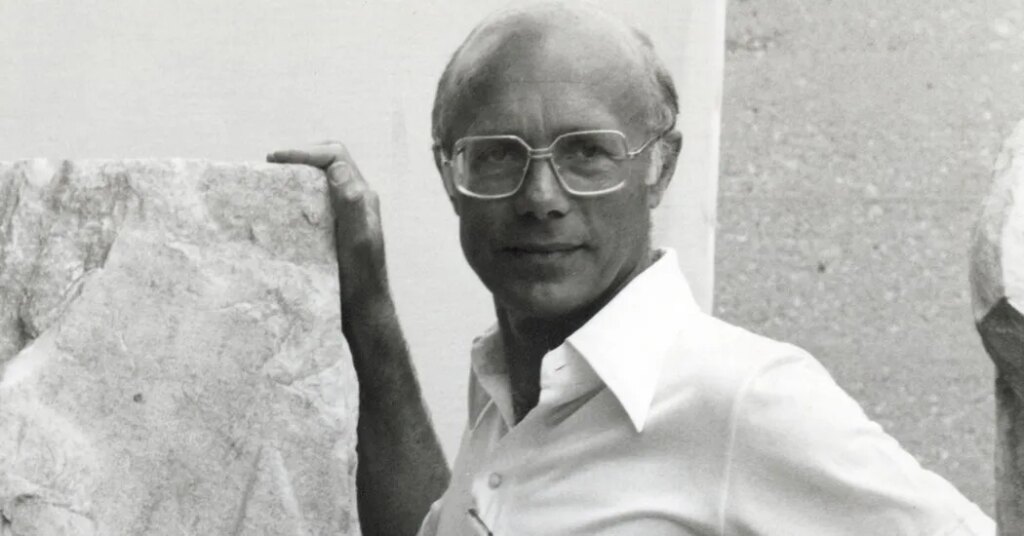
Charles K. Williams II, a towering figure in Greek archaeology who led excavations at the ancient city of Corinth, discovering significant parts of its past, including Roman-era frescoes that he used his inherited wealth to reconstruct, died on Sept. 16 in Athens. He was 96.
His niece Abby Coffin confirmed the death.
From 1966 to 1997, Mr. Williams was the director of Corinth excavations at the American School of Classical Studies at Athens, exploring Iron Age, Greek, Roman and medieval ruins of the city,.
“A lot of archaeologists focus on one specific period and a focused area of expertise,” Christopher Pfaff, the current director of the school’s Corinth excavations, said in an interview. Mr. Williams was deeply committed to examining “all periods of a complex urban site” and to the training of students in “the interpretation of archaeological materials as they emerged from the ground.”
Mr. Williams’s many discoveries included not only Roman frescoes but also 11 tons of pottery, Byzantine cookware, a public bath with a floor mosaic depicting a donkey and a centaur from the fifth century B.C., and an infirmary and a small church from the 13th century. And while in search of buildings in what was long believed to be an agora, or central public space, he instead found small shrines, a running track, a bathing structure and small commercial establishments.
“Archaeology always has a certain element of surprise and luck connected to it, for it is unpredictable to divine what lies directly under the surface upon which one is standing,” Mr. Williams wrote in 2021 in Expedition magazine, a publication of the University of Pennsylvania’s Museum of Archaeology and Anthropology.
The frescoes may have been the biggest surprise of his career because “they are very rarely preserved in Greece in more than scattered fragments unless they are found in tombs,” Dr. Pfaff said.
In the 1980s, when archaeologists from the school excavated a street near the Roman theater in Corinth, Mr. Williams and his team entered a courtyard that led to rooms with fragments of frescoes — about 120,000 in all, some still on the walls, some fallen.
“We had to work slowly through the corridor, as the mud brick of the wall was mixed with fresco fragments, so if you took out the mud, you had to make sure you first took out the fresco pieces that had fallen together,” he wrote in Expedition in 2024. Some of the wall paintings depicted gods and goddesses, including one of Aphrodite holding her shield, another a floral garland with musical instruments hanging from it.
Mr. Williams surmised that “women would come into the first room with the garland fresco and be entertained as they awaited their turn to move along to the next rooms for ritual cleansing and hairstyling,” he wrote in Expedition. (The rooms also included a cylindrical stand for a wash basin and figurines of women washing their hair.)
“You realize that the frescoes are good; it’s going to be important, and people will want to see them,” he told World Archaeology magazine in 2026. “Every time you think you are on top of Corinth, something surprises you. Things I never expected in Greece.”
Charles Kaufman Williams II was born on June 19, 1930, in Easton, Pa. His father, Morris, was the chief executive of C.K. Williams & Co., a manufacturer of pigments, coatings and fillers that was acquired by Pfizer in 1962. His mother, Josephine (Chidsey) Williams, managed the home. They focused their philanthropy on arts in Easton, much of it at Lafayette College.
Charles’s interest in archaeology began when he was a boy, during visits with an aunt and uncle to the Egyptian collection at the Metropolitan Museum of Art, in New York, which inspired his plan to build an Egyptian-like tomb for two dead birds in his backyard. He dug a hole and embalmed the birds with paraffin from canning jars. But before he could finish the burial, the gardener had filled in the hole.
While Charles loved archaeology, his parents demanded that their son make a living, regardless of the family’s wealth. So he studied architecture at Princeton University, earning bachelor’s and master’s degrees in 1953 and 1956. He received a Ph.D. in archaeology, with a dissertation about Corinth, from the University of Pennsylvania in 1978.
During graduate school, he took an architectural job with the British archaeologist Alan Wace, surveying excavations in Mycenae, Greece, and then worked in New York City for the architect Philip Johnson on a building for Brown University.
“I showed my family I could make a living — and then I went into archaeology,” he told World Archaeology in 2025.
He joined the American School in 1962 and was named director of excavations in Corinth four years later. He established a training program in excavation for student archaeologists; it was also attended by classicists and ancient historians to understand the importance of what was found on digs.
Mr. Williams, who was fluent in Greek, “lived modestly there and went out of his way to show respect to the local workers who did all the digging,” Dr. Pfaff said. He spent nearly all his time in Corinth, but also had homes in Athens and Philadelphia. He was also the godfather to an excavation foreman’s son.
Mr. Williams was generous with his inherited wealth. He designed and funded Hill House, a residential and research facility in Corinth; paid for one facility for the reconstruction of the frescoes and another, now under construction, for their storage; supported the laboratory at the British School at Athens; and funded an endowment for excavations in Corinth.
In 2001, he contributed $16 million to the University of Pennsylvania’s archaeology museum to help modernize its antiquated facility. Its holdings include a 3,000-year-old granite sphinx of the Pharaoh Ramses II and the 30-foot columns of the Palace of Merenptah.
He viewed his philanthropy as spending money that he had not earned.
“It’s really someone else’s,” he told The Philadelphia Inquirer in 2001. “You’re only the custodian of that money, and you’ve got to use it correctly.”
His honors include Commander of the Order of the Phoenix from the president of Greece for his efforts to preserve the country’s cultural heritage and the gold medal for distinguished achievement from the Archaeological Institute of America.
In addition to Ms. Coffin, his niece, Mr. Williams is survived by another niece, Lucy Rhame; a nephew, Willy Rhame; and a sister, Joan Rhame.
Mr. Williams was also an artist who painted watercolors of buildings, cathedrals, pyramids and temples. He was an art collector, too, some of whose drawings, watercolors and sculptures were exhibited in 2009 as “Adventures in Modern Art” at the Philadelphia Museum of Art.
“You might expect his collection to reflect a classicist’s appreciation of sculpture or the idealized forms of ancient art,” Karen Rosenberg wrote in her review of the show in The New York Times. “Neither assumption is correct. Dr. Williams has consistently gravitated to brash, boisterous painting from the first half of the 20th century.”
The post Pioneering Archaeologist Who Found 11 Tons of Ancient Pottery Has Died appeared first on New York Times.