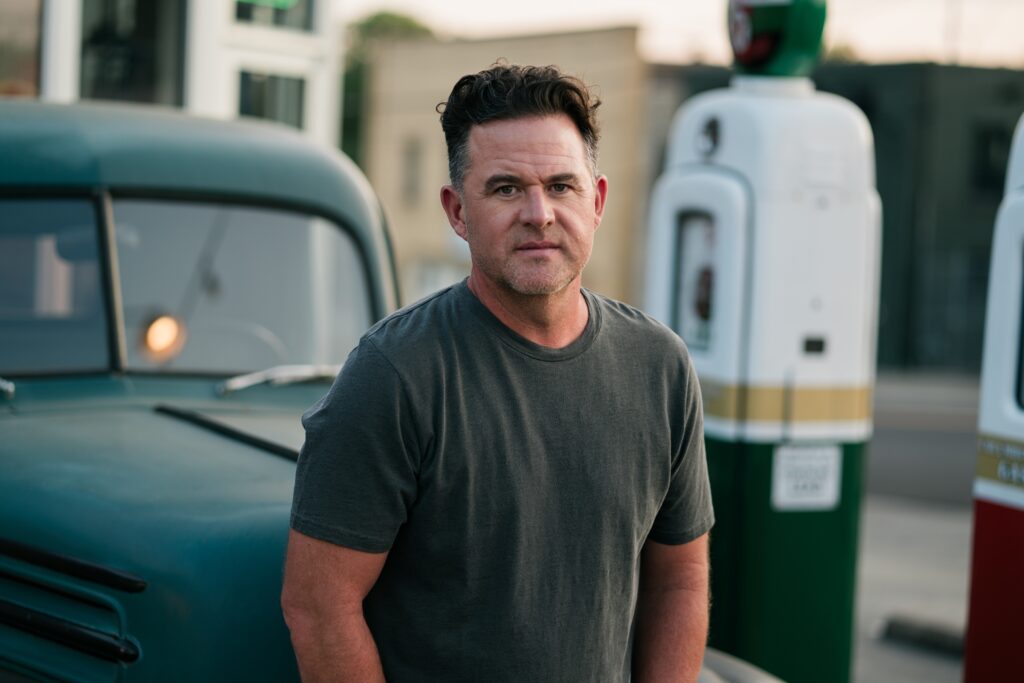
NASHVILLE — David Nail likes to sing with his eyes closed. Early in his career as a country music artist, it helped with his nerves. These days, more than two decades after he signed his first record deal, he just relishes the feeling of getting lost in a song.
But onstage during an industry showcase this spring at Rudy’s Jazz Room, an intimate, red velvet-curtained venue near Music Row, he shut his eyes for a different reason. He was trying not to cry.
“One of the things that I’ve hated over the years,” Nail said, his voice choked with emotion, “is when people say, ‘Man, you’re so underrated.’”
The 47-year-old Missouri native has heard this sentiment countless times during his 20-plus years in Nashville. He has heard it from his record label. He has heard it from executives when they talk to country radio programmers, urging them to play his music. He has heard it from fans — in person and on social media — who don’t know why, after he released several hit singles around the early 2010s (“Red Light,” “Whatever She’s Got,” “Let It Rain”) and was nominated for a Grammy award, he didn’t go on to greater stardom.
Usually, if your music doesn’t reach the kind of commercial success demanded by major labels, you don’t say it out loud. But Nail’s most vulnerable feelings live right on the surface, and he has never been interested in hiding them. This is a quality that has led to both critically acclaimed songs and difficulty navigating the country music genre, where singers are expected to be personable and chatty, with easily digestible sound bites that succinctly explain who you are as an artist.
“I met with someone the other day and I remember they were sort of asking me to try to explain myself,” Nail told the crowd at Rudy’s. “And I was like, ‘Man, I’ve been doing this a long time, I have no clue what people like about me. I just sort of do it. I close my eyes, I sing these songs, and I’ve been fortunate enough to do it this long, and it’s something that I certainly don’t take for granted. But I can’t define it.’”
Every time Nail has pondered that question or how much longer he can continue his career (he sometimes wonders if his local Lowe’s Home Improvement store is hiring), he’s reminded of what sets him apart but is still hard to articulate: his voice. It’s a soaring, soulful instrument, layered with emotion, that even his closest collaborators have trouble describing except to say it gives them chills. His longtime producer, Frank Liddell, said that Nail “has got to be the greatest male singer in the history of this town, and that’s saying something.”
Nail looks visibly uncomfortable at such compliments. But he keeps going, because he believes this is what he was meant to do. He recently dropped his independent album, “Flowers,” a decade after being let go by his major label, Universal’s MCA Nashville. Nail has released music since then, but this was the first time that the songs — raw with feeling, about everything from his time in Nashville to his 17-year marriage and three kids — just kept spilling out.
He also decided to embark on a solo acoustic tour, which continues this fall; just him and his guitar, the way it was in the beginning. He wants to remind people that even though the music industry can be go-go-go-more-more-more, with no time to celebrate success before being pushed to achieve the next milestone, it’s okay not to be Taylor Swift. (Who, incidentally, was such a fan of Nail that she invited him to open a string of dates on her 2011 arena and stadium tour.) It’s okay not to have No. 1 songs and to play small venues. What matters is that listeners feel seen by, and find meaning in, your music.
This is one reason why the “underrated” comments rub him the wrong way. Doesn’t everyone understand that he can’t even believe that he’s gotten this far?
“What I’ve learned over the course of my career is this person’s greatest and another person’s greatest can be different. … And I remember looking at my wife one night and I just said, ‘You know, babe, look at our life, look at where we are, look in our house, look where we live, look at our children,’” Nail said at the show. “Like, this ain’t underrated. This is the best. This is the dream.”
Nail, whose father was a band director, always knew he could sing. He was drawn to country music, but his early forays in Nashville didn’t go well. In the early 2000s, his friends introduced him to a girl whose father was a top music producer. Nail brought his guitar, and when he started singing, the girl burst into tears. She insisted that she introduce him to her father.
Her father signed Nail to a record deal, though when his first single flopped the label shelved the record. He wasn’t ready to give up, but kept waiting for someone to advise him that it was time to quit and move back home to Missouri.
“But no one would ever tell me [that] and it would drive me crazy,” Nail told The Washington Post this summer during an interview. At one point, his parents visited him in Nashville and Nail told them he had an alternative career plan: He was going to go to umpire school. His mother gently suggested that he should sleep on that idea. His father went with, “That’s the most ridiculous thing I have ever heard in my life.”
So Nail kept writing songs and soon met Liddell, the hit producer and co-owner of publishing company Carnival Music (and husband of country star Lee Ann Womack). In their first meeting, Nail sang “Missouri,” a devastating song he wrote about praying his girlfriend would leave him because he didn’t have the strength to break up with her. Liddell said it’s the only time in his career that all the hairs stood up on his arms when he heard someone sing.
“David has the most in-tune voice — that in and of itself doesn’t make it great, but he has such command over it,” Liddell told The Post. “Just his tone, and then also the way he holds his notes out … it’s very, very pure, but there’s a rasp to it as well, there’s just some heart and soul.” He signed Nail to a publishing deal and wound up producing his next four albums.
Nail secured a recording contract with MCA Nashville and released his debut album in 2009, “I’m About To Come Alive.” The song “Red Light,” about watching the outside world go on as normal while a relationship is ending, became a Top 10 hit on country radio. His nostalgic ballad “Turning Home,” co-written by Kenny Chesney, struck a nerve with Grammy voters. Nail landed a nomination for male country vocal performance, though he lost to Keith Urban.
The Grammy nod was a boost, buoyed by his first No. 1 a year later, “Let It Rain,” a mournful tale of a doomed affair; “Whatever She’s Got,” a peppy love song, became his biggest hit ever as it climbed the charts in 2013. But as his career surged, Nail struggled behind the scenes.
“I was like, ‘Okay, you’ve just gotten everything you wanted that you thought would make you happy,’” Nail said. “They answered all your prayers and you’re worse than you were before you had anything.”
In 2014, he revealed that he had been diagnosed with depression. He became an outspoken advocate for mental health, candid about how therapy and medication had helped him in his darkest moments.
Nail had a couple more songs that performed decently, but the traction slowed. After his 2016 album, he was released from the label. His collaborators wondered if it didn’t help that Nail, naturally introspective, didn’t have the “yuk it up” personality that’s often encouraged for for country singers; some programmers misinterpreted his quiet nature for iciness. Nail has joked that he probably broke the record for number of meetings with a media training consultant.
Now that he’s an independent artist, there’s less pressure to put on a show for executives. He is free to bare his soul, whether it’s through stream-of-consciousness on social media, recording snippets of his daily walks for his followers, or through his songwriting.
“There’s a lot of emotion that’s gone in country music,” Liddell said. “So to hear a guy [like David] just basically put it all out there: ‘This is who I am, and I hope you like it. If you don’t, sorry’ — nobody has the guts to do that.”
Sometimes, Nail’s music led to places he never expected. The financial success of “Whatever She’s Got,” which went triple platinum, helped fund in vitro fertilization for him and his wife, Catherine, when they struggled with infertility. Catherine gave birth to boy-girl twins in 2015, and five years later, another daughter.
Becoming a parent changed how Nail saw the world, and he savored more time with his family. His mother died last fall, and through his grief, he realized that if he was going to get back to touring, it needed to be just himself on the road and onstage to help him heal from a challenging few years. “It’s just a really good exercise for keeping grounded and just being appreciative and grateful,” he said.
He also pivoted to work on “Flowers” with acclaimed Nashville singer-songwriter Anderson East, who produced the album. The two found their contrasting personalities clicked: “I’m so analytical, he’s zero analytical,” Nail said. The first song they wrote was “The Crown,” about life not working out the way you planned; the lyrics were based on someone whom Nail knew from his hometown of Kennett, Missouri, a place that still greatly inspires him.
“Letting him have the opportunity to be himself and tell his story was the only thing that I was concerned with,” East said. “Just like, let the man have some room to just be himself, and that’s awesome. And that’s enough — that should be enough.”
Nail and East co-wrote several of the songs with Grammy-winning songwriter Lori McKenna, including “Riverbank,” a tender ode to his wife that Nail said makes him the most proud of any song of his career.
“I don’t think David is capable of not being honest,” McKenna said. She has always been impressed by his “stunning” voice, partly because she is drawn to vocals inflected with pain that allude to something below the surface. “I’ve always enjoyed those voices that feel like they’re telling you one story, but just by the tone of their voice, you can tell there’s lots of other stories.”
Nail has many layers, but after all these years, he only knows how to be open. During the show at Rudy’s, filled with Nashville industry executives who have known him for many years, he grew emotional as he reflected on the triumphs, the disappointments, and marvel over the fact that, through it all, he is still singing onstage.
“There’s really no other way to say it,” he said, “Than I firmly in my heart of hearts believe that the good Lord put me on this Earth to do this.”
The post This singer has the best voice in Nashville. Why haven’t you heard of him? appeared first on Washington Post.