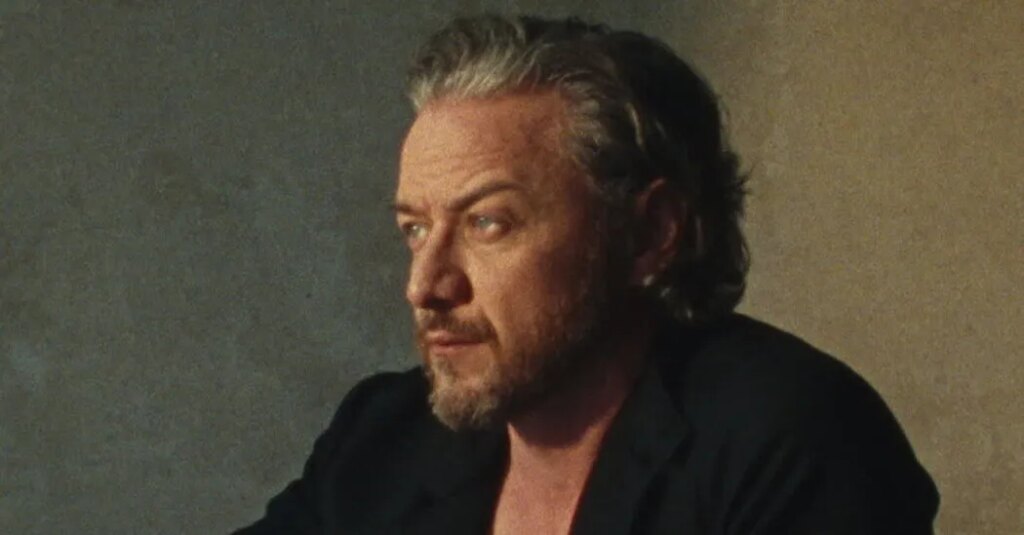
When James McAvoy was starring in a TV adaptation of “Macbeth” about 20 years ago, the director pulled him aside and told him to tone down his Scottish accent.
McAvoy, a Glasgow native, recalled feeling bewildered and angry. “You know it’s called ‘the Scottish play?’” he said in a recent interview. He resolved to disregard the instructions: “I’m going to be doing my own thing with this part, I’m afraid.”
A dismissive attitude toward Scottish inflection is common, McAvoy said. “It is part of the Scottish experience,” he said, and “sort of reduces you to just your accent.”
That was part of why McAvoy, 47, wanted to make the movie “California Schemin’,” his directorial debut, which comes out Friday in U.S. theaters. A comedy, it’s based on the true story of two aspiring Scottish rappers in the early 2000s who are rejected and mocked by the record industry because of their accents. So, like a topsy-turvy Milli Vanilli, they pretend to be from California to try to land a record deal — and it works.
When he was looking for his first directing project, McAvoy said, “It didn’t need to be Scottish. But when this came across my desk I was like: It has to be this.”
Gavin Bain and Billy Boyd, the rap duo, were in their early 20s in the film and living in a housing project in Dundee, where the film is partly shot. In the movie, they run around town, decked out in skater gear and with questionable facial hair, practicing their lyrics. They also cold-call record labels, hoping for a shot. When Bain raps over the phone in an early scene, a label employee replies, “I love foreign-language music — it’s beautiful.”
Their ruse comes to fruition after Bain and Boyd are laughed out of an audition and called “the rapping Proclaimers,” which is based on a real incident. “It wasn’t the music they were laughing at — it was us,” Bain’s character says in the film.
So they practice their American accents with quotes from “Friends” and “Forrest Gump,” and begin performing as Silibil N’ Brains. Their plan is to take it far enough to reveal the con on MTV and embarrass the music industry. But the trappings of success prove enticing, and they continue performing, partying and burning through their label’s money.
Séamus McLean Ross, 25, a Glasgow native who plays Gavin, said that for the rappers, the reality was “this alter ego becoming bigger than your pre-existing one.”
McAvoy said that Bain and Boyd in some ways had sacrificed their authenticity, which is the “heart and soul of hip-hop,” to break a “glass ceiling that they couldn’t get through otherwise.”
He related to some of that pressure after growing up in a rough part of Glasgow that he said was also “full of adventure and fun and excitement and peril, sex and high stakes.”
McAvoy didn’t want to make “just another sort of gritty drama,” he said. “I also wanted it to be entertaining. Because I feel like not a lot of people who come from that kind of background in the U.K. get stories told about them that are vibrant, entertaining, dynamic.”
McAvoy said that Scotland’s film industry tended to cater to audiences in the United States, its biggest market, which means a lot of “guys running about in kilts” for costume dramas like “Outlander.” “We end up making stories about ourselves, not for ourselves,” he said, adding: “We end up underselling our own people.”
Lucy Halliday, 23, the Scottish actress who plays Boyd’s girlfriend (one of the few people clued in to the ruse), said, “I don’t think you could tell this film without a Scottish director,” or without someone committed to making it as “accurate to Scotland as possible.”
In the movie, the Silibil N’ Brains scam lasts a couple of months. In real life, the pair stayed in character for over two years. They never released an album, and couldn’t produce American ID when they signed a contract. But they still got big enough to open for D12, Eminem’s rap group.
“One of things the real guys realized was that almost the worse they behaved, the better the music industry treated them,” McAvoy said, and they even got close to a deal for a “Jackass”-style TV show. But the pressure of keeping up the act began to weigh on them, until it unraveled.
Although they both continued to make music, the real-life Boyd and Bain rarely worked together again. They each wrote memoirs — Bain’s “California Schemin’: How Two Lads from Scotland Conned the Music Industry” gives the movie its name — and Boyd wrote and performed a song for the film.
A 2013 documentary, “The Great Hip-Hop Hoax,” reintroduced the affair to the public, which is when McAvoy said he started taking a “proper interest” in it, even though at the time he “wasn’t really ready to make a movie.”
But years later, McAvoy said, he was “really proud” to have a film made that resembled his own experience: “I didn’t quite realize just how personal the story would be for me.”
The post A Scottish Hip-Hop Hoax Helped James McAvoy Find His Movie-Making Voice appeared first on New York Times.