I opened an online storefront last year, even though everyone told me not to. An investor friend warned me it would be a “capital incinerator.”
He was right. I sold my product and I struggled to earn a dime. A hundred dollars spent on online advertising brought $100 in sales. My only profit came from chatting up strangers at parties, at bars, in Ubers, which was fun but, sadly, not going to put me on Easy Street.
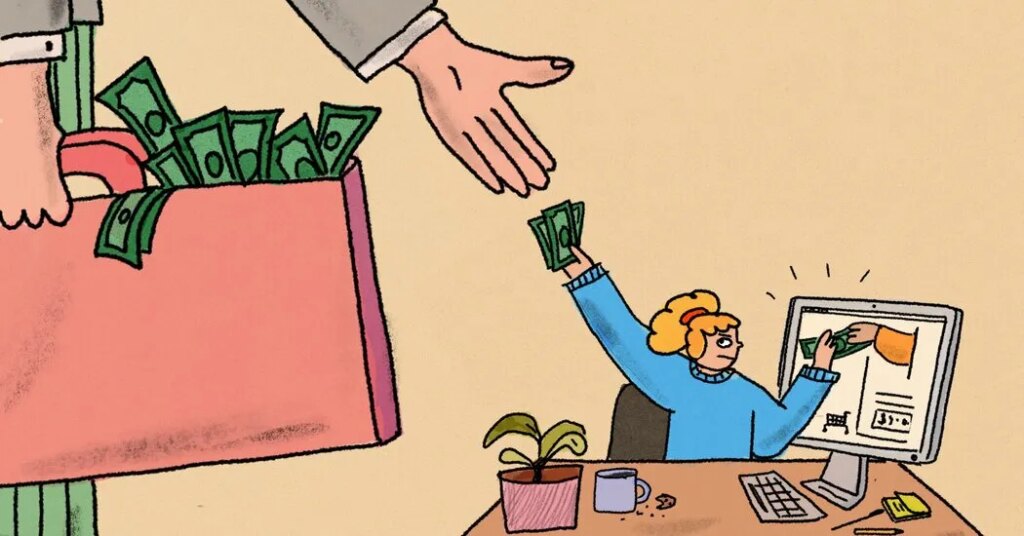
New business openings, e-commerce included, have exploded since the pandemic, but long-term viability is questionable. Big Tech platforms like Amazon and Meta are turning the screws on American mom-and-pop online businesses and empowering deep-pocketed mega-retailers like Quince, which a Times newsletter called a “well-branded dupe emporium”. That’s reducing choice for consumers and limiting paths to upward mobility for millennials like me and generations that follow.
Like all the e-commerce operators I spoke to for this piece, I was initially convinced consumers would be drawn to my thoughtfully branded product. Last year I stumbled across a gentle fabric woven from the protein fibers in milk and saw an opportunity. Americans spend more than $250 million annually on beauty pillowcases, including the frizz-battling silk and satin varieties, but I thought they looked garish and greasy.
Armed with a bit of capital, a finance background and an optimism bordering on naïveté, I placed my first order and put together a whimsical photo shoot on a ranch in Texas (cows … get it?). My friends gave rave reviews, and I got a glowing product nod from the wellness it-girl Alexis Page. All I needed were buyers.
Given the kind of customers who would likely purchase my pillowcases — wellness-curious women with disposable incomes — I knew I had to buy ads on Instagram. I budgeted $50 in daily ad purchases and waited for sales to roll in.
There was a time, not so long ago, when you could still make millions selling everyday products online such as mattresses (Casper), suitcases (Away) and sunglasses (Warby Parker). In the early 2010s, advertising online was inexpensive and effective. There was plenty of pie to go around.
The pandemic changed everything. Stuck at home, people shopped feverishly online. Soaring demand attracted billions in investor money, which in turn triggered an explosion in demand for online ads. Advertising prices went through the roof.
In 2021, Apple rolled out a new policy that limited iPhone apps’ ability to track user behavior. It was a win for privacy, but it also made ads on Meta platforms Facebook and Instagram less effective. If you were selling ramps for dachshunds, you went from buying ads that reached likely dachshund owners to suddenly having to buy ads that reached all likely dog owners, regardless of dog size. Researchers found a 39 percent reduction in revenues for Meta-dependent advertisers as a direct result of the switch, an effect they noted was felt primarily by small businesses.
I was stuck. Advertising on other Big Tech platforms was just as expensive. In August the Federal Trade Commission and the attorneys general of 22 states sued Amazon, accusing the company of imposing “undisclosed surcharges on its advertising customers, which include over 500,000 small- and medium-sized businesses that participated in auctions for advertising placements.” Meta and Amazon control so much of the market they can charge top dollar — recall Jeff Bezos’ gristly bon mot: “Your margin is my opportunity.” Those costs are passed on to small-business owners like me who are unaware that the risk is unevenly distributed.
However long the odds of success, I still harbored castle-in-the-sky dreams. It helped that opening an online store was so easy that it could be done while rewatching “The Agency.” But as fun as it was to have a business, it dawned on me that this business-in-a-box was just a purchase in disguise.
I realized how many people I knew owned online storefronts. They were all selling specialty products: jujitsu journals, vegan caviar, dried salad dressing blends, luxury apparel for plus-size men. Were any of them making money?
From what I could tell, the answer was no.
I asked my friend Leif Frey, a onetime successful entrepreneur who heads a fund that purchases e-commerce brands, what it takes to succeed selling online today (his first suggestion: $500,000 in capital). “Authenticity is still key for smaller brands, so founder-led content is really important,” he said. Translation: Smartphone videos showing the founder speaking directly to the camera.
A hot name in the founder-turned-smartphone-star space is the yogurt brand Sourmilk, which was founded by two camera-ready Stanford grads. In their videos, they film themselves doing such stunts as hand-delivering 8,000 yogurts via CitiBike. It was all very charming, but even watching them made me tired.
There is another cost of trying to run a small business in an economy of Goliaths. Let’s say I managed to make my milk pillowcase an “it” item on TikTok or Instagram. There is nothing to stop Amazon and the like from copying my viral product, lowering prices and quashing my business (Amazon employees reportedly said the company uses its internal data to sell products that compete directly with successful sellers on its platform, an accusation the company denies.)
And if profitability depends on winning the lottery of virality, owning an e-commerce business has more in common with sports betting or options trading than the slow and steady route to the American dream most people envision when they put their savings into a small business.
The net effect is deadening. Amazon, which accounts for nearly 40 percent of U.S. retail e-commerce sales, hosts thousands of listings for seemingly identical silk pillowcases. In the second quarter this year, Meta’s average price per ad increased 12 percent over the previous year. These costs aren’t just shouldered by the business; they get passed on to you, the consumer — an overlooked answer to the question of why everything is so expensive.
I’m still selling pillowcases. I’ve made some friends, I’ve had some fun, I love the product. I’ll keep selling to strangers. But I’ve made my milk fiber bed with Meta, and now I have to lie in it. I’ve given up on the idea that this product will lead to riches, or even to break even. The business, now, is a way to connect with people. And that will have to be enough.
Corissa Steiner is the founder of Lunaweft, a milk bedding company, and an emerging markets credit investor.
The Times is committed to publishing a diversity of letters to the editor. We’d like to hear what you think about this or any of our articles. Here are some tips. And here’s our email: [email protected].
Follow the New York Times Opinion section on Facebook, Instagram, TikTok, Bluesky, WhatsApp and Threads.
The post Big Tech Is Crushing Small Businesses Like Mine appeared first on New York Times.