More women are earning college degrees, chasing ambitious careers and pursuing prestigious titles at work. And at home, they’re earning another title: breadwinner.
The share of women in heterosexual marriages who make as much or more than their husbands has nearly tripled over the past five decades, according to the Pew Research Center. In 29 percent of those marriages in 2023, earnings were about equal. In 16 percent, women were the primary earner.
In the past, that might have introduced tension into relationships — studies linked an increase in women’s earnings to a higher probability of divorce, said Christine Schwartz, professor of sociology at the University of Wisconsin-Madison. But demographers such as Schwartz have shown how that association disappeared.
Still, even while financial dynamics are changing, shifting the work within a household can be stickier, said Claire Kamp Dush, a professor of sociology at the University of Minnesota. Both men and women are juggling household work on days they work for money, according to an analysis of Americans’ time use in 2025, from the Bureau of Labor Statistics.
“There is nobody who enjoys this work of doing those kinds of things,” Dush said. “Nobody enjoys that. But there’s only one person that feels guilt about it usually — and that’s the woman.”
Ingrained ideas about “men’s work” and “women’s work” continue to shape who does what, as seen in that BLS data. For example, men still spend more time on lawn care and management than women do. Women, in turn, spend more time on child care in houses with young children.
But in the kitchen, the balance is shifting. Both men and women spend more time on food preparation and cleanup, the BLS data shows, and men are spending much more time on that than in years past.
Dush said she sees the availability of easy-to-use tools like shared calendars and notes making it simpler than ever to divide the labor.
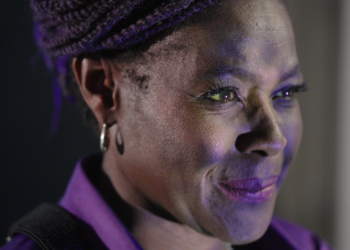
Tanya Goodrich, a 44-year-old physical therapist in San Jose, is among the new cohort of breadwinning wives. After her husband stepped back from his full-time job and embraced being the stay-at-home parent, Goodrich said she finally felt free to do less at home and lean in to her career.
She said she and her husband make a point of talking about the division of labor in front of their children.
“I love this dynamic,” she said. “It’s also cool to see the next generation, our children, seeing all of this and then also being okay to potentially have that. We talk about it openly in our household. ‘Mom is making the money right now’ and I joke ‘Dad has to rub my feet at night’ and we make a joke about it. I want them to be okay with it, and he likes it, too.”
The post More women are becoming breadwinners. What does that mean at home? appeared first on Washington Post.