The Trump administration is closely tracking reports of a death potentially related to pneumonic plague in Russia, with officials cautioning that much about the situation remains unknown.
The Centers for Disease Control and Prevention, the State Department, the Administration for Strategic Preparedness and Response, and other agencies have been working to learn more about the reported death of a laboratory worker who was employed at an institute dedicated to studying plague and quarantines imposed on several hospitals in Siberia, four officials said, speaking on the condition of anonymity to discuss internal briefings.
The situation has been complicated by Russian officials’ hesitation to share information, as well as reports that Russian intelligence officers have been involved, the officials said.
“We don’t have a lot of intel,” said one U.S. health official. “It’s in Siberia. Unless someone gets on a plane and gets to the U.S., it is low risk. We should be alert but not panicked.”
Late Sunday, Russia’s public health agency announced it had undertaken “a set of anti-epidemic measures” in the Irkutsk region of Siberia, after the lab worker’s death.
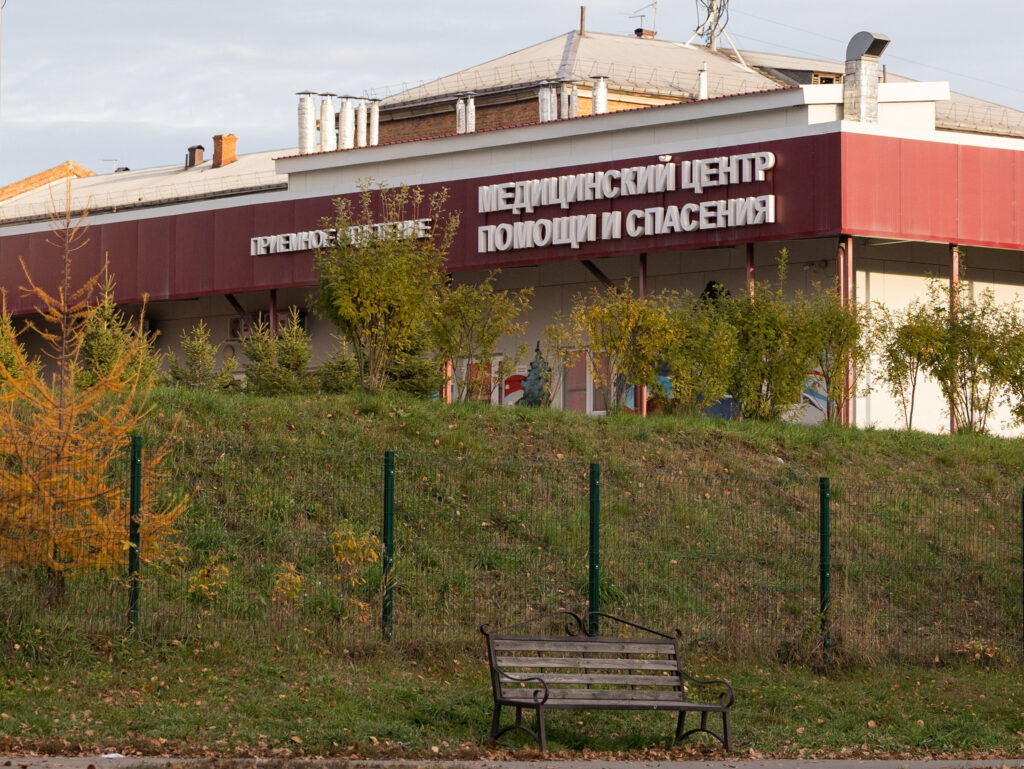
The lab technician, a 28-year-old woman, worked at the Irkutsk Antiplague Research Institute of Siberia and the Far East in the town of Shelekhov. She died after being diagnosed with pneumonia of “unknown” origin, according to the public health agency, Rospotrebnadzor.
The institute was set up in the 1930s as an anti-plague body and later expanded its scope to other highly dangerous diseases such as cholera, brucellosis, tularemia and anthrax, according to its website. It currently employs a staff of 95 people.
U.S. officials said that they could not judge the potential threat to the United States until more details were confirmed and encouraged Russian officials to immediately share information about the case.
The White House declined to comment on whether President Donald Trump had been briefed on the situation.
Paul Friedrichs, a retired Air Force major general who led the White House Office of Pandemic Preparedness and Response Policy before leaving government in January 2025, said that Russia should bring in experts from the World Health Organization, the European Union or the U.S. to help clarify the situation.
“The current narrative that a researcher made a mistake is plausible; human error is the most common cause of biosafety events; the reported risk mitigation efforts seem appropriate for an event like this,” Friedrichs said. “That having been said, first reports are usually wrong and Russia has historically not been particularly forthcoming about what actually happened.”
It is still not confirmed whether the deceased laboratory worker contracted pneumonic plague — which can lead to severe lung infections and be spread person to person — or another disease.
Pneumonic plague is almost always fatal when untreated, but many patients recover with a prompt course of antibiotics. The incubation period for this type of plague is up to six or seven days.
Several current and former U.S. officials said they were hoping to learn whether Russian officials’ reportedly elevated response was because they had worked to alter laboratory samples of existing plague, a technique known as gain of function.
Ashish Jha, who helped lead the White House’s pandemic response under the Biden administration, noted unconfirmed reports that Russian security services had been involved in escorting vehicles to hospitals. That would be “concerning,” Jha said.
“We also know Russia has an active offensive biological weapons program, and so we don’t really have a full understanding of what was going on in this facility,” he added.
The situation in Russia has drawn additional scrutiny in the wake of the coronavirus pandemic. Some lawmakers, scientists and Trump have asserted that the coronavirus outbreak began with a laboratory leak in China.
One Russian news report said that the technician “allegedly broke a test tube containing the pneumonic plague pathogen” on Sept. 25, that she soon fell ill and that she was taken to a hospital, where she died Friday.
On the same day, regional governor Igor Kobzev announced he had held a meeting with Russia’s chief sanitary doctor, Anna Popova, who had personally flown to Irkutsk, to follow up on “information that had emerged regarding a suspected case of a highly dangerous infection in a resident of the region.”
The governor of the neighboring republic of Buryatia, Alexei Tsydenov, said in a statement that the employee died “possibly from the plague” but noted that “there are no plague outbreaks” in his region.
Tsydenov is the only official who has publicly said that the cause of the technician’s death may have been linked to plague.
Unconfirmed Russian news accounts also said the woman may have exposed between 90 and 200 contacts at the hospital where she was treated and later died.
People who were in contact with the lab technician have been examined and continue to be monitored using “daily lab tests,” said Maxim Modin, the mayor of the Shelekhovsky district in the Irkutsk region.
The inpatient medical facility where the woman was treated has been quarantined, Modin said in a statement on the Telegram messaging app published Saturday.
“Laboratory operations have been suspended; samples are not being collected, and scheduled inpatient tests are not being performed,” he said.
If there is person-to-person spread among those individuals, Russian health authorities “can do the basic epidemiology and quarantine and isolate if people get ill,” the U.S. health official said. “Now that they’re aware and on alert, I suspect they’ll able to treat people fairly quickly.”
U.S. officials said American laboratory response networks and emergency providers should be equipped to respond to pneumonic plague if a case is detected here.
If Russian authorities confirm the death to be caused by pneumonic plague, they are supposed to report that to the WHO. But that reporting may not be immediate while Russian officials conduct lab and tissue samples to confirm the presence of the Yersinia pestis bacterium that causes the disease, the U.S. health official said.
Plague is an infectious disease usually found in small mammals and their fleas. Humans can be infected through the bite of infected fleas or animals, unprotected contact with infectious bodily fluids or contaminated materials, or inhaling respiratory particles from a patient with pneumonic plague.
While plague was infamously known as the “Black Death” during the 14th century, causing more than 50 million deaths in Europe, the disease is now treatable with antibiotics and the use of standard precautions to prevent infections.
Plague is a rare but persistent cause of illness in rural areas in the western United States and certain regions of Africa and Asia. More recent plague epidemics have occurred in Africa, Asia and South America, and most cases in humans since the 1990s have occurred in Africa. The disease remains endemic in several countries, such as the Democratic Republic of Congo.
Bubonic plague is the most common form of plague globally and is caused by the bite of an infected flea. Human-to-human transmission of bubonic plague is rare.
Pneumonic plague is the most virulent form. Symptoms can appear quickly, sometimes within 24 hours after infection. It can spread from person to person through respiratory particles. Without early diagnosis and treatment, pneumonic plague is fatal. However, when detected and treated early, within 24 hours of symptom onset, recovery rates are high, according to the WHO.
An average of seven human plague cases are reported each year in the United States, according to the CDC, with most cases occurring in the West, especially in northern New Mexico and in Arizona.
The post U.S. officials seeking details of reported Russian plague death, quarantines appeared first on Washington Post.