I supported the 2003 U.S. invasion of Iraq, convinced that it would lead to greater democratization in the Middle East. We all know how that worked out. Since then, I don’t have a lot of certainties about the world in general, and the Middle East in particular. I’m not even sure what to make of the removal last week of the last U.S. troops from Iraq —1,500 personnel in all, out of the more than 1.5 million who served during a deployment lasting more than 23 years. Instead of hot takes, what I have are memories, concerns and uncertainties.
I was a regular visitor to Iraq from 2003 to 2011, analyzing and reporting and occasionally advising U.S. commanders. It was a fascinating and formative experience that revealed to me how the neat verities of political dogma break down when they come into contact with on-the-ground reality.
During my first visit, in August 2003, I accompanied a Marine Force Reconnaissance unit on an early morning mission. Along the way, our little convoy was hit with an improvised explosive device. No one was hurt, thankfully. The Marines stopped, jumped out, and tried to find who had set off the bomb.
They came back to the light armored vehicle I was in, bringing with them a young Iraqi man in a tracksuit, his hands zip-tied together. They thought he had done it, but no one was able to communicate with him, because the Marines didn’t have an interpreter. They were also so shorthanded that at one point a sergeant put the detainee in the back of the vehicle with me, handed me a pistol, and told me to cover him while they went and did something else.
That experience revealed to me how undermanned the U.S. occupation force was and how little Americans understood of what was going on in a country they were suddenly running. We could not even communicate with its inhabitants in those days before “terps” were hired to bridge the language barrier. It was my first intimation that the invasion was not going according to plan.
During the next three years, I saw the situation getting a little bit worse each time I returned — more bombings, more chaos, more casualties. I could track the growing security threat by the vehicles I rode in. I began with unarmored, canvas-top Humvees and ended up in hulking, heavily armored MRAPs. Once, in Mosul, the Humvee in front of mine hit an IED, and the convoy I was in took automatic weapons fire.
I was always impressed by the U.S. troops I met, but I became increasingly skeptical of the gung-ho optimism invariably projected by their commanders. I recall getting briefings from brigade or battalion commanders who told me that the previous unit in their “AO” (area of operations) had really screwed up, but they had all the trend lines going in a positive direction, as illustrated by endless PowerPoint slides. Then a few years later, I would visit the same base and get the same briefing from a new unit that had just rotated in. I had, and still have, the greatest respect for the U.S. military, but I learned to distrust officers’ conviction that they were achieving their mission — because if they admitted failure, they would be the ones blamed.
I also came to see that the U.S. military deployment had become what the troops call a “self-licking ice cream cone.” I remember one salty Marine sergeant telling me in a giant DFAC (dining facility): “The only thing most of these guys are doing here is turning food into shit.” Simply sustaining and defending the U.S. military’s massive logistical footprint had become in many ways the military’s core mission.
The longer I spent in Iraq, the less I understood it. Traveling around the country made me aware of the tangled skein of interests — familial, tribal, ethnic, religious, geographic, economic — that underlay the conflict. It was easy to talk in Washington about the war as a battle between “good guys” and “bad guys.” It was harder to do when you saw how murderous and corrupt even many of our allies in the Iraqi government were.
But even as I grew disillusioned by the war I had foolishly supported, I worried about the cost of a premature withdrawal. I feared that would only accelerate the bloody Shiite versus Sunni civil war unleashed by our invasion. Thus, I supported the 2007 “surge” that sent 30,000 more troops to Iraq and changed their mission to focus on population security, not just chasing insurgents. Violence fell by 90 percent.
A few years later, I opposed President Barack Obama’s decision to pull out the U.S. troops in 2011. Tragically, that concern was vindicated when the resulting power vacuum was filled by the Islamic State. The group’s rampage through Syria and Iraq necessitated the return of about 3,000 U.S. troops in 2014 — this time not as occupiers but as enablers for local security forces.
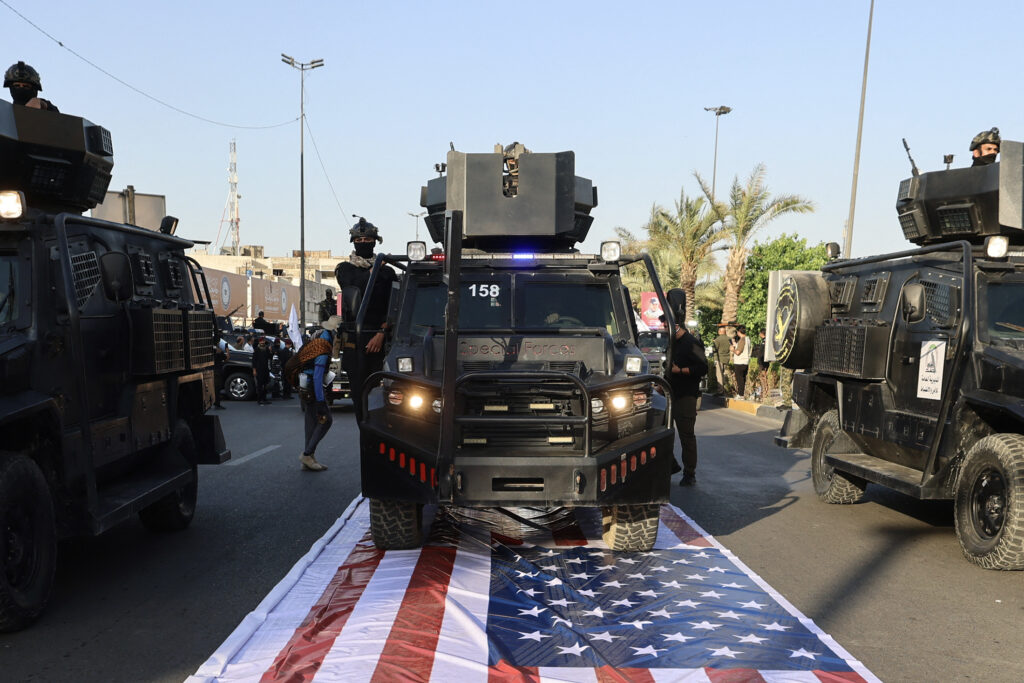
That mission is now basically completed, but the U.S. troops, few as they were, were still a small counterweight to Iranian influence. The departure of the U.S. forces was supposed to be accompanied by the disarmament of the Iranian-backed militias, but of course that hasn’t happened.
Was it worth keeping a token U.S. force in Iraq? I’m honestly not sure. What I am sure of is that the invasion was a catastrophic mistake that resulted in huge costs — $1.8 trillion in spending, 4,418 dead Americans, hundreds of thousands of dead Iraqis—without any appreciable strategic benefit. It’s true that things are much better in Iraq now than they were a decade ago — the country is mostly peaceful, and the economy is rebounding — but the most lasting consequence of the conflict was, just as its opponents predicted, to entrench Iranian influence in Iraq.
The whole experience has taught me to be more wary of America’s ability to transform foreign lands and made me more skeptical of wars of choice. The ongoing conflict with Iran only reinforces those lessons. The Iraq War hasn’t turned me into an isolationist or a dove — I still think it’s important for America to help defend freedom in places like Ukraine — but it has made me into a chastened hawk acutely conscious of the limits of American power. I hope our leaders have learned the same lessons, but as I read news that President Donald Trump is sending a third aircraft carrier to the Middle East, I fear that they have not.
The post We’ve left Iraq. But we haven’t learned its lessons. appeared first on Washington Post.