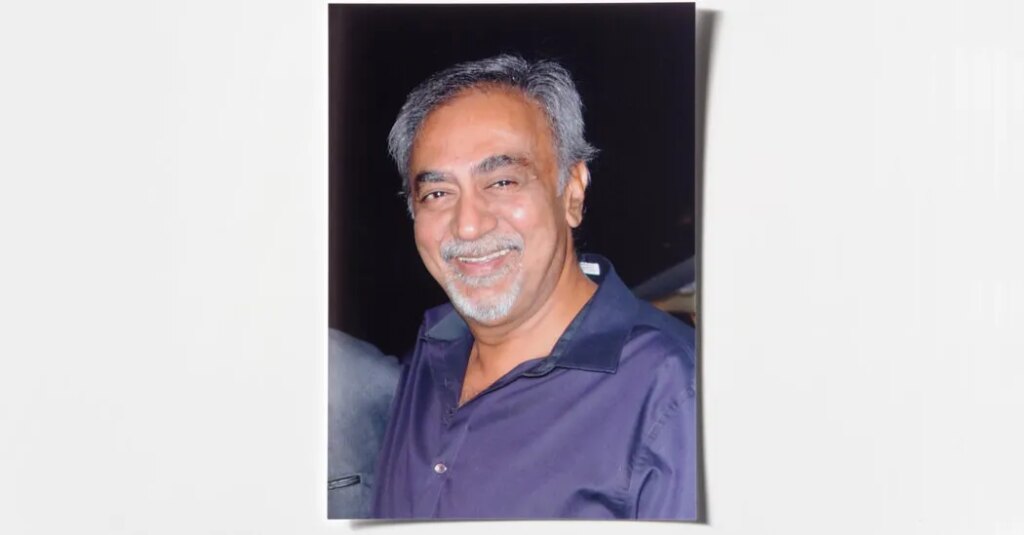
My mom was making lunch when she heard a thump come from the bedroom. She ran upstairs and found my dad face down on the carpet, blood seeping from a gash under his eye.
For days, he had been feeling lightheaded and fatigued since receiving a round of chemotherapy at Memorial Sloan Kettering Cancer Center. He was sitting on the edge of the bed when suddenly, he told my mom, everything went black. Thump. As my mom struggled to lift him from the ground, he vowed that he was done — done with Western doctors, who he said were “crooks” and “quacks”; done with “poisons” coursing through his body; done with sickening treatments he didn’t believe in.
“I’m going to die if I keep doing this,” he told her.
That evening, with a bruised eye and a stiff neck, my dad decided to book a flight from New Jersey to Arizona so he could check out a clinic he had found on the internet. On its website at the time, the clinic, Envita Medical Centers, said that its unique protocol had helped patients “outperform other renowned cancer centers for nearly two decades.” Its “proprietary” chemotherapy treatment was “so gentle,” it said, “that many patients report being able to hike and exercise” during care. My dad believed this outpatient clinic — which cost nearly $10,000 a week — could save him from the Stage 4 lung cancer ravaging his body.
In many ways, this was a predictable development. Long before the cancer, my father, Rajeev, who was 63, avoided conventional medicine with an intensity that bordered on phobia. He loathed the sterile waiting rooms, the detached doctors, the pricey medications. A sharp and successful entrepreneur, he created a small business that helped doctors submit insurance claims — an experience that he often said gave him an unfiltered look at the medical industry.
The modern medical system reminded him of all he learned to fear from his own father, an Indian homeopath, who worked at an alternative-medicine practice in Midtown Manhattan. Patients traveled from across the country to see my grandfather after finding him through televised interviews and a lecture series, where he disseminated his views that vaccines are dangerous and American children overmedicated. He also taught his audience about the healing power of homeopathy, an unproven alternative medical practice developed in the late 1700s.
While I always found my father’s fixation against modern medicine to be extreme, it was hard not to see things from his perspective as all the little indignities added up in the early days of his diagnosis. A brusque surgeon. A nurse who never looked up from her computer. Hours wasted in waiting rooms, treatment plans with no end in sight.
My mom, brother and I each took turns trying to persuade my dad not to go to Arizona. Memorial Sloan Kettering — ranked one of the best cancer hospitals in the world — seemed like the obvious choice, the only choice. Any deviation from the standard of care felt like a reckless gamble with death. I dug up a bad review about Envita’s treatments and high prices and read it to my dad; my brother researched holistic doctors in New Jersey who could complement his standard chemotherapy; my mom begged him to stay close to home.
But my dad was fixated on Envita’s online testimonials from patients who claimed to have beaten aggressive cancers with the clinic’s help. There was a woman who said a painful and “angry looking” tumor in her breast disappeared with Envita’s help; another who said she left the clinic “completely cancer free.” He would rather spend his money at Envita, he said, than line the pockets of a pharmaceutical industry that makes billions each year on cancer treatments.
As this unfolded in the fall of 2019, I dismissed my dad’s choices as an extreme reaction by someone who had long preferred natural remedies and didn’t like going to the doctor. But that was before the pandemic eroded trust in the medical system and the Make America Healthy Again movement elevated such skepticism into the federal government. Now I look back on my dad’s aversion to conventional medicine and realize it was more than just personal eccentricity; it was also an intimate preview of an ideology that was on the brink of going mainstream.
As my dad was, patients today are inundated with misinformation spread by alternative-medicine practitioners, social media influencers and public figures. They are willing to experiment with unproven therapies, often at great physical or financial risk, in part because they want more personalized and empathetic care — an antidote to the famously harsh aspects of traditional medicine.
It’s one thing for a doctor to inform you of all the clinical trials, the rigorous scientific evidence, the percentage chance of one therapy working over the other. But it’s another to be looked in the eye by another human and told that your suffering is real and that you will be OK, and to hear that there is, in fact, a secret cure, a magic bullet. Looking back on those desperate months with my father, I can see clearly how much he valued the feeling of his care above anything else.
A few days before we left for Arizona, I forced my dad on a walk through the canopy of late-October trees in our small suburban New Jersey town. I begged him one more time to stay with his current treatment plan. But with his bony arm linked with mine, he confessed what was really behind his decision.
“This is the first time in my life that I feel out of control,” he said, his raspy voice cracking. Coming across this clinic online, he said, was the only moment he had felt hope since his diagnosis. “I need to feel that.”
My dad seemed perfectly healthy in early 2019 when my mom dragged him to get his heart checked. A friend of theirs had recently told them about a CT scan that revealed he was at imminent risk for a heart attack. The friend credited the scan with saving his life, and my mom, suddenly worried at what could be lurking in their own bodies, made an appointment and forced my dad to come with her.
The scan, which cost them each $750 out of pocket, revealed mostly healthy hearts but showed a concerning image in my dad’s lungs: “interstitial lung disease prominent in the lung apices” and “a nodule of ground glass lesion in the superior segment left lower lung,” according to the report. The doctor called five days later, on a Saturday morning, to implore my dad to get it checked out. “Don’t ignore this,” my mom remembers him saying. My dad smoked several Marlboro cigarettes a day for some 40 years, but with no symptoms at the time, he dismissed the results as unnecessary hysteria from a doctor.
It wasn’t until the summer, when a deep and dry cough emerged and my dad began to feel short of breath, that he realized he might need to do something. So my dad turned where he always did when he needed health advice: our longtime family homeopath, a man he met through his father. Some of the homeopath’s remedies remain family lore: a poison-oak rash all over my body erased in hours; mysterious black splotches on my brother’s back gone overnight; even a remedy for our grumpy, dying cat, Boise, which supposedly helped him live another seven years.
In a series of emails and texts, my dad described his worsening symptoms to the family homeopath: red, scaly skin eruptions under his armpits; increased shortness of breath; rattling in his chest when he tried to sleep. He mentioned nothing of the scan. The homeopath (who died of Covid-19 in 2021) initially suggested that he try rubbing castor oil under his arms and also take Carbo Vegetabilis, a remedy typically used for indigestion.
My dad’s symptoms continued, and as the summer wore on, it became harder for him to walk up stairs without taking a break midway. “I’m getting really disheartened,” he emailed the homeopath in August. “So far the remedies are not doing anything for me.”
The homeopath then suggested he drink elderberry cough syrup and try mouth taping — sealing the mouth with medical-grade tape to force breathing through the nose. “You must try this therapy no matter how simple it looks,” the homeopath said in an email, attributing my father’s issues to mouth breathing and years of smoking.
As all of this was happening, I was 25 years old and living in San Francisco, oblivious to the crisis unfolding back home. It was only six years later, as I pored through my father’s emails, texts and medical records, that I learned of his decision to ignore that scan.
It’s this kind of scenario — the wasted opportunity to address an early-stage cancer, the recklessness of trying to manage it on your own — that several physicians told me ranks among their most troubling cases. Each told me a version of the same haunting story: A patient with a treatable cancer delays standard care for an unproven alternative, only to return once the disease has metastasized.
By September 2019, my dad’s breath became so strained that he relented and saw a pulmonologist, who recommended a bronchoscopy. The doctor called him back to his office two days later and told him the severity of what he found: cancerous tumors in his lungs. In the car home, my dad texted his homeopath: “So … I have a diagnosis of lung cancer. Adenocarcinoma,” he wrote. “Do you know of any alternative clinics? Before I go down the usual road of treatment.”
“I’ll check,” the homeopath responded.
That night, two of my parents’ friends came over with a bottle of wine. My dad declared that he was going to beat the cancer, one way or the other. But there was a flatness to him, my mom remembers, a deep sense of uncertainty she had never noticed in 31 years of marriage.
At 5 the next morning, my mother woke to find my dad’s side of the bed empty. Horrified at what he may have done in the night, she jumped out of bed to look for him. She discovered him in his office, his face lit by his computer screen. “What are you doing?” she asked.
“What do you think I’m doing?” he responded tersely. “I’m searching for an alternative.”
In the early days after his diagnosis, my dad grew more fearful, more depressed. His eyes welled up easily, and he repeatedly canceled plans with his friends. We quickly learned that the cancer had metastasized to his brain. Stunned, we asked his oncologist how long his patients tended to live with such advanced cancer — months? Years?
He declined to answer with any certainty, saying that everyone was different. But the doctor said he would prioritize my dad’s quality of life and craft a chemotherapy plan that wouldn’t affect his thinning salt-and-pepper hair. None of this seemed to give my dad any comfort.
“Prognosis?” my dad’s best friend texted him after the appointment.
“Death. Eventually,” he answered. “Drugs drugs and more drugs for now.”
Each appointment at Memorial Sloan Kettering started the same volcanic fight at home: My dad would shout about how he thought the chemotherapy was going to poison him and how he would feel much safer at any of the alternative clinics he had read about online. We would counter that he was being hysterical, irrational. Then he would accuse us of the same.
“I know that I am with the best doctor,” he said of the hospital’s oncologist during a teary argument one evening. He said he just needed to feel like he was going to survive this, even if the odds weren’t in his favor. “Why don’t you guys get it that I’m not feeling the power?” he said.
“I think you’re just saying that you’re scared,” my brother said.
“Yes,” my dad said. “I’m scared shitless.”
Was there something else the oncologist could have said to make him feel better without stretching the truth? I’m not sure. What I do know is that after leaving these appointments, I, too, felt a sense of despair. The idea of my dad’s enduring intense treatments and sickening side effects for the rest of his life was dreadful. Hopeless.
It was three against one in every conversation with my dad, and we initially succeeded in getting him to Memorial Sloan Kettering for his early intake appointments and even a round of chemotherapy. But we started to lose ground the more he went online and the more he was flooded with ads for all the seemingly better alternatives: spalike clinics with vitamin infusions, naturopathic doctors and detox diets.
Of course, those ads weren’t reaching him by accident. Researchers have found that alternative cancer-treatment clinics in the United States and Mexico pay to target cancer patients like my dad, who search for phrases like “Stage 4 cancer survival rate” and “chemotherapy side effects.” In some cases, they have found, these alternative clinics have paid to appear above search results for cancer hospitals, like MD Anderson Cancer Center and the Mayo Clinic.
Through his emails and texts, I can now see how rapidly my dad was drawn into a world of misinformation and alternative cancer clinics. He came across a blog run by an author known for his conspiracy theories about cancer treatment and vaccines and signed up for the mailing list. He then considered a clinic in California that claimed, on its website, that it was internationally recognized for its “remarkable rate” of helping terminal patients into “long-term remissions.” Its treatment program cost $8,500 a week and another $28,500 for an inpatient stay at a hospital in Tijuana, Mexico, according to a price breakdown emailed to him.
My dad booked a plane ticket, but a cousin, helping with his research, alerted him to the history of the founder, who was sentenced to a year of prison in the 1960s after three cancer patients died under his care. (That conviction was later overturned.) “Thank you!” my dad emailed her back. “This is the kind of stuff I need, since I am desperate and grasping at straws.” He canceled his flight.
He then connected with a clinic in Florida whose treatment plan of “nontoxic” alternatives cost $4,000 to $5,000 a week. (The clinic’s lead doctor would later have multiple complaints filed against him, beginning in 2021, for therapies he provided to several patients. His license was revoked in 2025.)
But it was Envita, based in Scottsdale, Ariz., that he was most taken with. On its website, the clinic said that it employed doctors “from a variety of disciplinary backgrounds,” which included those with standard medical licensing and naturopaths. In an email, a patient coordinator told my dad that the clinic was “strategically” located in Arizona because the state “has the largest scope of practice for integrative medicine.” The clinic also claimed to have helped “thousands” of patients from around the world.
My dad’s cousin happened to know a friend of a friend who went there for late-stage cancer, and my dad was able to call him. He told my father that before he went to Envita, he was emaciated from his cancer and sure he was going to die. But now, he said, he was golfing, boating and enjoying time with his children.
After that conversation, it was settled: My father knew that Arizona was where he needed to be.
When we arrived in Scottsdale, my dad — whose face was still bruised from his fall — said the city felt like somewhere he could heal. The air was fresh and temperate, a welcome reprieve from the late fall chill that was settling into the East Coast. Arid, rolling hills, dotted with saguaro cactuses, sat beneath the large blue sky. I could imagine all the hiking and biking my dad would do here if he got better.
Envita was in an unassuming office park, between a luxury-homes business and a gastroenterologist. The inside was bathed in natural light, with clean wood floors and comfortable brown leather couches. Cheery receptionists greeted us at the front desk.
A provider, who was licensed as a naturopathic medical doctor, brought us into an office and sat with us for an initial consultation that lasted nearly four hours (and which cost $450). After learning about my dad’s medical history, he told us what to expect while at Envita. He emphasized that the clinic was integrative, which meant it combined both conventional cancer therapies — like chemotherapy, immunotherapy and radiation — with alternative therapies like vitamin infusions and supplements.
The naturopath turned to a whiteboard behind him to explain Envita’s “proprietary” chemotherapy regimen ($2,315 per treatment), which included lowering my dad’s blood sugar with insulin and delivering low doses of chemotherapy into his body. The side effects would be minimal, he said, far less than what my father felt with standard chemotherapy. Envita would also send him to a clinic it operated in Mexico to receive a cell therapy ($125,000) that the naturopath said would help his body fight off whatever cancer cells remained.
While I was sitting in his office, a nagging thought emerged: What if Envita actually had the secret cure for my dad? Its treatment seemed sophisticated, thoughtful and promising. The naturopath said his own father was successfully treated at Envita — evidence of how much he trusted the protocol that he was recommending for mine.
Those are the things that I remember, at least. Now, looking through my dad’s medical records, I can also see that his treatment plan came with a battery of what Envita calls “supportive” therapies. Many of them had little to no clinical evidence supporting their use in cancer care. They included infusions of hydrogen peroxide ($215 per infusion); a therapy that included adding medical-grade ozone gas, a known toxin, to his blood (also $215 per infusion); and coffee enemas, which carry side effects such as rectal burns and severe infections. If the naturopath told us about these specific therapies with the risks clearly outlined, I didn’t hear it. By that point, my skepticism had largely fallen away, and I heard what I desperately wanted: that the clinic was safe and effective.
After the consultation, I looked at my dad and said he should commit. I texted my brother, who was home in New Jersey, and said I was “pretty sold.”
Later, I sent my best friend a voice memo and said I left Envita feeling “good and supported and trusting in what they were doing.” For the first time, I told her, I felt hopeful about my father’s chances.
That weekend I helped my dad get situated in a rental house, while my mom flew home to prepare for the long-term move. When my dad and I returned to the clinic for his first round of treatment a few days later, a receptionist handed him a thick stack of forms to sign. He started by diligently reading the first few pages, but then laughed and nodded his head as he quickly flipped through the rest. “Who knows what I’m signing,” he said. He handed the papers back to the receptionist and gave her two credit cards to pay for the treatment, instructing her to split the payments so he wouldn’t max out either account.
A nurse took us to the infusion room, a comfortable space with leather recliners and several patients sitting with IV drips. I sat next to my dad as they connected him to an IV and the first infusions dripped into him.
Over the next few days, as my dad prepared for the long haul, we went to Target to stock the rental house with everyday items. I slept in his bed just in case he needed anything in the middle of night, and we fell asleep watching episodes of “Friends.” At some point each night, I would wake up to his deep, wheezing cough. I remember comforting myself with the thought that soon his cough wouldn’t be so bad.
My mom came later that week, and I returned to San Francisco. Life then seemed to settle into a rhythm. My parents went to the clinic for several hours every day for my dad’s treatments, and when he felt well enough, they went on walks at a nearby park and sat in the sun near the water fountain. He wore a fedora hat and T-shirts that exposed his skinny arms. Ten of his closest friends came to visit one weekend, and they went to dinner, played cards and worked on a puzzle of the San Francisco skyline.
I visited Scottsdale every few weeks and was pleasantly surprised each visit at how much better my dad looked. His shortness of breath improved, his cough no longer sounded as intense, and he was getting large doses of steroids from Envita that improved his energy. But most important, he finally believed in his treatment plan. He had confidence, support, hope. Taken together, those things can have a real effect on the body.
Our hours at Envita were pleasant — a sharp contrast with our agonizing appointments at Memorial Sloan Kettering. The nurses and doctors were kind and personable and asked me about my life and work in San Francisco. They had inside jokes with my dad, and he befriended a few fellow patients, who gave him a sense of community, a feeling that he was no longer alone.
At some point, the hope he was feeling morphed into actual belief. My dad emailed his uncle to say he was doing well and that he may just beat the “dismal” odds of Stage 4 lung cancer. He also texted a former co-worker that he should be “cancer free” by the end of February. “I’m fully intending to recover!” he wrote.
Shortly before Christmas, and about one month into his treatment, Envita sent my dad to Hermosillo, Mexico, for the first part of his cell therapy, a “proprietary” treatment that the clinic was not authorized to perform in the United States. Envita arranged the flights, the hotel and transport to and from the airport.
Over two days, my dad sat in the bare clinic for hours hooked up to an IV. Envita told him they were extracting cells that would then be trained to destroy his cancerous ones. The plan was for him to return to the clinic a few weeks later so they could infuse the cells back into his body to eat up the bad ones — “my little Pac-Mans,” my dad called them.
But things started to unravel after he got back to Arizona. His shortness of breath returned, and his appetite diminished. His nose bled frequently, and his whole body regularly erupted into sudden, violent bouts of chills. The fatigue consumed his days. His cough increased, along with a rattling sound when he breathed. He had lost so much weight since beginning treatments at Envita — 20 pounds, in addition to the 24 he had lost before he arrived at the clinic — that he found it painful to sit on a chair without a cushion. His hair also started falling out so rapidly that one evening we went to the barber so he could shave it all off. When we got home, I saw him quietly tear up as he caught a glimpse of himself in the mirror.
I scroll through pictures from this time and see a man so unrecognizable that they are difficult to look at: a skeletal face with sharp cheekbones and sunken eyes; shoulder bones protruding through his sweater; skin darkened from the radiation.
Privately, my dad started to acknowledge to himself that he was going to die. But the only person he admitted this to was his best friend, who came to visit him around the holidays. Still, day by day, my dad went back to Envita for treatments, hanging on to the hope that maybe he was wrong.
At this point, the costs were staggering: around $200,000 since moving to Arizona, a price that mostly included invoices from Envita. There were also scans and outside therapies the clinic recommended, like “colon hydrotherapy,” a treatment that supposedly cleansed toxins from his body (though there’s little scientific evidence to support it). This accounting does not include all the supplements he needed to take, which at one point was 14 different pills, twice a day.
His Envita medical records from this time detail his lethargy, his cough and his precipitous drop in weight. At certain points, the records show, Envita’s doctors referred my dad to the emergency room or to an outside pulmonologist when his symptoms got particularly bad. But there were also a few bits of good news that my dad clung to. In January, he was told that there were some signs of improvement in his lungs and that the lesions in his brain — which were being treated by an outside radiation oncologist — were disappearing.
Any positive news contrasted with the person we were seeing — a man suffering and shrinking, a husband and father wasting away. My mom, desperate to return to her support system in New Jersey and horrified by my dad’s rapid decline, suggested that they go back to Memorial Sloan Kettering — or, at the very least, call the oncologist for a second opinion. But my dad refused, saying that Envita’s treatments were just running their course.
At the clinic one day, a fellow patient noticed my dad was struggling and suggested he read up on fenbendazole, an antiparasitic typically given to animals. Its use had been going viral online. My dad found the blog of a man who claimed to cure his Stage 4 lung cancer with a regimen of fenbendazole, a miraculous recovery that stumped his oncologists. There were Facebook pages, articles and YouTube videos from other patients who claimed similar results. He ordered the powder on Amazon. When it arrived the next day, he mixed it into some yogurt and ate it with a spoon.
But a few days later, my dad sank into the couch as his oxygen level dipped dangerously low. He refused to let my mom call an ambulance, for fear of having to go to a hospital.
“Please, Rajeev,” she said. “You are going to die on this couch.” She ignored his resistance and called 911.
I arrived in Scottsdale that evening and went straight to the hospital. My dad, breathing through an oxygen mask, looked more gaunt than when I saw him a few weeks earlier.
When a doctor in the I.C.U. asked us where my dad was being treated for his cancer, he wasn’t surprised by the answer. The hospital, he said, receives patients from such clinics in the area all the time, and they always come to him “like this.” He gestured toward my father, gasping for air.
“You wasted your money,” he said.
It was a callous remark to a family that was scared, that was far from home, that already knew they had spent a lot of money. What a jerk, I remember thinking of the I.C.U. doctor. Where was the bedside manner, the empathy?
But what I didn’t know then was just how much history Envita had with both state and federal officials. The medical center was founded in 2001 by a man named Santo Dino Prato, who once said that he had a “God-given gift of serving people and transforming the broken health care system in America.” Prato has a naturopathic license in several states but has never held one in Arizona.
As Envita grew in its early years, the clinic repeatedly came under scrutiny. In 2006, for example, the Food and Drug Administration sent Envita a warning letter for providing a cell therapy that it did not have the approval to perform in the United States. Instead of pursuing a formal drug study under the F.D.A., Envita sidestepped U.S. regulators and established the clinic in Hermosillo — the same place where my father was flown for treatment.
Then, in a 58-page report compiled by the F.D.A.’s Office of Criminal Investigations in 2015 — which I obtained through a public-records request this year — the agency wrote out a long list of “questionable activity” reportedly conducted at Envita. Those issues included selling treatments “at a high cost to desperate subjects” and administering unapproved drugs to vulnerable, end-state cancer patients. The report notes that a member of the Arizona Naturopathic Physicians Medical Board also told federal investigators that Envita had been the “target of complaints” by patients and their families for issues including its high prices and experimental treatments.
Nothing ever came of the investigation. The case was closed, according to the F.D.A., because of “a lack of interest by the U.S. attorney’s office” in Phoenix. In the years following, a doctor working at Envita had his license temporarily suspended for “gross negligence” in the treatment of several pediatric cancer patients. Then, the family of a cancer patient who woke up paralyzed after a procedure at Envita sued her doctor and the clinic, accusing it of creating a “false impression that the health care services it offered were actually above the standard of care for cancer treatment.” Envita denied those claims, and the case was settled last year.
Last month, I emailed Envita a long list of questions about its history and my father’s care. Envita answered through a spokesman — and also sent me a letter from its lawyer, threatening a defamation action against this publication. In its lengthy response, Envita said that it does not guarantee outcomes and that patients, including my father, sign consent and disclosure forms that include the proposed treatment, potential risks and anticipated costs.
The clinic said it “wholly” rejects the “unsubstantiated claims” in the 2015 F.D.A. report and that Prato “does not practice clinically.” Envita said the physician whose license was temporarily suspended no longer works for the clinic and that the case “should not be represented as evidence” concerning Envita’s current staff. The clinic said the case involving the paralysis of a patient “was resolved without any admission of wrongdoing or adjudicated finding” and “is not representative of Envita’s overall clinical experience.” The physician, who still works for Envita, was temporarily put on probation by the Arizona Medical Board last year.
“Any organization that has operated for over two decades in health care is going to face challenges,” the clinic said, adding that its policy is to comply with “all applicable F.D.A. and other regulatory requirements.”
Envita, I learned, is not unique. I also found dozens of similar businesses around the country that provide cancer patients with costly, unproven treatments. I spent months trying to figure out what kind of oversight exists for such clinics, only to discover a confusing patchwork of laws that vary from state to state. What’s more, many of the clinics I found were affiliated with practitioners with long disciplinary histories that included allegations of improper diagnoses, botched operations and patient deaths.
Alternative treatment protocols like the one my dad received at Envita are often not covered by insurance and can cost families tens — if not hundreds — of thousands of dollars. My parents were able to shoulder the expense, but there are many whose decision to seek care drives them into serious debt. I came across hundreds of GoFundMe pages of people asking their communities for help and spoke to several families whose loved ones sold off assets or ran through their small savings to afford such treatments. Some claimed they were betrayed or misled by their clinics but felt their only recourse was to write a bad online review. (I would also later leave Envita a one-star review online.)
As I pored through my dad’s Envita records this year, I tried to understand what, exactly, my family spent so much money on. Envita told me that my dad came to them with an “extraordinarily serious and complex medical condition” and that they only selectively take on such cases. They said his protocol was based on his “specific clinical circumstances” and other factors including the severity of his disease. But when I asked several oncologists across the country to take a look at his records from Envita, they were stunned. One told me that he struggled “to identify a biologically plausible or mechanistically coherent rationale” for much of my dad’s treatment plan. Reading the records, he said, made him “sick.” Another wrote back, in all caps: “OH DEAR.”
What has been the hardest for me to learn, though, is just how doomed my dad was from the moment he was diagnosed. I recently spoke to my dad’s oncologist at Memorial Sloan Kettering, Dr. Mark G. Kris, who said sticking with a conventional regimen of chemotherapy may have eventually improved my dad’s quality of life. Still, no matter what he did, his chance of long-term survival was slim. I have racked my brain to pinpoint a moment when this futility was made clear. But I cannot find one.
Kris did not remember my father; it has been almost seven years, and he was his patient for only about a month. But when I explained my dad’s decision to abandon conventional oncology and asked what he thought, his answer surprised me: “I could not promise him his life back,” he said. “So in that context, he needed to decide how he felt best to fight it.” Kris said he supports patients’ doing whatever they need to feel hope, particularly when they’re as sick as my dad. But, he cautioned, the only thing worse than no hope “is false hope.”
It strikes me, only now as I revisit these moments, that all the conversations about my dad’s illness centered around what he could and should do. It was never, as far as I can remember, about what he — what we all — actually wanted out of the time he had left.
Back then it felt as if there were two options: treatment at any cost or death. I cannot remember a moment when the third option — acceptance — even crossed our minds.
As my dad rapidly deteriorated in the Scottsdale I.C.U., we frantically tried to get him back home to New Jersey so he could be closer to friends and family. But he was too fragile and could barely breathe on his own. After he was intubated, the doctors ran some tests that determined his disease had progressed significantly in the last month.
Eventually, after nearly a week in the hospital, my mom, brother and I decided it was time to pull him from the breathing machine. The I.C.U. doctors told us my dad would last 30, maybe 60 minutes without it. But as the hours passed with him still alive, they moved us into a large, sunny room to accommodate all the family that was pouring in to say their goodbyes. The room was full of chatter as we shared stories about my dad while he lay there with a morphine drip.
I thought he was sleeping when, suddenly, a sound came from his bed: “Dog!” he gasped. “Yogurt!” — a breathless plea for the dog-deworming powder he had bought. My mom, brother and I told him that the cancer had spread too far; the powder was not going to save him. But the more we refused, the more indignant he became that we were squandering his last chance at survival. “You’re killing me!” he croaked.
We asked everyone to leave the room as he continued to groan for the powder. The next moment is the one that still haunts me. Instead of sitting at my father’s bedside while he remained alert and saying everything I wanted to say (that I loved him, that I would look for him in the birds), instead of hearing all that I wanted to hear (that I was a good daughter, that he was proud), I walked to the grocery store to buy the yogurt. When I returned, my mom poured the powder into the yogurt and fed it to him with a plastic spoon. The yellow color from the fenbendazole stained his white goatee.
He somehow hung on for another day, barely conscious, waiting for a miracle as my mom and I slept on hard recliners in his hospital room. That night I heard him rustle in his bed, and I walked over to see if he needed anything. “I don’t think I’m going to make it, Trishi,” he whispered. A quiet, final surrender. “It’s OK,” I said gently, careful not to wake my mom. “We will be OK.”
By the next afternoon, he was gone — no miracle, no secret cure. Just precious, final moments lost to something he read online.
Trisha Thadani is a former health reporter for The Washington Post. This is her first article for the magazine.
The post Dying Patients Are Inundated by Misinformation. My Dad Was One of Them. appeared first on New York Times.