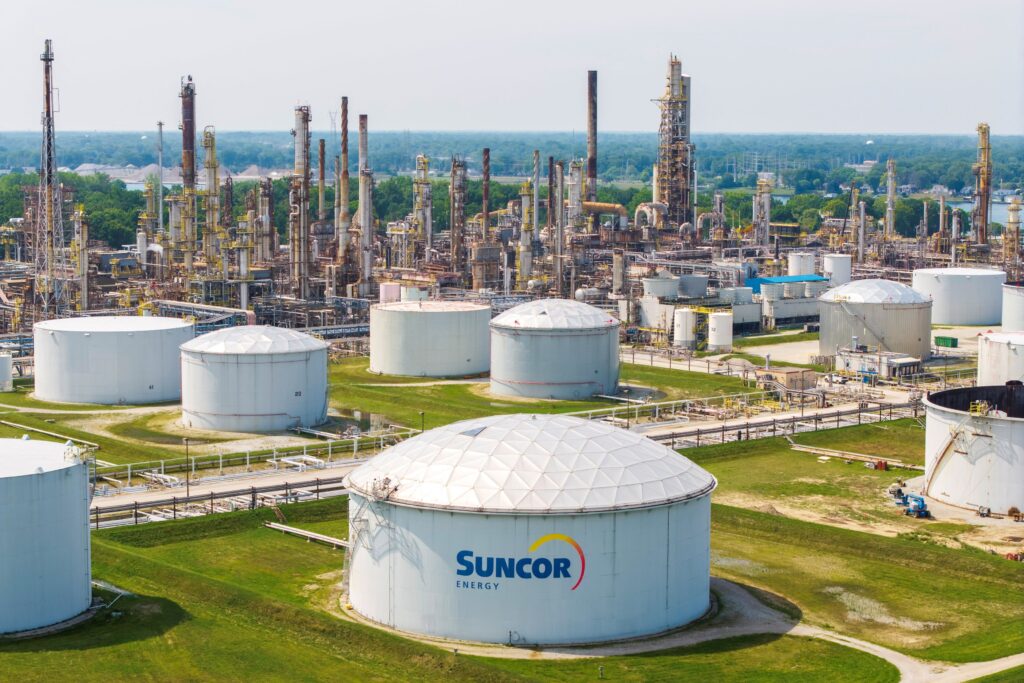
The Supreme Court will start a new term Monday by hearing arguments in Suncor Energy v. Boulder County, a case that has the potential to bankrupt every major oil and gas company if the justices don’t close the floodgates.
The city and county of Boulder, Colorado, sued Suncor and ExxonMobil under a state law in 2018, arguing that their energy production released carbon emissions, which contributed to global climate change, which intensified weather-related harms, which created millions in local damages. The Colorado Supreme Court let these specious claims proceed.
Dozens of similar suits have subsequently been filed by localities across America, seeking billions in damages. A former member of the Boulder legal team, David Bookbinder, admitted last year that the goal of these cases is to impose a “carbon tax” through juries because Congress won’t pass one. If even a few suits succeed, “all these companies declare bankruptcy,” Bookbinder said. Too bad for anyone who drives a gas car or heats their home with fossil fuels.
While Boulder’s theory of liability seems far-fetched, the issue before the court on Monday is different: whether federal law allows Colorado law to penalize companies for contributing to climate change. The decision could address a core question about federalism: To what extent can blue and red states impose their will on one another?
One issue is whether federal law preempts the Colorado law Boulder is suing under. The companies argue that interstate emissions regulation is an inherently federal task. The Environmental Protection Agency has set rules under the Clean Air Act of 1970, and if Colorado seeks to do the same, it would interfere with federal authority.
A 2011 Supreme Court decision provides strong support for these arguments. States and New York City sued energy companies under federal law for contributing to climate change. But the court decided this was a job for the EPA. Writing for an 8-0 majority in American Electric Power Co., Inc. v. Connecticut, Justice Ruth Bader Ginsburg said, “Congress delegated to EPA the decision whether and how to regulate carbon-dioxide emissions from power plants.”
A ruling on similar grounds now would prevent future attempts to regulate emissions through state courts. But this case is also an opportunity for the high court to address the growing problem of states seeking to regulate beyond their borders.
Boulder’s suit would allow Colorado to penalize a company for conduct outside of its borders. Every plant and refinery — and, for that matter, every car or cow that produces emissions — could theoretically be subject to the state law. As the dissent at the state Supreme Court put it, “That just can’t be right.”
The structure of the Constitution doesn’t allow this. When states ratified the founding document, they kept “all the rights of sovereignty which they before had” and which were not given to the federal government, as Alexander Hamilton wrote in Federalist No. 32. How can Tennessee retain its sovereignty if Colorado is permitted to regulate its power plants?
The justices may choose to punt the case back to lower courts on procedural grounds. That became more of a possibility after Justice Samuel A. Alito Jr. recused himself last week. He didn’t offer a reason, in line with court tradition, but climate activist groups had pointed to his individual stock holdings in energy companies such as ConocoPhillips, which is not a party in the case. A 4-4 split would let the suit move forward.
The American intuition that states function well as laboratories of democracy depends on protection from horizontal power grabs by other states. And citizens’ faith in our constitutional system requires the power to vote out lawmakers. But Boulder’s effort would circumvent Congress and let a Colorado jury make law for 49 other states.
The post The Supreme Court takes up climate change — and much more appeared first on Washington Post.