In November 2008, I was eight months pregnant, watching the election returns roll in. Somehow, I’d found a way to make myself even more uncomfortable: I was upside down on my couch. My head was on the cushions. My feet dangled above me. I strained to balance myself while trying to keep something called mugwort near my toes. My daughter was breech, and I was willing to try anything to help her flip, even if it meant turning the world upside-down.
I’d seen from a Google search that “moxibustion” with the smoldering herb might help with turning a breech baby. As a physician and scientist, I was well aware there was limited peer-reviewed evidence for what I was doing. I’d never heard of anyone prescribing moxibustion. But with the window narrowing for the birth I had hoped for, I was more willing to believe there might be something to it. Although I was skeptical, I thought, “It couldn’t hurt! Why not?”
My impulse to seek out and use unproven health information is not uncommon. New research released by the Edelman Trust Institute and our team at the Yale School of Public Health, where I serve as dean, shows that many of us are willing to look for health guidance in unreliable places.
In a world where information comes at us in fragments and trust in institutions is crumbling, it’s worth understanding what we believe and why. Our new analysis tested views on six unfounded health claims about subjects like childhood vaccines, raw milk, fluoride in drinking water, and so on. Huge majorities of the 13,000+ people surveyed, 70% globally, believed at least one of these claims. And the people who believed these claims weren’t simply those without exposure to science; most of them had taken a university-level or higher science course. Nor did susceptibility fall neatly along partisan or generational lines.
The search for alternative answers is far more mainstream than we tend to assume. Young or old, left or right—almost all of us are confused about some aspect of health information.
That’s especially true, the analysis shows, in moments of fear and uncertainty, when your life or the life of someone you love is on the line. In fact, those who frequently interacted with the health care system were more than 50% more likely to hold three or more of these unfounded beliefs.
Anyone who has endured the frustration of a complicated or persistent illness can understand why that might be the case. The longer you search for answers, the more uncertainty you encounter: ambiguous tests, treatments that don’t work, specialists who disagree. So people keep searching. They may rely on intuition or turn to friends for answers.
Increasingly, people also look online or turn to AI. In fact, nearly half of the respondents in our survey believe someone without medical training who is fluent with AI can perform at least one health-related task as well as or better than a doctor.
As a doctor, these findings concern me, but don’t surprise me. People crave empathy, humility, and active listening. AI—as well as friends, family, and social media—can provide that. Whether they provide accurate information is, however, up for debate.
Empathy alone isn’t, of course, a substitute for good data. Our analysis shows what may work in the face of confusion: recognizing that people are far more likely to accept good advice when they believe their concerns are truly heard. That principle applies not only to the exam room, but to anywhere public health asks people to place their trust in expertise.
What techniques seem to make a difference? People reported being more likely to take advice when they believe, first, that their concerns and experience have been taken seriously, when they believe that someone understands their community, and when they feel listened to.
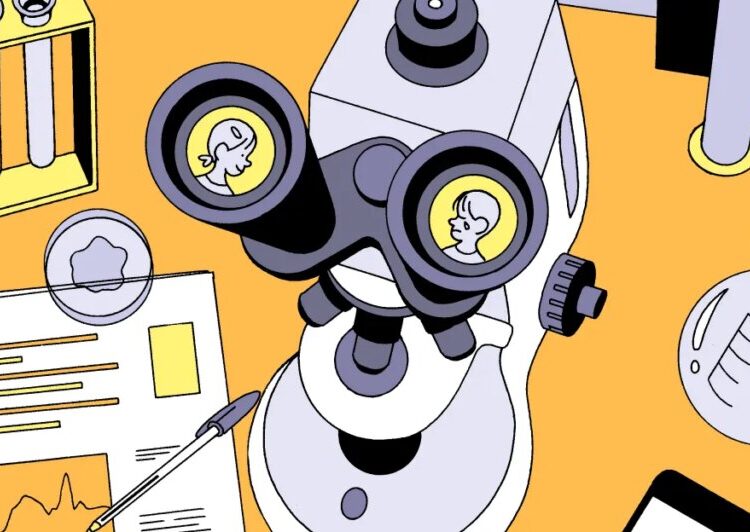
As we collectively wade through a sea of conflicting health information, knowing whom to trust is genuinely hard. Misinformation flourishes in the petri dish of uncertainty, especially when misinformation offers simple answers to complicated questions. But our analysis shows that trust is not out of reach. In fact, nearly half of respondents said they’d seen doctors or medical experts build bridges and grow trust. This is where this analysis holds hope and shows us that there are paths forward.
As for me? In the end, my daughter did flip, albeit weeks later. I doubt the mugwort had anything to do with it. But I remember what I was actually looking for that night, and it wasn’t an answer. It was agency. Lighting that moxibustion stick was a little prayer that there was something I could do.
That impulse to find some certainty, control, and answers is deeply human. The more we understand that, the better chance we have of helping people find answers they can trust.
The post We Must Fight Health Misinformation With Empathy appeared first on TIME.