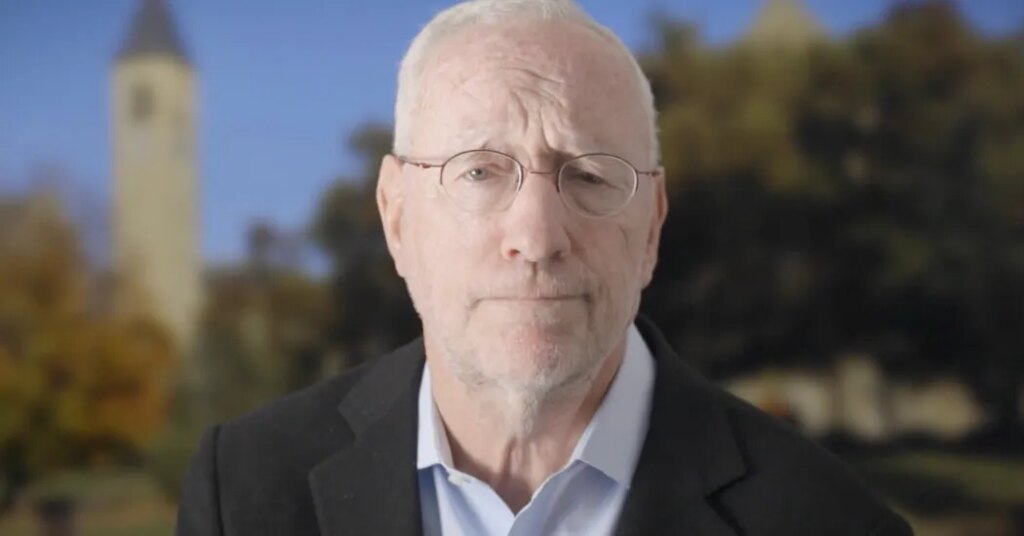
The president of Cornell University assured the campus community that officials would take action in the wake of sexual assault allegations, promising in his first personal statement about the incident that “this will not be a moment that passes.”
In an eight-minute video, the president, Michael I. Kotlikoff, acknowledged the distrust that has gripped his campus since a lawsuit alleging a gang rape at a campus fraternity garnered national attention. He promised that the university, which has been criticized for its handling of the initial allegations, would be more transparent going forward.
Mr. Kotlikoff, who has served in the role for about two years, struck a conciliatory tone, saying the university supported an independent investigation and would work to find ways to hold Greek life accountable.
“This has been one of the most difficult weeks in our history,” Mr. Kotlikoff said.
A woman, identified in court documents as Jane Doe, claimed in a lawsuit filed last month that she was sexually assaulted in October 2024 at a Chi Phi fraternity house on Cornell’s campus by seven men and that the school and local law enforcement failed to punish those involved appropriately. None of the accused men have been charged with a crime, and they have denied wrongdoing, and the university has defended its handling of the allegations.
The claims made in Jane Doe’s lawsuit, along with the release this week of internal school documents that included Jane Doe’s account and testimony from six of the seven men, prompted Gov. Kathy Hochul of New York to appoint Letitia James, the state’s attorney general, to oversee the investigation into Jane Doe’s allegations.
Ms. Hochul held a news conference on Friday in which she strongly criticized Cornell University’s campus police and the county’s district attorney. She had already put pressure on the university to conduct an outside investigation by an independent law firm.
In his video message, Mr. Kotlikoff said that he supported the outside investigation and the governor’s move to appoint the state’s attorney general to oversee the criminal investigation.
“We will not wait for the investigation or the review to be completed before we act,” he promised, adding that the university would look for opportunities to strengthen prevention and student support as well as mental health and substance abuse resources.
Mr. Kotlikoff said that a task force focused on addressing sexual assault that the university established in 2025, in the wake of Jane Doe’s allegations, made recommendations that had “already led to substantial changes in education, prevention, and support.” The task force would continue having “conversations about our campus culture and its future, and to find new ways to do more,” he said.
“You have my commitment that this will not be a moment that passes,” Mr. Kotlikoff said, adding: “We are listening, we are learning, we are committed to communicating more openly, and where we can do better, we will.”
He also noted that the response to Jane Doe’s allegations should include “a serious look at the role of fraternities and sororities on campus.” Mr. Kotlikoff said that at their best, these organizations provided community and membership, but that “being part of a group can never diminish individual responsibility.”
He promised to engage students, alumni and community members to discuss ways to preserve what is valuable about Greek life while strengthening accountability. The Chi Phi fraternity was suspended from Cornell’s campus in 2024 and remains barred.
But Michelle Fan, a sophomore at the school, said she watched the address and was “disappointed” that the president had not spoken more forcefully.
“Obviously I’m glad the university is addressing something, but still there was no apology and that was the biggest thing we were looking for,” she said.
In his statement, Mr. Kotlikoff also said the university would lend its support to changing New York sexual assault laws — echoing a priority the governor noted at her news conference on Friday. Currently, the law in New York State makes it difficult to charge people with rape if the accuser willingly became intoxicated.
He said that the university did not have all the answers the community needed but was committed to finding them.
“This is a defining moment in Cornell’s history,” he said in closing. “We owe it to Jane Doe and to survivors of assault to get this right, and we must keep each other safe.”
Maia Coleman contributed reporting.
The post Cornell President Calls Rape Inquiry ‘Defining Moment’ for Campus appeared first on New York Times.