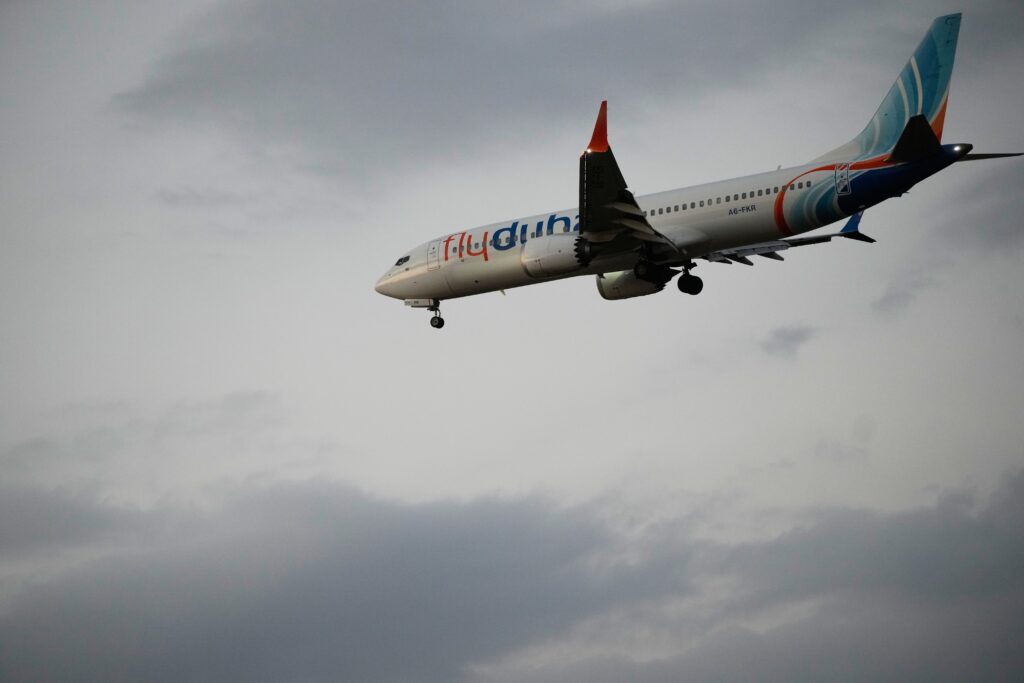
The co-pilot who tried to hijack a flight bound for Israel on Wednesday used a crash ax to attack the captain in the cockpit, UAE officials said.
The co-pilot attempted to “take control of the aircraft” and carry out a “terrorist act,” UAE Attorney General Hamad Saif Al Shamsi said in a statement Saturday, published on the official Emirates News Agency.
FlyDubai Flight 1073 from Dubai to Tel Aviv lost half its altitude in less than two minutes on Wednesday when the captain, Smit Machchhar, was attacked by his co-pilot in the cockpit.
The UAE statement did not identify the co-pilot. An Israeli official, who spoke on the condition of anonymity to discuss sensitive details of the investigation, named the suspect as Hammam al-Hamami, an Omani national.
On Thursday, Israeli Prime Minister Netanyahu said the co-pilot was “suicidal” and “underwent Islamic radical indoctrination.”
During the attack, Machchhar was able to open the cockpit door, enabling passengers and crew members to take control of the Boeing 737 Max and make an emergency landing in Saudi Arabia. The passengers were unharmed, while the pilot and co-pilot were hospitalized.
The UAE statement answers one of the questions over potential security lapses that emerged following the incident — how the co-pilot was able to access a weapon on board.
A crash ax is normally used for emergency evacuations, Marco Chan, a former pilot, said in an interview. “If none of the exit doors are available, the pilot can … use the ax to crack” designated parts of the plane’s structure which are designed to open more easily to create an exit route.
In current Boeing 737 planes, the crash ax “is usually located just behind the first officer or co-pilot” in the cockpit, said Chan, who is now a senior lecturer in aviation operations at the U.K.’s Kingston University.
The ax is located in the cockpit “for emergency access reasons,” Chan said, adding that he thought reviewing the screening measures in place when recruiting pilots was the key to preventing future attacks.
Machchhar, the captain who was wounded during the attack, has been lauded as a hero for resisting the attacker and fighting to open the cockpit door.
“When I was lying there on the floor, I could feel that the aircraft was plunging,” he said during a phone call with Indian Prime Minister Narendra Modi. “And I knew that it would be the last push.”
He willed himself to open the door to the cockpit, which allowed other passengers to rush in and apprehend the assailant, and off-duty pilots to regain control of the plane.
Cockpit doors on modern aircraft are hardened barriers designed to keep hijackers out, making them almost impossible to breach from the outside.
Machchhar’s actions have been credited with saving the lives of those on board, and Chan said that pilots were likely to be trained to immediately open the door in the event of any cockpit altercations from now on.
Suzan Haidamous contributed to this report.
The post FlyDubai co-pilot used crash ax to attempt ‘terrorist act,’ UAE says appeared first on Washington Post.