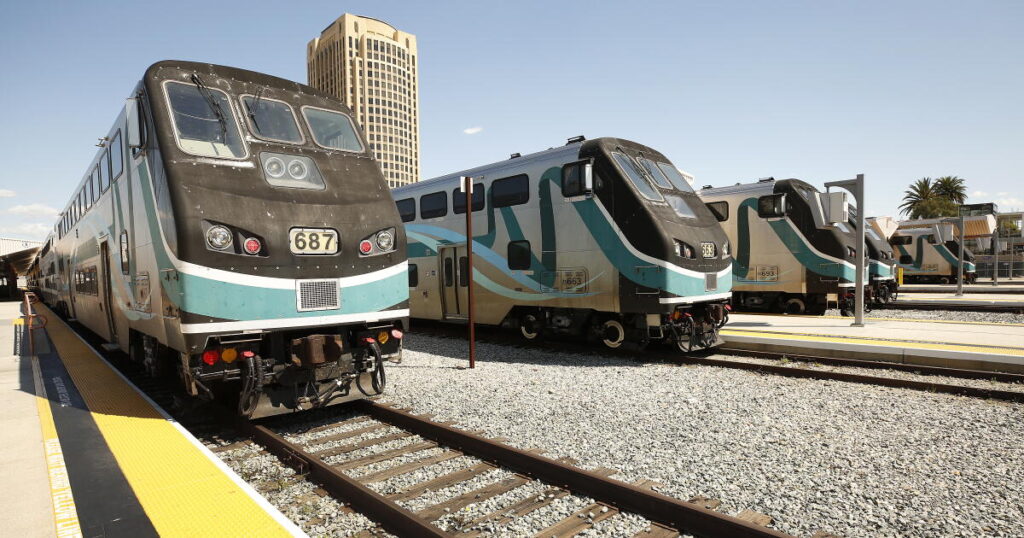
Metrolink is raising fares for its regional commuter rail network by up to 27% starting Monday, with officials saying the move is needed because of declining funds from the state and federal governments, a dip in ridership from the COVID pandemic and rising operating costs, according to the agency.
The weekly SoCal Day Pass, now $15, will cost $19 under the fare hike — a 27% jump. Monthly passes will rise 20%, from $10 to $12, while one-way tickets — the prices of which vary by distance — will go up 14%.
This will be Metrolink’s first fare hike in 13 years, the rail agency said.
“Metrolink has worked hard to keep fares affordable while the cost of operating and maintaining our regional rail system has continued to rise,” Metrolink Chief Executive Darren Kettle said in a recent statement. “These pricing adjustments are one step in a broader effort we are taking to responsibly address those pressures and support Metrolink’s long-term financial sustainability.”
The rail network has an operating budget of more than $350 million and includes an average daily weekday ridership of more than 23,000 and an average weekend ridership of roughly 235,000. It’s operated by the Southern California Regional Rail Authority, made up of members from transit authorities in Los Angeles, Orange, Riverside, San Bernardino and Ventura counties.
In recent meetings, riders have expressed frustration with the agency’s decisions.
“Metrolink is in crisis right now with these budget cuts and I’m not seeing a lot of transparency and oversight at this board,” said Adriana Rizzo of Californians for Electric Rail.
“The timeline between these proposed budgets and the cuts is extremely short, which I think is quite disrespectful to riders where one train being canceled can make the difference for whether they can get to work or not.”
Metrolink is one of two major transit authorities in Los Angeles. The other, L.A. Metro, operates bus, light rail and subway lines in L.A. County and helps fund Metrolink’s budget.
Ara Najarian, who serves on the boards of both agencies, acknowledged during a recent meeting of the Metro board that tensions were high between both train systems and the public.
“I’m getting a lot of emails from people saying that ‘we’re abandoning Metrolink. Metrolink is going down the tubes.’ That’s not what’s happening. We are facing some very difficult financial times. Metro just can’t open our pocketbooks and throw money at the agency,” he said.
Metrolink is currently embroiled in new litigation after a former executive who was fired earlier this year filed a lawsuit that alleged the system failed to properly maintain parts and put riders and employees in danger. According to the suit, the issues led to at least one collision and two train breakdowns that stranded hundreds of travelers in the heat.
In recent months, the board of L.A. Metro has scrutinized Metrolink over safety concerns and service cuts. The L.A. Metro board approved an audit last month into the health of the train’s parts and decision-making practices.
“I know the catastrophic mechanical issues that have plagued Metrolink trains this year have severely undermined the reliability of the system and the confidence of the riders,” said L.A. County Supervisor and Metro board member Kathryn Barger. “Allegations of safety issues add a whole new concern and dimension to the problem that requires Metrolink take a closer look at what’s going on.”
Metro has funded about $137 million of Metrolink’s budget and has posed a 3% budget reduction, which Metro staff said is based on Metrolink’s surplus. Metrolink also faces cuts from the Orange County Transportation Authority.
Earlier this year, Barger criticized Kettle over a “narrative” presented to the public that places blame on Metro for its financial struggles.
“This is not passing the smell test with how the money is being allocated,” Barger said at a meeting in May. “I resent what they are doing, what the CEO of Metrolink is doing by, I feel, holding us hostage over the money that we’re giving and deciding to do cuts instead of looking internally and looking at where he could save.”
The post Metrolink riders brace yourselves: Fares will rise by up to 27% starting Monday appeared first on Los Angeles Times.