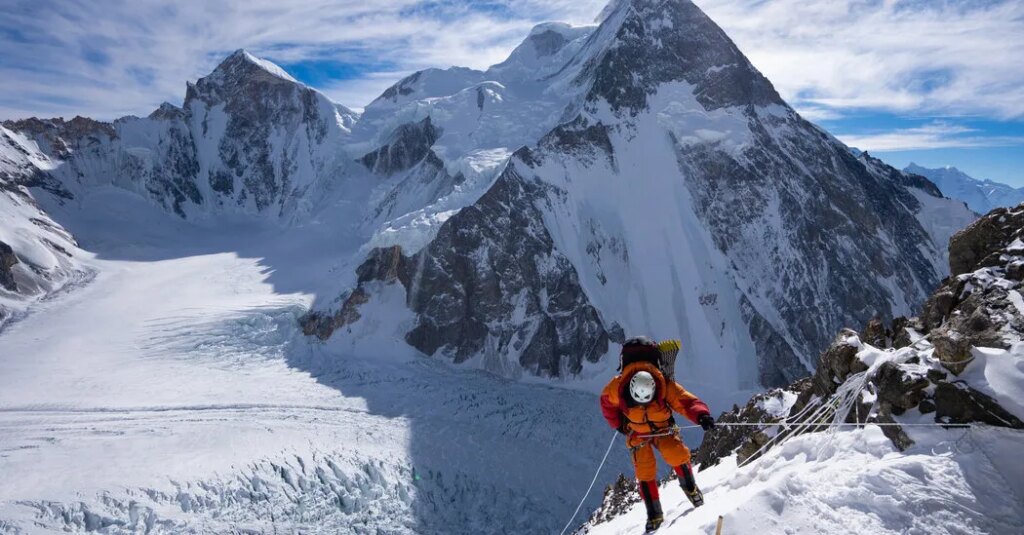
There’s a thriving subgenre of documentaries about extreme mountain climbers, and for the most part they conclude on the same note: Isn’t the indomitable human spirit inspiring?
“The Last First: Winter K2” is not that type of mountain-climbing documentary. Directed by Amir Bar-Lev, it’s instead the story of a climb gone wrong, told mostly by people who were there. Without the optimistic gloss, the film reveals something that others sometimes fail to explain: why people go to such great lengths to scale these peaks, and how their desire to do so can be exploited.
K2, on the border between Pakistan and China, is the second-highest mountain in the world, behind Everest. Until 2021, no one had ever reached the summit during winter. And that made it “the last great prize in mountaineering,” as the climber Colin O’Brady says in the film. O’Brady explains that because most major feats of climbing had been accomplished before he was born, he was on the lookout for “other world firsts” to take on. A K2 winter summit would be it.
He was far from alone. That winter, well-known climbers like John Snorri Sigurjonsson and Nims Purja announced they’d be making the attempt. Sensing an opportunity, the adventure company Seven Summits Treks put together a commercial expedition. Would-be K2 climbers could pay to join the trip. But, as the filmmaker and influencer Elia Saikaly puts it, “If you commercialize K2 the way you’ve commercialized Everest, bad things will happen. And that’s in the summer.”
Bad things did happen. But before the film gets to that point, Bar-Lev tells the story through footage shot on the mountain and interviews with climbers and their family members. “The Last First” explores factors that influenced the events, including the growth of mountaineering into fodder for social media, the complex dynamics between Himalayan and Western climbers, and the lack of planning by those who were unprepared for what they’d encounter on the mountain.
“The Last First” also has to ride a tricky line. On the one hand, the film aims to honor those who died on the mountain. But it also works to create narrative tension by not revealing who they were until late in the film. Sometimes this kind of concealment in a documentary — especially when the story was broadly reported — can come off as manipulative, even ethically dubious. But here, it works: Bar-Lev foreshadows the tragedies and moderates the tone, so we’re prepared for the outcome.
Those of us with no desire to risk our lives scaling dangerous mountains may never fully understand why anyone would want to do it. But what “The Last First” does well is demonstrate how complex the reasons are, and how the evolution of extreme mountaineering as a sport has added to them. The result is sobering and illuminating, paying respect to those who never came home from K2 while arguing that they should still be alive today.
The post ‘The Last First: Winter K2’: Hard Truths in a Mountain-Climbing Tale appeared first on New York Times.