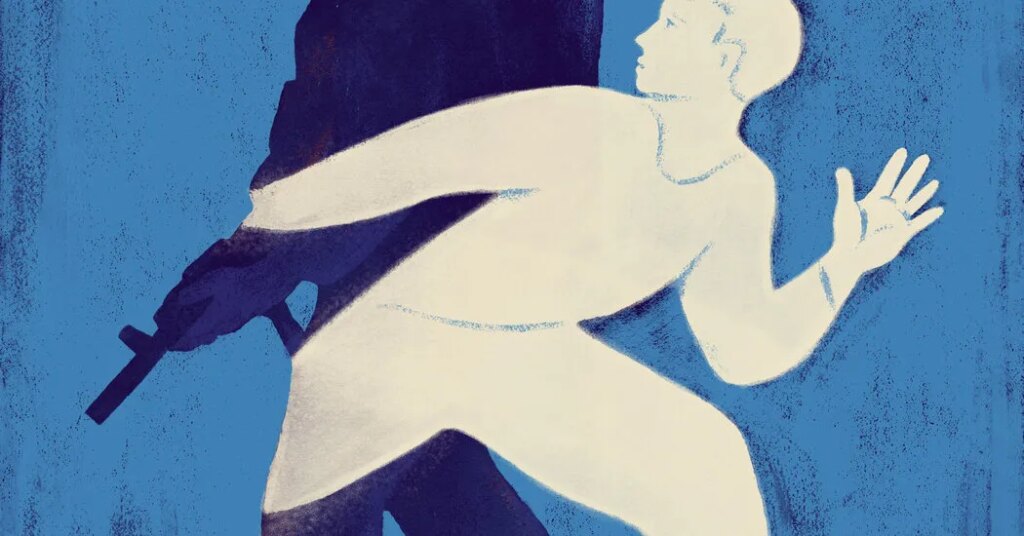
A friend of mine is a draft dodger. Everything he does is governed by the unspoken rules of the nationwide hide-and-seek that is playing out between recruitment squads roaming the streets of Ukrainian cities and some two million men wanted for draft evasion.
Buying groceries can be a life-or-death decision. He never steps outside without checking messaging apps where men share information about checkpoints and recruitment raids in our home city, Odesa. These channels count their subscribers in the tens of thousands.
In Odesa, we clock the disappearances — a barista in my favorite coffee shop, an artist who painted cityscapes in the nearby square, a friend’s brother. Coming across a gaping void where a familiar face used to be has become routine.
More of us are taking action. Almost every week, videos appear online of bystanders trying to wrestle men out of conscription vans to rescue them. Last year, 341 clashes between military recruiters and civilians were registered — nearly triple the number in 2024. I used to pause at these videos, dismayed by the brutality of the violence that permeated everyday life. Now I scroll past them, disturbed by my lack of reaction. I’ve grown used to living in this male version of “The Handmaid’s Tale.”
Last autumn, my friend got caught next to his apartment building. It rained that day, and he slipped in the mud running from recruiters. A recovering drug addict who vomited all night and an older man who was picking up his prescription medication were among his fellow captives. “It felt like we were mere bodies there for sale,” my friend said about the day and night he spent at the Territorial Center of Recruitment and Social Support, before he managed to raise the necessary sum and bribe his way out.
Would you accuse him of being a coward? I didn’t. Because bravery has turned into a cliché masking the profound social and economic injustices of this war.
“In fact, this is our brand,” President Volodymyr Zelensky said in the spring of 2022. “To be brave.” He added, “We will spread our courage. We will start a special global campaign.” Billboards in Times Square, a Vogue photo shoot featuring the president’s wife as a “portrait of bravery” and enthusiastic media headlines promoted Ukrainian courage at home and abroad.
Earlier this year, NATO’s secretary general, Mark Rutte, echoed the same theme, describing his interaction with a Ukrainian mine detection dog: “I even looked the dog in the eye, and he told me that he will never give in.”
Even though self-preservation is a basic human instinct, we have been conditioned to despise and mock running from war by millenniums of literature and art. Throughout history, the fear of being labeled a coward has kept soldiers in the fight and sometimes kept wars going against the tide of dissenting public opinion. “If I left that war and let the Communists take over South Vietnam,” President Lyndon B. Johnson said, “then I would be seen as a coward.”
During the Vietnam War, the largest antiwar movement in U.S. history appropriated the insult, rebranding war as moral cowardice. In “The Things They Carried,” by Tim O’Brien, the character of the same name says, “I was a coward. I went to the war.” Men went to war, he says, because it was more embarrassing not to.
Estimates of the number of young Americans who left the country during the Vietnam War to avoid fighting range from 40,000 to 100,000, with Nixon’s speechwriter Pat Buchanan dismissing them as “malingerers, opportunists, criminals and cowards.” When Ukraine loosened exit restrictions for men aged 18 to 22 in August last year, the number of men those ages crossing the border into Poland soared to 1,600 per day over the following two months.
At the same time, hundreds of thousands of young Russians have chosen to leave their country since 2022.
Of course, I don’t equate the two sides of this war. Ukraine was, after all, invaded, and in the days afterward hundreds of thousands of ordinary Ukrainians, men and women, volunteered to join the armed forces. With long lines snaking around enlistment centers, the number of volunteers was so overwhelming, some were sent home. But in the nearly five years of the brutal war, a new kind fear has taken over. We have grown used to drones and explosions in our cities. Now, what scares me and most people I know is the glaring absence of any realistic prospects for peace. We are scared to watch our country bleed its best people and its future.
Many men who refuse to fight are protesting the unequal burden of the war — while some sacrifice their lives, others amass wealth. When Andriy Yermak, Mr. Zelensky’s former chief of staff and, until last year, the second most powerful man in the country, resigned his post mired in a corruption scandal, he told The New York Post that he would go to the front lines. The promise remains unfulfilled, and as a friend of mine said with a chuckle, “All of us will end up at the front before he does.”
So many bright and kind people have been killed. And, every day, Ukrainian soldiers show superhuman levels of selflessness and courage. But their bravery must not be cheapened and paraded as a cardboard cutout to divert attention from growing inequality and corruption. And from the lack of any honest and serious conversation about how we can achieve peace.
Samuel Johnson once said that “mutual cowardice keeps us in peace. Were one-half of mankind brave, and one-half cowards, the brave would be always beating the cowards. Were all brave, they would lead a very uneasy life; all would be continually fighting: but being all cowards, we go on very well.”
I would be happy to live in Johnson’s utopia, populated with cowards who value their lives and the lives of others. And I would take it over this world, where leaders who are supposed to keep us safe though diplomacy and dialogue instead engage in self-important and shallow militaristic discourse.
My grandfather served as a Soviet Navy officer during the Cuban missile crisis, and I have always been disturbed and fascinated by this period in history. Adlai Stevenson, the U.S. ambassador to the U.N. at the time, who advocated diplomacy over military action to avoid escalation, said: “I know that most of those fellows will probably consider me a coward for the rest of my life for what I said today, but perhaps we need a coward in the room when we are talking about nuclear war.”
When I read the news or jump out of bed in the middle of the night during an air raid, I wish there were more diplomats like him in the world today.
Alyona Synenko is a writer from Odesa, Ukraine.
The Times is committed to publishing a diversity of letters to the editor. We’d like to hear what you think about this or any of our articles. Here are some tips. And here’s our email: [email protected].
Follow the New York Times Opinion section on Facebook, Instagram, TikTok, Bluesky, WhatsApp and Threads.
The post Please Spare Me Your Talk of Bravery appeared first on New York Times.