More oil is flowing from the Middle East than at any point since the start of the war with Iran, yet crude still costs almost $100 a barrel, much more than at other times when supplies were more constrained.
That seeming conundrum can partly be explained by a change in traders’ views about how long the conflict is going to last. Optimism that an enduring peace deal might be around the corner has given way to concern that hostilities could restart.
In the meantime, the United States and other countries have been drawing down their oil stockpiles to bridge the gap between supply and demand. That is effectively keeping prices high because the world’s buffers against future oil disruptions have become a lot smaller.
Another important factor is that China, which slashed imports soon after the war started, is now buying more oil.
“You have this apparent contradiction,” said David Fyfe, chief economist for Argus Media, a commodities pricing firm. “Flows seem to have picked up. But it’s because the industry has said, ‘What the hell, let’s go for it,’ while the politicians have failed to reach any sort of an agreement.”
There are many different prices for oil, depending on where it’s coming from and when it’s to be delivered. The most commonly cited international price for oil, known as Brent, was $98 a barrel on Wednesday, reflecting how valuable traders think oil will be in December. That is more than the so-called futures price was, on average, in June, July or August, when a lot less crude was flowing out of the Persian Gulf.
Those looking to secure oil as soon as possible have to pay much more, almost $121 a barrel, according to Argus, which tracks the physical market where energy companies are buying and selling oil to be loaded onto ships. That is comparable to prices in April, when much less oil was leaving the Persian Gulf. But the price does not include the cost of transporting the crude to its destination — a cost that has skyrocketed during the war.
“You are seeing more flows, but you’re in a much more vulnerable position industrywide now,” said Jason Gabelman, an energy analyst at the investment bank TD Cowen.
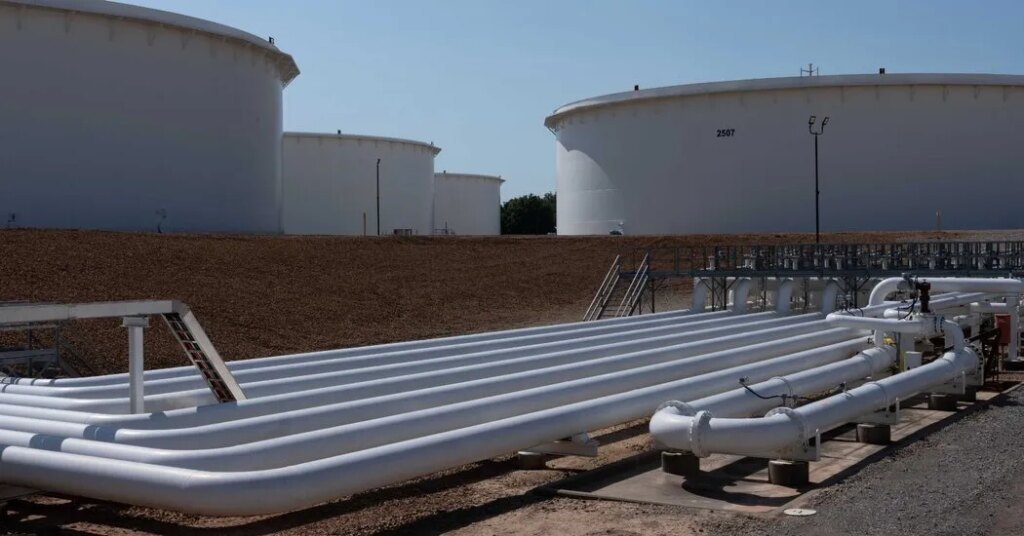
Depleted inventories are a big reason for that. Governments and companies the world over have been draining their oil tanks over the past seven months to keep a lid on prices. That means they will not be able to step in with as much oil should new strikes inflict more damage on energy infrastructure in the Persian Gulf or make shipping even more dangerous.
The United States has withdrawn more than 130 million barrels of oil from its strategic reserve since the war started, leaving government inventories at their lowest level since 1982.
A slight uptick in oil purchases by China has also kept prices elevated. Early in the war, the country cut back, keeping global prices from rising even higher. But China has been slowly returning to the market. Roughly 30 percent more oil was loaded onto tankers destined for China in September than in May, according to S&P Global Energy, a research firm.
China is also buying less from Russia and Iran, whose oil is generally cheaper because the countries are subject to U.S. sanctions, according to Goldman Sachs. That has created more competition for oil from other sources, the investment bank said.
Those getting crude from the Persian Gulf are facing significant extra expenses. The cost of moving oil by sea from the Gulf to East Asia is around $34 per barrel, a record high and up from an average of $3 in January, according Argus. Importers pay transport fees on top of the oil price. The high rates for transporting Middle Eastern oil have also driven up tanker rates elsewhere.
More expensive shipping is contributing to the high cost of gasoline and diesel, which has become a political headache for President Trump before the elections in November — so much so that he has mused about banning diesel exports. Several state governments have made policy changes in an effort to reduce the cost of some diesel fuel, particularly for use in agriculture.
On Wednesday, diesel cost an average of $6.41 a gallon in the United States, up more than 70 percent since the war started on Feb. 28. Oil prices, by contrast, had risen around 35 percent.
Peter Eavis and Kevin Draper contributed reporting.
The post Oil Is Flowing From the Persian Gulf, but Prices Remain High. Why? appeared first on New York Times.