The Sept. 26 editorial “Ban Chinese cars? They’re already here” missed the mark in expressing the clear and present danger of allowing Chinese automakers to manufacture or sell inside the United States.
The editorial acknowledged the national security threat posed by China-connected vehicles, software and hardware given the “communist government’s enmeshment in the Chinese economy.” But Chinese automaking also poses an economic security threat to the U.S.
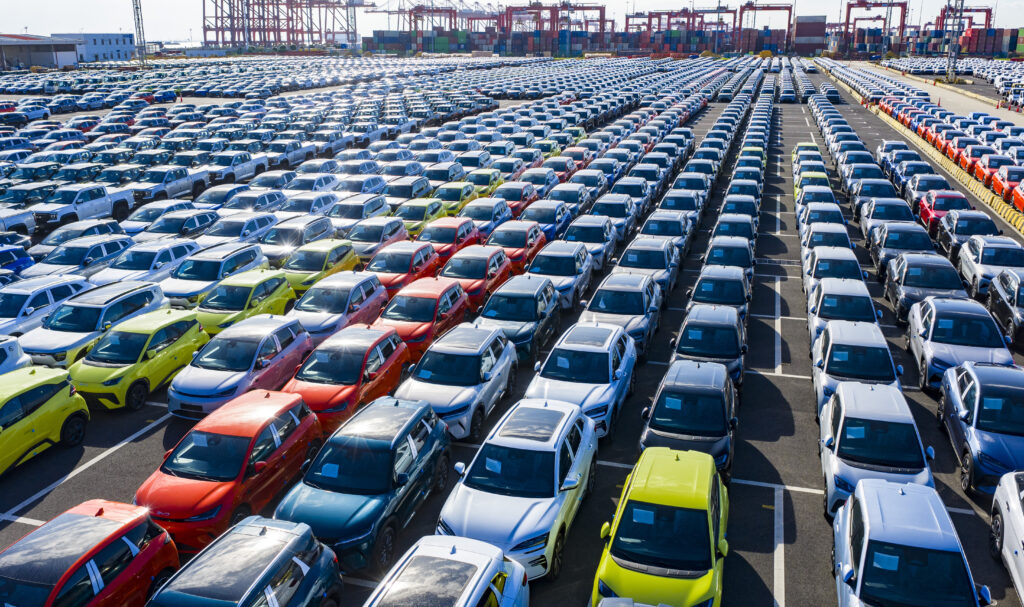
China is rapidly expanding its global automotive presence via massive government subsidies — state-directed investment and non-market policies that incentivize Chinese automakers to build excess production capacity and aggressively expand overseas.
These subsidized Chinese automakers sell vehicles worldwide at artificially low prices. That’s not “market disruption” or garden-variety competition. Call it what it is: a strategy to dominate and decimate America’s auto industry — a sector that employs about 10 million people and is foundational to our advanced manufacturing and defense base.
In Europe, Chinese automakers are off-loading these subsidized cars, capturing market share and weakening established manufacturers. And the vehicles have the ability to transmit data to the Chinese Communist Party.
Congress can avoid this by passing the Connected Vehicle Security Act of 2026. It bans the sale, import and manufacture of China-connected vehicles, software and hardware inside the U.S. It has more than 120 sponsors in the House and nearly unanimous support in the Senate.
Automakers in America can compete with any company in the world if they are competing on a level playing field.
Congress should stand up to Chinese automakers to protect U.S. workers and national security and to ensure the U.S. remains a global leader in auto manufacturing and connected technology.
Debbie Dingell, Washington
The writer, a Democrat, represents Michigan’s 6th Congressional District in the U.S. House.
In the mid-1960s, I bought a Toyota Corona. My wife and many of my friends asked me why I chose a junky Japanese car instead of a good, solid Ford or Chevy. There were very few Japanese cars in the U.S. market then. I said it didn’t have all the bells or whistles of U.S. cars, but it didn’t look bad. However, it had a radio, the seats were comfortable, it got good gas mileage, and, at less than $2,000, it was about half the cost of many of its American counterparts.
I had that car for about six or seven years. During that time, Japanese cars gradually became more popular and eventually the U.S automakers lost their market dominance.
Now, the United States has Tesla. Last year, my wife and I visited Iceland, and our tour guide was driving a Polestar, which is a Sweden-based company but is majority-owned by the Chinese firm Geely. The tour guide told us that Tesla used to dominate the Icelandic market, but Polestar had longer range and was less expensive.
I think more competition will be beneficial to U.S. consumers. And it might force U.S. manufacturers to make better, less expensive cars.
Howard Pedolsky, Rockville
This idea strikes out
Regarding the Sept. 28 front-page article “Baseball considered for Grand Teton”:
I love our national parks and I love professional baseball, but the two do not belong together. Professional baseball involves crowds, noise, human interaction, commercial activity and a reasonable degree of pollution and litter, which is fine, but parks demand the opposite: space, serenity, interaction with nature and a minimal degree of man-made facilities and equipment.
Ideally, the natural beauty of national parks should be left as untouched as possible, for our benefit now and for generations to come. Many areas still look close to how early American explorers first saw them. We owe our grandchildren the same opportunity.
Our national park system has often been described as “America’s best idea,” but hosting a game at one could be one of America’s worst.
James Kosnett, Los Angeles
A Major League Baseball game in a national park? Never! But I might change my mind if, in return, the league helps pay down the National Park Service’s backlog of about $24 billion in repairs; pushes to reinstate the approximately 4,000 permanent employees that the National Parks Conservation Association says NPS lost since Trump’s return to office; and works to recoup the millions of acres stripped from Bears Ears and Grand Staircase-Escalante National Monuments in Utah last July.
Our national parks already have all-stars: the Cubs, the Diamondbacks, the Cardinals, the Blue Jays and the Orioles. May they devour this irresponsible MLB idea and win every season thereafter.
Phyllis Windle, College Park
AI is perfect for FOIA
The Sept. 27 news article “The government enlists AI to help decide what public records you get to see” shared skepticism about using artificial intelligence for Freedom of Information Act (FOIA) requests. When I was an attorney at the Occupational Safety and Health Administration, I was sometimes asked to help respond to those requests. I think AI would be ideal for the job.
Congress does not have a line item for funding FOIA offices. Staff is taken from other useful functions to handle the overwhelming number of requests. As the article noted, last year, over 1.7 million FOIA requests were filed with federal agencies.
It takes a lot of time to fulfill those requests, often resulting in long delays in response. I’ve gotten a sense from FOIA requesters that they believe redactions are done for nefarious reasons and waste agency and court time in lawsuits. That was not true in my experience.
FOIA work is stultifying and requires good judgment. It also requires a lot of manpower. AI could run the search and compile the response more quickly. It could maintain higher consistency and accuracy in response. It would save agencies much staff time and money. Perhaps it would also convince FOIA requesters that there is nothing improper about the redactions.
Charles Gordon, Gaithersburg
The writer is a retired OSHA attorney.
Letter submissions
Send letters to [email protected].
Submissions must be exclusive to The Post and should include the writer’s address and day and evening telephone numbers. Letters are subject to editing and abridgment. Please do not send letters as attachments. Because of the volume of material we receive, we are unable to acknowledge submissions; writers whose letters are under consideration for publication will be contacted.
The post Rep. Debbie Dingell: Cheap Chinese cars come at a big cost appeared first on Washington Post.