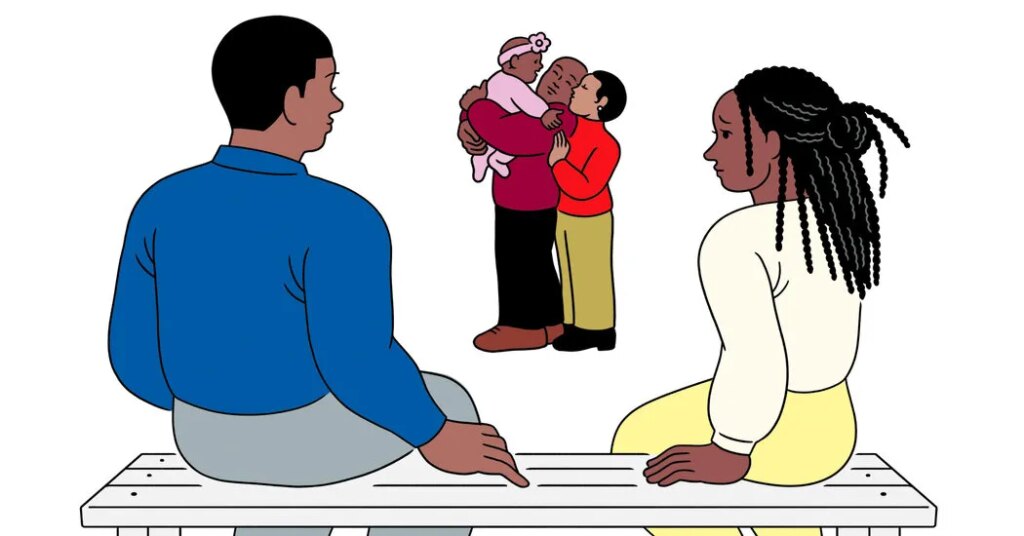
My partner and I have been together since 2022, and we started living together six months ago. We’re still recovering financially from renovating and furnishing our apartment, so having children isn’t something we can afford to consider right now. In Italy, where we live, people often wait until 35 to become parents. I’m 32, so it still feels “early.”
The problem is that I know my partner wants to become a father someday, while I simply don’t know whether I want to become a mother. I raised my brother and enjoyed spending time with him when he was little, but otherwise I have never felt the delight that some people show around children. Instead, they leave me indifferent or even annoyed.
I’m also afraid of the changes that parenting would require of me. I tolerate my current job only because it pays the bills, and I worry about the distractions that children would bring; right now, finding work that I love and feeling fulfilled matter more to me.
I’m also in therapy for anxiety and obsessive-compulsive disorder, and I’m scared of how my mind might react to something as significant as motherhood. My partner knows that I have a difficult family history that traumatized me. I don’t want to become a grumpy, unfulfilled parent or pass my own problems on to an innocent child.
I’ve decided to give myself a few years and see how I feel. But do I have to tell my partner now that I’m unsure about something he hopes for? If I do, I give him the chance either to find someone else with whom to build a family or to stay with me despite the uncertainty. I’m scared he won’t choose me.
At the same time, if I still don’t want children in five years, will I have wasted years of his life while he waited for me to feel ready?— Name Withheld
From the Ethicist:
The foolish man, in Matthew 7, “built his house upon the sand; and the rain descended, and the floods came, and the winds blew, and beat upon that house; and it fell, and great was the fall of it.” If you allow your partner to believe that you share his expectations about raising a family, you would be building a relationship on a foundation of dishonesty, which is scarcely more secure. You say that you’re worried that letting your partner know now that you may not want to have children will lead him to break up with you. But why do you think it will go over any better a few years down the road?
Your partner has been upfront about his hopes that you’ll have children. You owe it to him to be equally upfront about your uncertainty. You seem open to the possibility that you’ll want children someday. You can tell him that too. What’s needed here is honesty about where you are now.
Many of the spats that couples get into are about nothing very much: accidental slights seized on as evidence of character flaws, two mammals briefly getting on each other’s nerves and growling. But some disagreements go to the heart of things, and whether to have children is one of them, because it concerns the shape of the lives you want to lead. Whatever shape those lives take, I hope they’ll be characterized by candor about the things that matter most.
Readers Respond
The previous question was from a reader whose family wasn’t getting along on group vacations. She wrote:
I married into a large, extended close-knit family. … We get along very well and have stayed close despite several of us living in different corners of the country. Almost four decades ago, the family established an annual weeklong vacation that is precious to many of us. Depending on the year, between 30 and 40 people join the trip. … Despite her efforts, my brother-in-law’s wife does not fit in with the group. She wants to be liked and included, but her behavior is often a combination of confrontational and defensive. And it is exacerbated when she drinks alcohol. Every year she has big, vocal fights with her husband, her daughter or another member of the family. Most of us have responded by ignoring or avoiding her. … Last year, three of us had a conversation with her directly to address our concerns, including asking her to consider curtailing the drinking. On this year’s vacation, we saw little to no improvement. … We love her husband and their two daughters. Is it appropriate to ask her, and her alone, not to attend these family gatherings any longer? — Name Withheld
In his response, the Ethicist noted:
Family vacations call for some measure of forbearance; not everyone will be equally easy to be around. Still, if your sister-in-law’s conduct is as bad as you say, a response is warranted. … Do bear in mind, though, that she’s almost certainly part of a package. If her husband is made to choose between her and the rest of you, he’s very likely to choose the person with whom he shares his daily life. … There’s a difference between banishing your sister-in-law — declaring that “you’re no longer one of us” — and telling your sister-in-law that she can join the gathering next year but will have to leave the disruptive behavior behind or sit out the following one. So don’t just have the conversation; be specific about what has to change and what will happen if it doesn’t. And leave a way open for her return. … Your brother-in-law might consider couples counseling; his wife could be encouraged to get help with what sounds like a problem with alcohol. But you don’t need to fix their lives to deal with the vacation. You’re entitled to protect a cherished family gathering. Just be sure you’re drawing the line at behavior rather than deciding who belongs in the tribe.
(Reread the full question and answer here.)
⬥
We dealt with something similar for years with our family vacation, only it was my sister. Her behavior was volatile, including loud arguments with her husband and heavy drinking. The truth was that she is an alcoholic and no one really addressed it. Finally the trips ended. It was easier to do that than to exclude her and her family. Unless you want to be alienated from your sister-in-law’s husband and children, I don’t think you can ask her not to come. The true answer may be for her to stop drinking. You can express your concern with kindness and compassion or not at all, but it’s not really your issue to treat. Isolating her will not make anything better. — Morgan
⬥
Where is the woman’s husband in this? Talking to him alone would seem to be the starting point. Don’t say, “Get her to shape up or she’s out!” But do some brainstorming about how he might help her. Counseling? Alcohol treatment? Taking her out on some day trips with just their family? Also consider that she may have always known this group does not like her and that this awareness is making her behavior worse. You might get more with honey. Try being nice. — Jan
⬥
This has mean-girl vibes that I can’t shake. Do you make any effort to see this family at other times of the year to establish a closer relationship that might help smooth the transition to the big gathering? Has anyone reached out to her husband see if he’s OK, or needs support? Most important, do you have standing to be the one delivering this message? A difficult person at an event can either be the main focus or diluted among the many. Try focusing less on her and more on you. — Christine
⬥
Could an agreement be made that this year’s trip will be alcohol-free for everyone? She might decline to come, or she might benefit from a no-alcohol week. — Jan
⬥
The fact that the sister-in-law tries hard to be liked is important. She’d probably love to be part of the group, but because of unresolved stuff she gets triggered frequently. I don’t know if “sanctions” are the first step. Clearly she is hurting, so it would be wise to have the most caring members of your group get together with her over coffee individually and try and make a connections that would give her a feeling of trust. Sounds to me as if this family is a little too perfect and has not had many challenges. — Laura
The post Do I Have to Tell My Partner I’m Not Sure I’ll Ever Want Kids? appeared first on New York Times.