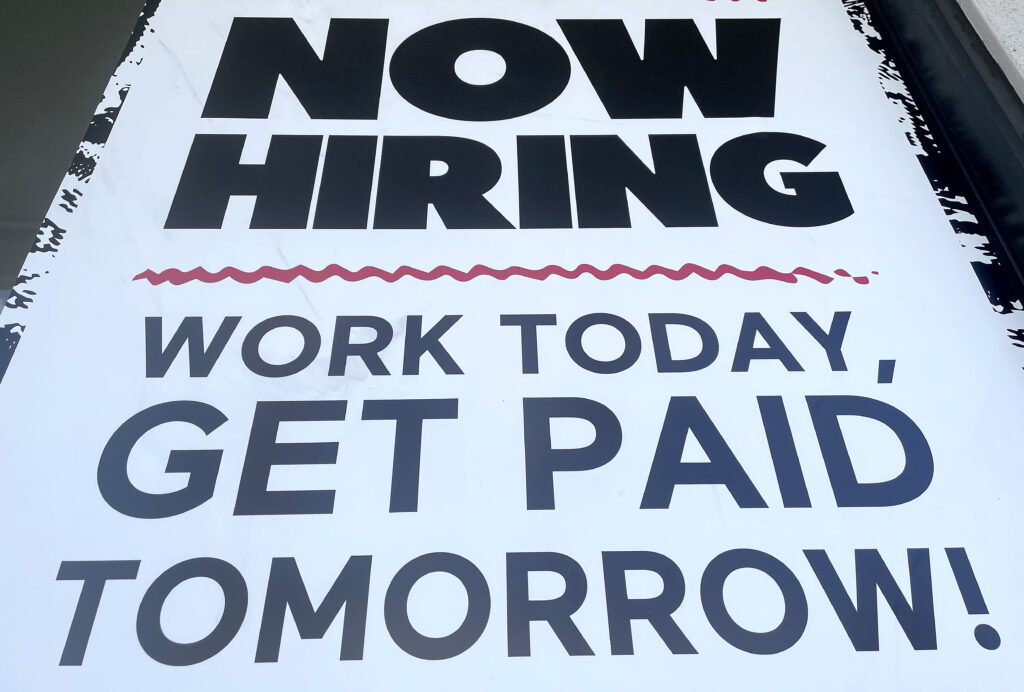
Today’s job seekers often say they’re feeling overwhelmed by the number of postings online, exhausted by the long hunt and desperate for a breakthrough. Unfortunately, this vulnerable position makes them perfect targets for online job scams.
In 2025, nearly 25,000 people reported falling victim to an employment scam, according to data from the Better Business Bureau. That number has more than doubled since 2023, with a median loss of $1,000.
“These job ads are a perfect storm of pressing circumstances for a lot of people who are looking for employment,” said Josephine Wolff, professor of cybersecurity at Tufts University. “And also, these AI tools coming online can really scale up the type of fraud that has existed for a long time on the internet and in some ways even before the internet.”
Everyone will be familiar with spam texts promising opportunities to make fast cash while working from home. But the latest scams tend to exhibit a new level of sophistication.
Wolff used to tell people to look for red flags such as bad grammar or suspicious-looking graphics — but now artificial intelligence helps shady scams look completely legitimate.
Fraudsters will post ads for fake jobs, sometimes directly cribbing from existing postings or “ghost” jobs still floating around online. They may ask applicants to follow a link to a third-party website, one completely unaffiliated with a given company or legitimate hiring portal. From there, they may capture applicants’ data directly, or they may then start asking applicants to share valuable data over email or text message.
Information such as your address or birth date could be valuable to a scammer, but so could things such as usernames and passwords you may frequently use on other sites, said Mona Terry, chief operating and programs officer at the Identity Theft Resource Center. Scammers could use that data to access your accounts directly or impersonate you when setting up new accounts elsewhere.
Most often, she said, they’re intentionally targeting recent grads or low-income people. Both sets of people may feel a heightened pressure to land a job no matter what — and that vulnerable position means they’re less likely to catch a scam.
“It’s a lot easier for someone to be in that stressful, panicked mode, to miss some of those red flags, especially because some of them are so subtle,” Terry said. “We know that that is what scammers are doing. They’re preying on that emotion. They’re looking for people who are in that place with a heightened sense of ‘I really need this.’”
“Task-based” scams in particular are on the rise, said Mel Lanning, executive director of the Better Business Bureau’s Institute for Marketplace Trust. Scammers may send you an official-seeming check for mandatory job equipment. The “team” on which you’re supposedly being hired needs you to deposit the check and then transfer them the funds. But, as people discover way too late in the process, the check is in fact fraudulent — and the candidate is out the money.
Be ultra-wary of any hiring process that seems “too good to be true,” Lanning advised. If a supposed hiring manager is asking for extremely personal information very early in the process, take the time to research the company and confirm its legitimacy. If you’re concerned someone is either impersonating a hiring manager or spoofing a firm’s actual posting, Lanning recommends going the extra mile to verify a job listing on the company website or even contacting them over email.
“It’s a really hard time for job seekers because, number one, you have to be careful of these scams, and then you’re also wasting time on some of these postings and then you never hear back,” she said. “For job seekers right now, be very thoughtful and careful about every job that you apply for.”
The post Job scams have gotten more sophisticated. Here’s how to spot and avoid them. appeared first on Washington Post.