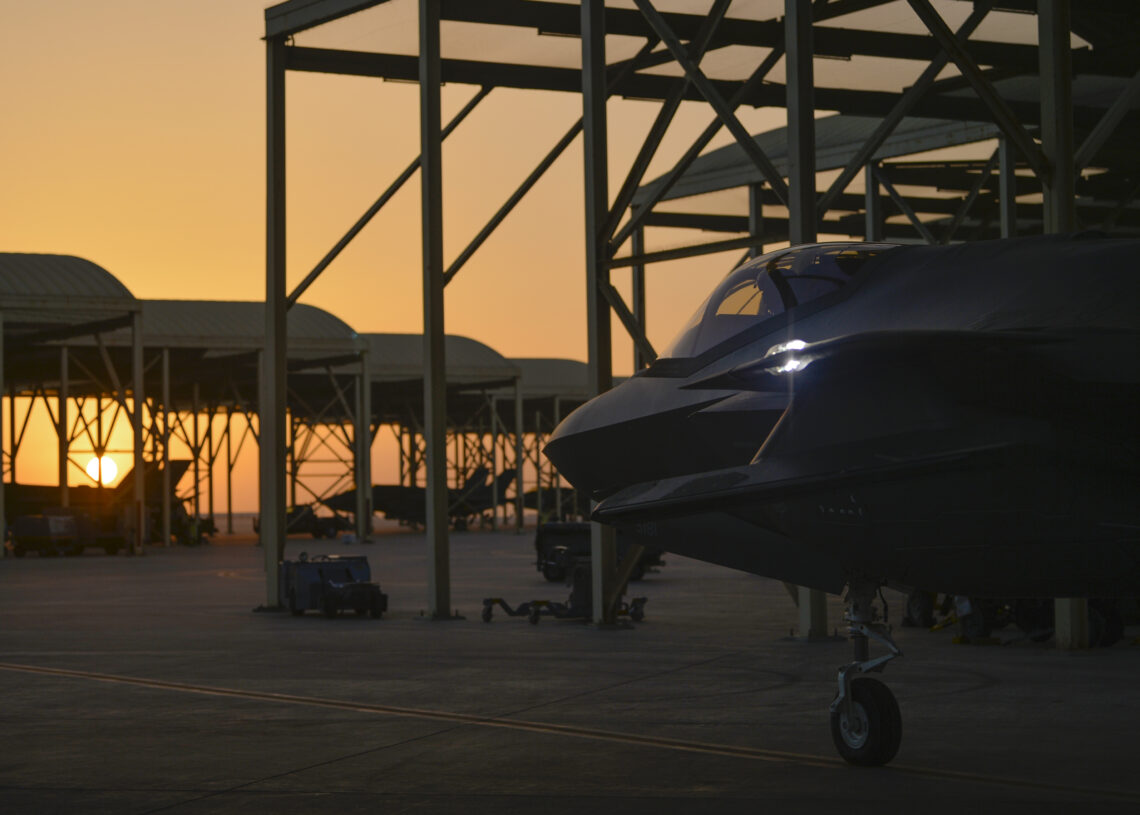
In one respect, the Japanese attack on Pearl Harbor was a game changer. But in another way it wasn’t. By sinking or damaging the U.S. Navy’s battleships on Dec. 7, 1941, the Japanese forced the United States to rely instead on aircraft carriers. But neither the Pearl Harbor attack nor even the attack nine hours later on Clark Field in the Philippines — which devastated Gen. Douglas MacArthur’s air force on the ground — shook the U.S. military’s reliance on bases within the enemy’s strike range. Indeed, much of the Pacific campaign that followed consisted of landings by U.S. soldiers and Marines to secure island bases to enable air attacks on Japan.
Since World War II, the U.S. has developed a far-flung network of 750 bases in 80 countries and territories. When war looms, as with Iraq in 1991 or 2003, the U.S. builds up “iron mountains” of supplies at nearby bases before launching offensive operations. The presumption has always been that U.S. air superiority would keep those bases safe. During the Iraq and Afghanistan conflicts, U.S. bases were relatively secure even in insurgent-infested areas.
The ongoing conflict with Iran, however, has revealed that this assumption no longer holds, thereby calling into question the long-standing foundation of U.S. military strategy. Iran has used drones and missiles to inflict heavy losses on U.S. bases across the Persian Gulf region. As a recent Defense Department inspector general report noted, “Iranian strikes damaged and destroyed hundreds of buildings and structures at U.S. bases in Kuwait, Bahrain, Qatar, UAE, Saudi Arabia, Iraq, Oman, and Jordan during the conflict. In addition, dozens of U.S. aircraft were destroyed or damaged.”
The damage was particularly significant at the Naval Support Activity Bahrain — the headquarters of the Fifth Fleet — which was knocked out of action on Feb. 28, the first day of fighting. “They blew the hell out of Bahrain,” acting Navy secretary Hung Cao said recently. “We’re not getting back in there anytime soon,” Adm. Daryl Caudle, chief of naval operations, told a Navy town hall. “I just want to be completely honest with that.”
Because the Bahrain port was inoperable, the Navy had to rely on its base at Diego Garcia, 2,200 miles away, to supply the U.S. fleet in the Middle East. That increased the cost, and decreased the frequency, of supplies reaching the ships, while also making port calls too dangerous to contemplate. The aircraft carrier USS Abraham Lincoln spent a backbreaking nine months at sea; the stress became so severe that eight personnel who were part of the strike group attempted suicide.
Now imagine what China, with far more drones and missiles than Iran, could do to U.S. bases in Japan, South Korea, Australia, the Philippines, Guam, even Hawaii. If most of those bases were knocked out of commission, even temporarily, it would cripple the U.S. ability to defend Taiwan.
The growing vulnerability of U.S. bases because of the proliferation of cheap drones and missiles — which will only get worse with the spread of artificial intelligence guidance — has no easy solution. Shutting down bases is one way to prevent them from being targeted, but that would have a deleterious political impact, because it would signal U.S. disengagement. U.S. bases serve an important trip-wire function, alerting foes that if they attack a U.S. ally, they will have to attack U.S. troops too. Russian President Vladimir Putin and Chinese leader Xi Jinping would like nothing better than to see U.S. bases near their countries close.
It may make sense not to rebuild all of the bases in the Persian Gulf, but it’s also important to buttress both active and passive defenses at bases around the world. That begins with building more bunkers and shelters for troops, aircraft and supplies. This obviously wasn’t done in the Middle East, at least not to a sufficient degree, and it hasn’t been done elsewhere, either.
A Hudson Institute study found that, since the early 2010s, China has built more than 3,000 hardened and unhardened aircraft shelters, while the U.S. has built only 43 aircraft shelters within 1,000 nautical miles of Taiwan, excluding South Korea. Yet the money needed to fortify bases is being consumed by the expensive and unnecessary war with Iran (total cost $43.6 billion and rising).
Active defenses are also important, particularly cost-effective defenses against drones. Those were also MIA in the Middle East, forcing the U.S. and its allies to rely on expensive guided missiles to shoot down cheap drones. In response to one recent Iranian attack on a U.S. air base in Jordan, U.S. forces fired 60 to 70 Patriot missiles and more than a dozen THAAD interceptors. Such massive expenditures of scarce air-defense munitions exacerbate U.S. vulnerabilities against potential foes such as China, Russia or North Korea — and also leave Ukraine vulnerable to Russian attacks on its cities.
Expanding the U.S. supply of drones is also important, especially long-range drones that don’t need to be launched from bases close to the target. The good thing about drones is they don’t require food or water, thereby obviating the need for “iron mountains” of supplies at forward bases. They could even be launched by submarines or by small numbers of mobile troops who would be difficult to detect.
Most of all, the U.S. military needs a radical change in its thinking: It can no longer expect to operate from invulnerable bases near the front. But it’s hard to imagine that the armed forces can focus on such a major strategic reorientation when they are dealing with Defense Secretary Pete Hegseth’s destabilizing political purges and his retrograde demands for increasing testosterone counts. Many of the topflight officers being cashiered by Hegseth, for no good reasons, are the very ones the armed forces need to adjust to the massive changes in the American way of war being necessitated by the drone revolution.
The post Iran destroys a fundamental U.S. military assumption appeared first on Washington Post.