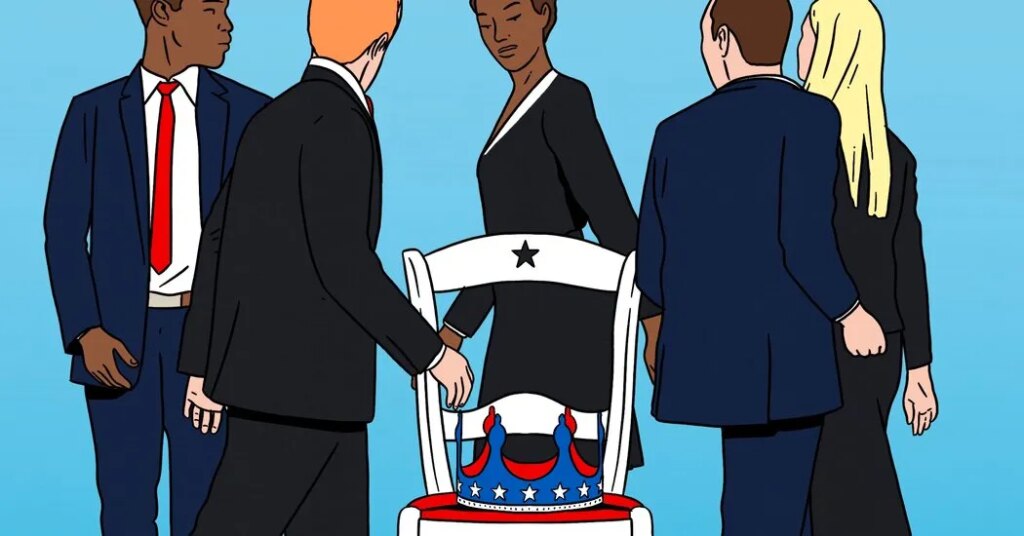
“We live in the age of the revolt against the elites,” writes Hugo Drochon in “Elites and Democracy.”
Indeed, everyone hates elites. No one wants to be one, or at least admit to being one. No candidate, Democrat or Republican, running for office in the midterms would call him or herself an elite.
But there is a rub: The candidates are running to become, or remain, elites — elites who govern and wield power.
In short, for better or worse, as Dr. Drochon, a political theorist, argues, democracy depends on elites: “How can the fact that a small number of people wield disproportionate power in economic, social or political spheres be reconciled with democracy understood as political equality?”
Dr. Drochon explores the role of elites in our politics in a written conversation with John Guida, an editor in Times Opinion. It has been edited for length and clarity.
John Guida: We are fewer than 40 days away from midterm Election Day. These elections are typically seen as a contest between candidates and parties. But are they also, in your view, a contest between elites, or at least who gets to be elite?
Hugo Drochon: They’re both: Parties are the institutions through which elites compete for political power, and voters decide between them during the midterms. Whoever makes it through the primaries can be considered a political elite; the elections in November will decide which elites get to be in power.
There are always elites. The people get to decide which ones rule. That may not be our ideal of democracy, but it’s not nothing, either.
Guida: So what is the ideal of democracy, and how does the reality of rule by elites complicate it?
Drochon: Our ideal is “people rule” or “sovereignty of the people.” The existence of elites complicates that: It doesn’t mean the people don’t have power, but it’s not absolute. You might say power is shared between the people and the elites.
If elites are a feature and not a bug of our political system, it’s an inconvenient truth that forces us to rethink our understanding of what democracy is. The reality is, we don’t have majority rule, but something closer to minorities rule. They don’t rule on their own; they need some support from the people to hold the reins of power. That’s exactly what we’re going to see in November.
Guida: And who are the elite?
Drochon: Elites are at the top of their respective spheres. They can be the best chess players, lawyers, athletes, artists — think about all the debates about who is the GOAT in any field. But there is a difference between what we might call governing and nongoverning elites, between those who have power and those who are the best at what they do.
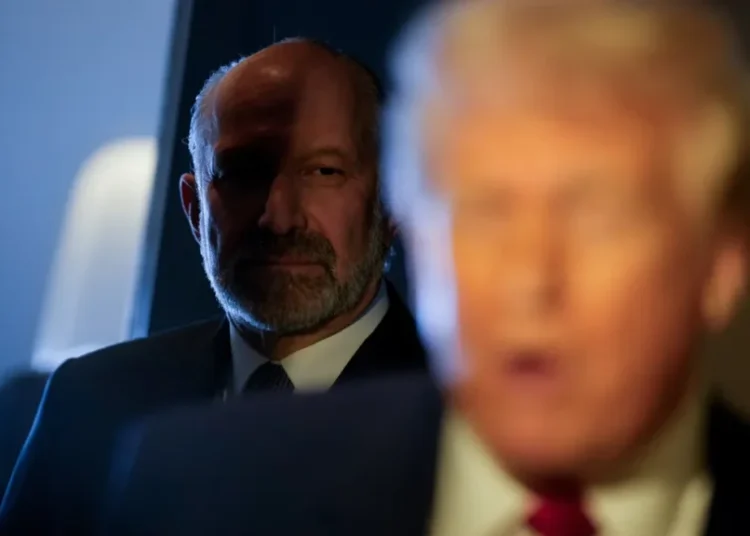
What we’ve seen recently in the U.S. in particular is a big change in the composition of the governing elite. Donald Trump, in 2016, was not a member of the political elite — he was not part of the establishment in Washington — although he was certainly an economic elite, part of the 1 percent, and a celebrity as the host of “The Apprentice.”
Over the past 10 years, a new elite has risen to challenge the old, established political elite and has largely been successful in replacing it. And it has done so, especially in 2024-25, by bringing other elites — the “tech bros” — into the fray on their side, even putting one of them, Elon Musk, in charge of DOGE.
Guida: So Lionel Messi is elite. Taylor Swift. Tom Brady. Beyoncé and Jay-Z. Christopher Nolan. Dolly Parton was elite. But that is a categorically different elite than in the world of politics.
Drochon: Exactly. That is the difference defined by Vilfredo Pareto, who gave the word “elite” the meaning it has today: between governing and nongoverning elites.
Guida: You mentioned the tech bros. What does their presence — people like Musk, Sam Altman and Mark Zuckerberg — at the White House state dinner for Chinese President Xi Jinping say about their current role in politics?
Drochon: They’re the clearest case of nongoverning elites becoming governing ones: Being at the state dinner for Xi means they’re no longer knocking on the door; they’re now inside.
Another way to think about politics is as rising elites perpetually challenging established elites. This is what’s been happening here. The rising elites brought economic elites over to their side, along with the people who are part of the MAGA movement.
Pareto has this simple but effective formula: A is the established elite that is challenged by B, the rising elite. C are the people. B persuades C that it will serve C’s interests better, and C helps B topple A. Then D (a new elite) rises to challenge B. The constant is that C never rules, although in this perpetual challenge, I want to argue, there is the space for change, and even positive change.
Guida: Perhaps you could apply that formula to the Democratic Party this year, which is going through something of a makeover. Its candidates include democratic socialists in New York City (Alexandria Ocasio-Cortez is the best known) as well as people like a smokejumper in Montana, a farmer in North Carolina, a Tejano singer in Texas, a Methodist pastor in Kansas. … The list goes on. Does that translate to Pareto’s formula, or some version of it?
Drochon: Yes. I’ve tried to develop that idea through the notion of “dynamic democracy.” For political change to happen, you need three elements. The first is a social movement or force putting pressure on the political system. Second, you need a section of the established elite to break off from it and join the movement to overthrow the established elite. And that coming together of the two happens through institutions like political parties — Step 3.
I was fascinated by how MAGA managed to put Trump in the White House, but Black Lives Matter didn’t seem to have had the same or similar political impact. Arguably, Trump would not have come to power in 2016 if establishment Republicans like Paul Ryan and Mitch McConnell hadn’t fallen in behind him once he’d won the nomination, rather than resisting him: They acted as what I call the “rebel” elites.
Nothing comparable happened for Black Lives Matter: Black voters were crucial to Joe Biden in 2020, but no section of the Democratic establishment turned B.L.M. into a political vehicle.
The smoke jumpers and farmers are the party renewing itself from below — Pareto’s circulation of elites — which is healthy. The democratic socialists are the more challenging test. The question for A.O.C. and the Democratic Socialists of America is if a section of the established Democratic Party is willing to break and come over to their side. Hakeem Jeffries, the House Democratic leader, said in August that he doesn’t support the D.S.A.’s agenda, so for now the answer seems to be no, but let’s see how that develops.
Guida: Gallup has a poll tracking Americans’ satisfaction with the way things are going. In 2005, it dipped below 40 percent, and only for the briefest moment (February 2020) has it risen above that level since. It currently stands at 21 percent. That seems like a damning verdict on the political elite. What does the perennial dissatisfaction of Americans say about the elite? Or is there a failure here of the dynamism you identified as a key part of the churn of politics?
Drochon: Perennial is the operative word here: The fact of elites is always going to rub up against the view we have of what democracy should be. There’s no way to close that gap.
But you can narrow it. As one elite gives way to another, change can occur — hopefully for the better, and hopefully in the direction of doing a better job of delivering what voters are actually looking for.
The opposite — leaving the current elites in place — generally makes things worse. There is an argument that actually there hasn’t been enough churn, to use that term, in U.S. politics recently: Samuel Moyn has recently decried the U.S. as a gerontocracy.
You could also argue that democracy is something never achieved and something we have to keep striving for.
I want to defend that idea: We have to keep striving, but in doing so, good things may come out of it. And it also makes celebrating the small victories worthwhile.
There’s this great fable from Aesop I like to quote, of the dying peasant on his deathbed who tells his children there is a buried treasure in the field: They dig and dig and dig but can’t find the treasure, because there is no buried treasure. But by the end, having dug up the land — tilled it — they have made themselves richer.
That’s the relation I’d like to keep between the ideal of democracy and the reality, dynamic democracy: We’ll never find ideal democracy of the rule of the people, but in striving toward it, certain democratic benefits might accrue.
Guida: Anton Jäger (a Times contributing writer) has developed a theory of “hyperpolitics.” How does that interact with elite theories? He recently described hyperpolitics as “a concept that describes a change in political culture in the West” that notes “an increase in political activity on a variety of metrics, whether it’s voting, protests, but also political violence.” That increase in political activity, however, “is not matched by an increasing institutional strength.”
Drochon: There’s a strong overlap between the two: Jäger is pinpointing how there’s been an increase in social movements, without institutions to carry that pressure into changing the political system. That’s the Black Lives Matter condition generalized: movement without mediation. But institutions alone aren’t enough: You also need rebel elites.
Guida: You are in Britain, which has a Labour prime minister. But in much of Europe, parties on the left, particularly the center-left, are struggling, and populist parties of the right — most recently, Alternative for Germany — are often advancing. Any idea why these movements on the left have trouble connecting to institutions, political parties or rebel elites? Or has the decline of mass politics and unions hit the center harder than parties further on the ideological spectrum of both the left and the right?
Drochon: On the center-right, look at the Christian Democratic Union in Germany or even the traditional conservatives in France; the latter have almost been wiped out. Most of the energy seems to be on the far-right at the moment or, at least, the AfD, Reform UK and Marine Le Pen seem closest to gaining power.
But there is energy on the far-left, too: In Berlin, the Left party has just come first in the state election; in Britain, Zack Polanski, the Green Party leader, has been an insurgent force; and in France, Jean-Luc Mélenchon might make it to the second round of the French presidential elections.
But the collapse of traditional mass politics and unions — unions, like parties, serve as mediators between the people and political elites, and that loss of mediation has meant a turn to more populist politics with a direct link to a leader — has hit the center parties most strongly. It’s also that we’re going through a change of elites: The post-Cold War consensus is coming to an end, and the politicians who represented that consensus are being replaced by new ones. So there is a “circulation of elites” — another Pareto term — happening here, with new elites challenging the established ones. But all of these parties — the AfD, Reform, even Le Pen — need established elites, whether political, economic or social, to break off and come over to their side if they’re going to achieve power.
Guida: The 20th century provides the most obvious, and horrible, examples of this dynamic process going badly wrong, or at least going in worrisome directions. How should we think about those examples, when the dynamic process produces institutions or parties that are authoritarian or illiberal?
Drochon: It’s the same mechanism. Neither Mussolini nor Hitler came to power on his own: Established conservatives brought them in, thinking they could tame them. That, on a very different scale, is the Ryan and McConnell story — and it ultimately consumed them.
The mechanism itself is neutral, so the story goes both ways: If you’re in the D.S.A. and want to take over the Democrats, you look for one concession at a time. But if you don’t want D.S.A. to subsume the Democratic Party — or MAGA to take over the Republican Party — then you know you have to draw the line.
What I’ve described as rebel elites isn’t automatic: The decision to break is a choice, not a fait accompli — it can be resisted. And you can fight back; this is, after all, a dynamic process.
Guida: Are there ways of getting better at choosing elites? Some seem better than others at disguising, or at least talking past, their eliteness.
Drochon: Go back to Aesop’s fable for a moment: We can still judge whether the rising elites are at least aiming toward more democracy or less. And by democracy here I mean equality, whether political, social or economic. Do politicians say they’re going to increase political participation? Are they going to redistribute wealth? Are they going to be more inclusive?
Every society has a distinct elite. In the U.K., for instance, we often say that P.P.E. — philosophy, politics and economics — at Oxford is the “degree that runs Britain.” In France, it was ENA, until Macron abolished it and replaced it with the National Institute of Public Service. In the U.S., Ivy League-educated lawyers have often had the edge. It makes a real difference whether you have civil servants, lawyers or debaters running the show.
Like our politicians, our societies are always in flux. Ideally we’d have leaders who can manage and channel that flux. But if they’re not up to it, we need to be able to throw them out and try someone new, to see if they can do it any better. That’s the notion behind dynamic democracy, and, as I see it, still fundamentally what democracy is about.
Hugo Drochon teaches political theory at the University of Nottingham and is the author of “Elites and Democracy.” John Guida is an editor in Times Opinion.
The Times is committed to publishing a diversity of letters to the editor. We’d like to hear what you think about this or any of our articles. Here are some tips. And here’s our email: [email protected].
Follow the New York Times Opinion section on Facebook, Instagram, TikTok, Bluesky, WhatsApp and Threads.
The post Trump Revealed Something Essential About Elites appeared first on New York Times.