Dustin DeVito is director of research at the nonprofit 1792 Exchange.
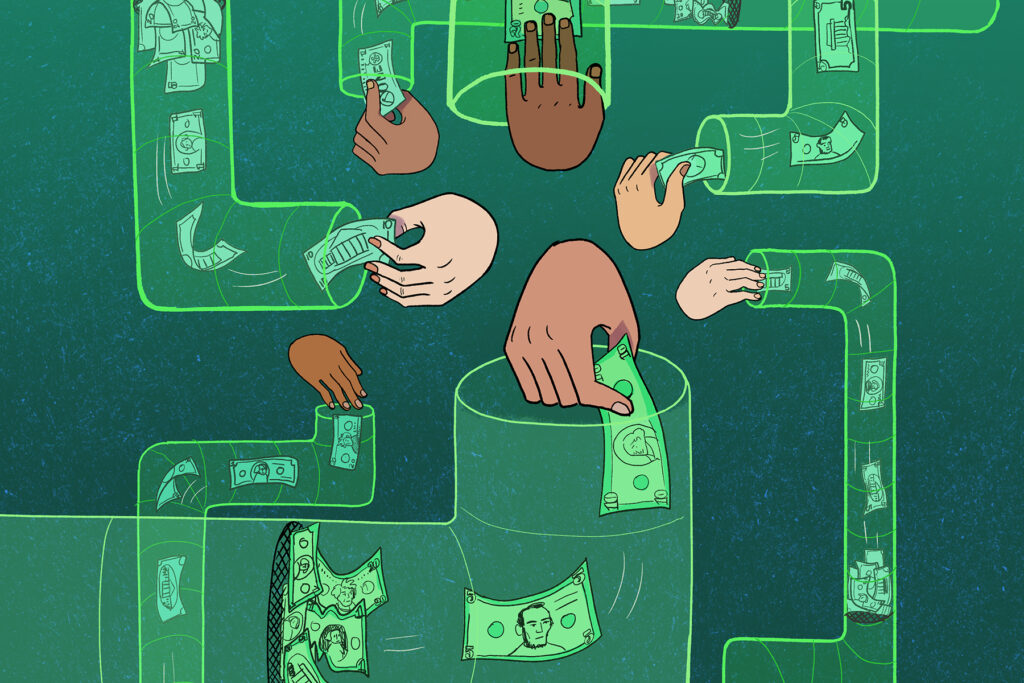
Millions of workers in America donate to charities through giving portals set up by their employers, confident that a full range of legitimate nonprofits is just a few clicks away. But this trust, unfortunately, is often misplaced.
Many companies turn to third-party platforms such as Benevity, Bonterra and Groundswell to operate their charitable-giving programs. Benevity is the largest of these, processing billions of dollars in donations annually. Though it does not publish a full list of its clients, research by my organization, 1792 Exchange, has identified more than 200 Fortune 1000 companies with Benevity portals, representing millions of employees.
Part of the appeal of these services is that experts have done the vetting work. So employees who use them to make donations reasonably assume that if a charity is excluded, it failed some objective test of legal compliance, financial transparency or organizational integrity.
In the case of Benevity, however, that assumption is often incorrect. And the problem is not that companies outsource the work of vetting nonprofits to Benevity. The problem is in the process used to decide which organizations to include and which to leave out.
Alongside many noncontroversial criteria, our research indicates that the Southern Poverty Law Center’s overly broad “hate map” is often used to determine which organizations are eligible for employee donations and corporate matches at companies using Benevity’s portal. In practice, that means that many organizations doing important work get shut out. This includes Focus on the Family, whose Wait No More program recruits foster and adoptive families, and Do No Harm, which seeks to protect children from life-altering procedures that lack scientific justification. It also includes Alliance Defending Freedom, a nonprofit legal advocacy organization that has won multiple cases protecting religious liberty and free speech at the Supreme Court.
At many companies using Benevity’s system, all of these are barred from a single dollar of employee charitable giving, classified as they are on the hate list alongside groups like the Ku Klux Klan. An open letter from these organizations and 12 others on the hate list warned Benevity that this approach “effectively blocks employees from donating to organizations that reflect their values, while favoring others that align with one side of the political spectrum.”
Whether one would donate to every organization on this list is beside the point. The question is whether employees should be steered away from supporting lawful IRS-recognized charities because an advocacy group has decided they are ideologically unacceptable.
Ironically, the SPLC is itself eligible for donations through Benevity. Since 2020, corporations have donated more than $3.5 million to the organization through major foundations, including six-figure sums from entities associated with Raymond James, PayPal, Allstate and BNY Mellon, 1792 Exchange research shows. Setting aside the propriety of allowing an organization that’s vying for dollars to have a role in winnowing its competitors, this gets at the deeper problem: In June, federal prosecutors alleged that the SPLC funneled more than $4 million to individuals associated with extremist organizations, including the Ku Klux Klan, Aryan Nations and the National Alliance.
The SPLC has strongly denied any wrongdoing, arguing that the Justice Department is misrepresenting a paid-informant program that was created to investigate and fight extremism. The group also alleges that the indictment is politically motivated. The case will play out in the courts, but while it does, how would the SPLC react to being blacklisted based on an unproven assessment of its work by an actor it considers to be ideological?
Benevity maintains that it doesn’t exclude groups on the SPLC list; its clients do. “Benevity is not directly affiliated with the SPLC,” the company’s spokesperson told the Daily Signal in June. “Benevity clients have the option to use the list of nonprofit organizations included on the SPLC’s annual Hate Map to determine nonprofit eligibility within their programs. The use of this option is not a default setting, and is at the sole discretion of clients.”
I reached out to more than a dozen companies that use Benevity, however, and I can report that most executives were unaware the SPLC filter existed and often discovered that it was enabled only after they contacted Benevity. Further, in 2021 then-CEO Kelly Schmitt said the SPLC’s hate list was used as a filter applied to nonprofits. And as of October, Benevity program documentation listed the SPLC as a foundation of its vetting process — with no mention of a chance to opt in or out.
Given the questions this raises, employees presented with a Benevity portal should ask their employers whether their charitable-giving portal uses SPLC data. Corporate leaders should contact their Benevity representative and ask that SPLC designations are not being used to screen nonprofits, as Microsoft, American Express, AT&T and other companies now have. A simpler alternative, which some companies have embraced, is using IRS 501(c)(3) status as the sole eligibility standard. The IRS charitable designation is transparent, viewpoint-neutral and already enforced by federal law.
And finally, Benevity’s current chief executive, Soraya Alexander, should demonstrate leadership by publicly removing the SPLC filter from Benevity’s platform entirely.
Americans of every political perspective should be able to agree on one principle: Workplace charitable giving should be governed by transparent, viewpoint-neutral standards, not by the ideological judgments of any advocacy organization.
The post Your company’s charity list may have a political screen built in appeared first on Washington Post.