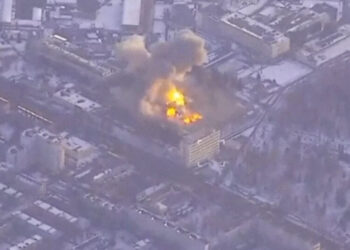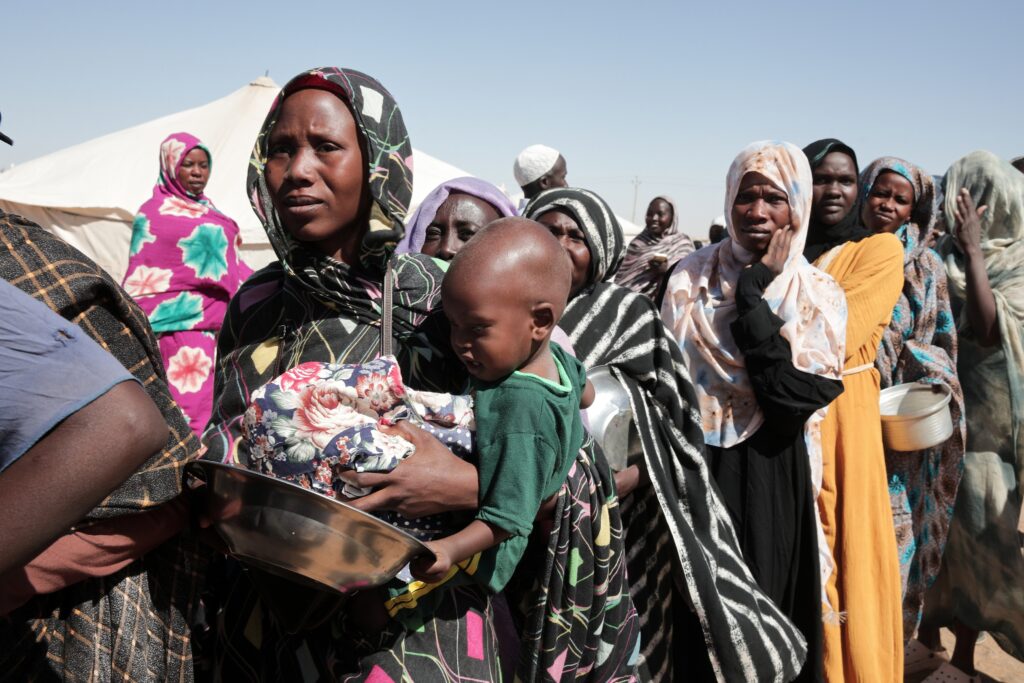
The world is coming to learn of the horrors of El Fasher not from visceral evidence but through silence and absence. No independent news media have been able to access the Sudanese city in the state of North Darfur, which fell in late October after more than 500 days of miserable siege. Satellite images show hollowed-out neighborhoods, bloodstained grounds and traces of mass graves. Patients languishing in hospitals and clinics that were targeted by fighters disappeared. Children fleeing El Fasher arrived at camps for the displaced without parents or other loved ones.
Aid workers and U.N. officials have shared accounts of widespread slaughter and rape carried about by the militiamen of the Rapid Support Forces, one of the two main factions engaged in Sudan’s ruinous civil war. Since the conflict flared in April 2023, the RSF has consolidated its grip over the vast Darfur region in the west of the country. Their capture of El Fasher entrenches a de facto east-west partition, with the rival Sudanese armed forces having reclaimed the capital Khartoum in the center of the country.
The civil war has spawned the world’s worst humanitarian crisis. About 14 million people, half of whom are children, have been forced from their homes. Famine and diseases such as cholera stalk swaths of the country, especially El Fasher and its environs, where witnesses described how besieged residents subsisted off animal feed and weeds. Then there’s the direct toll of war, including the RSF’s apparent systematic violence against non-Arab ethnic and tribal groups in Darfur. Up to 150,000 people from El Fasher are missing, and researchers estimate that about 60,000 people may have been killed by the RSF and its allies just in the past month.
In the wake of El Fasher’s fall, “we’re seeing a velocity of killing that can only be compared to the Rwandan genocide,” Nathaniel Raymond, executive director of the Yale Humanitarian Research Lab, told CNN last month. The lab has been monitoring the aftermath of El Fasher’s fall. “We are looking at a mass casualty event that could exceed in a week the amount of people who have died in two years in Gaza. That’s the speed of killing we’re at based on what we’re seeing with piles of bodies on the ground.”
Even as we try to grapple with the disaster visited upon El Fasher and Darfur, more broadly, the region is still coping with earlier traumas. On Tuesday, judges at the International Criminal Court in The Hague sentenced Ali Muhammad Ali Abd-Al-Rahman, a commander of the infamous Sudanese Janjaweed militia, to 20 years imprisonment after his conviction on multiple charges of war crimes and crimes against humanity carried out under his watch more than two decades ago during Sudan’s brutal counterinsurgency in Darfur. The Janjaweed are the precursors to the RSF, but at the time were doing the bidding of the central government in Khartoum under then President Omar al Bashir.
The genocidal violence unleashed then has found its echo in the current war. Social media abounds with chilling videos of RSF fighters and commanders exulting in their rampage, gloating about killing and raping civilians from various tribes. Before the calamity that befell El Fasher, there was the ravaging of the West Darfur city of El Geneina, where the RSF and its allies killed about 15,000 people and carried out the ethnic cleansing of Black African Masalit people.
El Fasher itself has a central place in the story of the Darfur genocide two decades ago. In April 2003, rebel forces launched a raid on a key installation in the city which prefigured the hideous government-backed crackdown and atrocities that followed.
The parallels are clear to all. “What is unfolding in El Fasher recalls the horrors Darfur was subjected to 20 years ago,” Tom Fletcher, the U.N.’s top relief official, said in a briefing at the end of October to U.N. ambassadors. “But somehow today we are seeing a very different global reaction — one of resignation. This is also a crisis of apathy.”
Analysts are at pains to stress that the current tragedy was all too predictable. “Today, Darfur’s civilians remain at the mercy of the same security forces who committed crimes against humanity and war crimes in Darfur and other parts of Sudan,” Tigere Chagutah, Amnesty International’s regional director for eastern and southern Africa, said in a statement in 2023 when the civil war first flared. “It is shameful that people in Sudan are still living in fear every single day.”
The Sudanese military is also accused of carrying out its own atrocities, particularly through indiscriminate bombardments of civilian areas where the RSF has held sway. The RSF, too, is alleged to have killed dozens of civilians with drone strikes in the Kordofan region in south-central Sudan, which has become the latest hot spot in a war that outside powers have failed to end.
“With the RSF emboldened and the SAF entrenched, Sudan faces a political stalemate that neither side can break militarily,” the International Crisis Group noted in a policy brief. “Having demanded a RSF withdrawal from El Fasher as a precondition for negotiations, the army and its allies now appear far less disposed to engage in talks in the immediate aftermath of this defeat. Avoiding a permanent east-west partition will require urgent, creative diplomacy by the U.S.-led ‘Quad’ process, which also includes Egypt, Saudi Arabia, and the United Arab Emirates.”
But despite the recent public involvement of President Donald Trump, the diplomatic track has little momentum, not least because various countries are thought to have a guiding stake in the conflict. The UAE, for example, is thought to have enabled and bolstered the RSF through various channels, even though Emirati officials vociferously deny supporting the paramilitary group.
“The death and destruction are being enabled by too many governments choosing not to use their influence to try to pressure the warring parties to stop killing people or blocking humanitarian aid,” wrote Javid Abdelmoneim, international president of Doctors Without Borders. “Choosing to issue passive statements of concern, while they and their allies provide financial and political support, and the weapons that destroy, maim, and kill.”
Sign up to receive WorldView, a free, thrice-weekly email newsletter from the international desk of The Washington Post.
The post The horrors of El Fasher echo Sudan’s genocidal past appeared first on Washington Post.