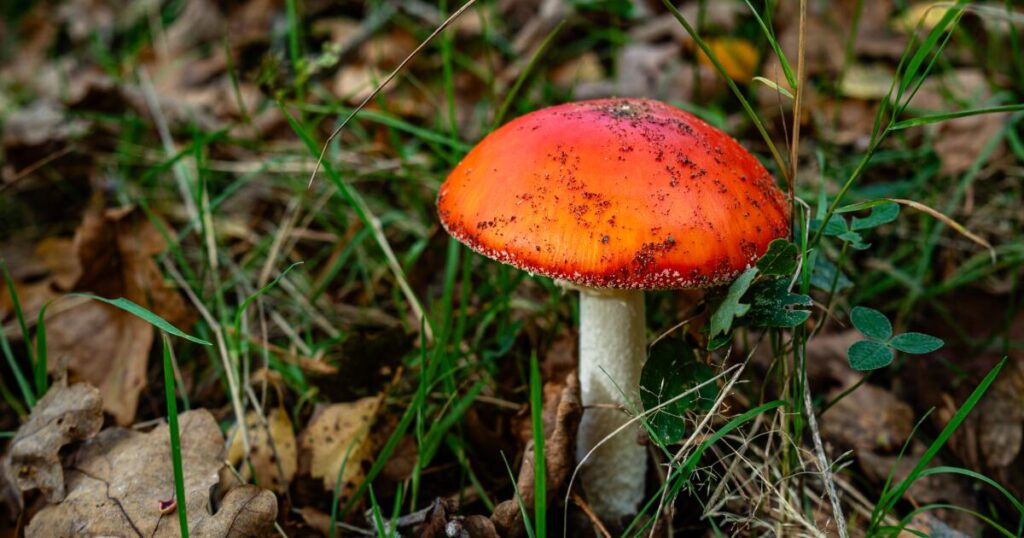
The winter season has brought cold and wet conditions that are perfect for fungi like death cap mushrooms, or Amanita phalloides, to grow in California, experts say, but with that has come a rash of people mistakenly eating them thinking they’re safe.
So far this year, at least 23 people have been sickened by eating death cap mushrooms in California and one person has died.
When eaten, they can cause severe liver damage, requiring intensive care and even causing death in some cases.
Cases have been concentrated in Monterey County and the San Francisco Bay Area, but the danger remains across the state, said Dr. Rais Vohra, medical director for the California’s Poison Control System’s Fresno-Madera Division.
“It’s really not worth the risk,” Vohra said, adding that the safest mushrooms to eat are found in the grocery store aisle.
But foraging enthusiasts say there are ways to enjoy the activity safely — it just takes a bit of research.
There’s no silver bullet for finding out whether a wild mushroom is poisonous unless you know what species it is, said Rudy Diaz, president of the Los Angeles Mycological Society.
Old wives’ tales of silver spoons turning black when they touch a poisonous mushroom, or that only bright-colored or foul-tasting mushrooms are unsafe are false, he said.
“A novice forager should only eat wild mushrooms after they’ve been taught to identify them by an expert in their region,” Diaz said.
Here’s some tips on why amateurs should avoid foraging for mushrooms — but if they do, how to minimize the risks.
Why do people forage for mushrooms and is it safe to do?
Not only can wild mushrooms be tasty, but learning to identify them can be a fun way to learn about the world around you, Diaz said.
“It’s about finding this personal connection between you and nature,” Diaz said, to find something growing from the earth that hasn’t been processed or prepared by other humans.
One of the first things a novice mycologist should learn, Diaz said, is to identify the Amanita genus and avoid it because of its dangerous lookalikes.
Foragers don’t have to eat their finds at all, he said. It’s safe to touch or pick any mushroom, as long as you don’t eat it.
People interested in learning more about identifying mushrooms should find experts in their area, like their local mycological society, and join their in-person meetings, Diaz said. There are also various Facebook groups that crowd source identification through photos.
Mushroom hunters should avoid relying on AI, like ChatGPT, to identify ones in the wild fit for consumption, and instead use resources like iNaturalist, he said.
When taking a picture of a mushroom for identification, you should show where it was found and dig up the entire mushroom, including its stem and base. It’s also helpful to show the gills located underneath its cap, Diaz said.
Other edible mushrooms in California that are far more recognizable — and don’t have dangerous lookalikes — include the chicken of the woods, oyster mushroom and honey mushroom, Diaz said.
How can you identify the death cap mushroom?
A death cap mushroom will be growing out of the ground near an oak or other hardwood tree, Diaz said. It has a sac-like cup at the base of its bulb that is usually found under the soil — a sign it is in the Amanita genus which can be dangerous, Diaz said.
Its dome-shaped smooth cap may have olive or yellowish-green tones. It will have white gills and spores on the underside of its cap, and will have a distinct ring or skirt around its stem.
If you are not experienced in identifying wild mushrooms, you should ask an expert for help.
The death cap mushroom is responsible for over 90% of mushroom-related deaths in the world, according to iNaturalist. There is no way to cook, freeze or prepare it for consumption to make it safe.
The species can be mistaken for edible mushrooms like Amanita caesarea, or Caesar’s mushroom, and the straw mushroom.
What are the symptoms of eating a death cap mushroom?
Unlike many other poisonous mushrooms that can cause vomiting or other symptoms almost immediately, you may not know you are sick from amatoxin poisoning until hours — and several meals — later, said Vohra from the state poison control center.
Symptoms are hidden for around the first eight hours, Vohra said, before a patient may start experiencing abdominal pain, cramping, diarrhea, nausea and vomiting. In extreme cases, a person who ate death cap mushrooms can go into catastrophic liver failure and need a liver transplant.
Doctors have no good way of testing for amatoxin in the body if you don’t know what you’ve eaten, potentially leading to a delay in care which can be dangerous, Vohra said.
If you’ve eaten something that you can’t identify, call California’s poison control hotline at 1-800-222-1222 for free, confidential expert advice in multiple languages. If you suspect mushroom poisoning, call 911.
The post These wild mushrooms have sickened Californians. Here’s how to forage safely. appeared first on Los Angeles Times.