Lawmakers are pushing for a ban on diesel exports, seeking relief for truckers and farmers who are paying record high prices for the crucial fuel. But economists and oil experts say the plan could backfire — and lead to higher costs at the pump for Americans.
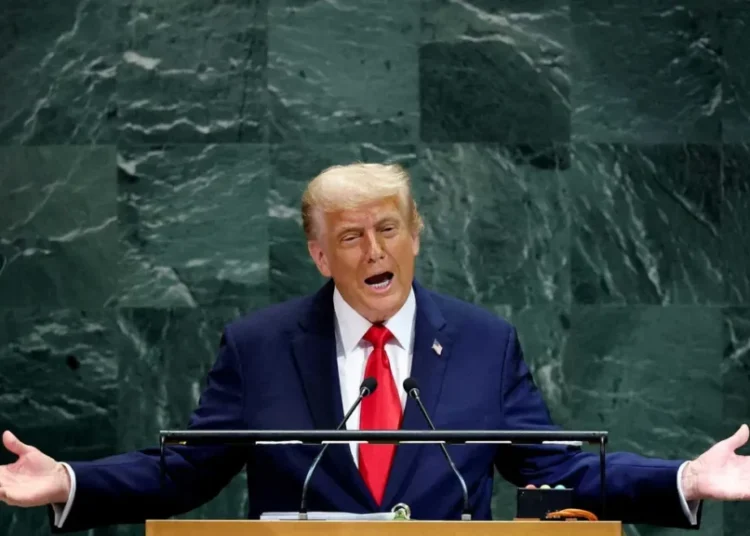
President Donald Trump said Tuesday that he’s calling for a ban on diesel exports, and his administration confirmed they are “examining” the issue.
The United States is the largest exporter of diesel in the world, sending on average 1.4 million barrels of distillate fuel a day to trading partners mainly in Latin America and Europe. Experts say that a blanket ban on shipments would imperil those economic allies and push domestic refineries to cut production. That, in turn, would almost certainly lead to higher gasoline prices.
Here’s what is being proposed and what could happen.
Why is a ban being considered?
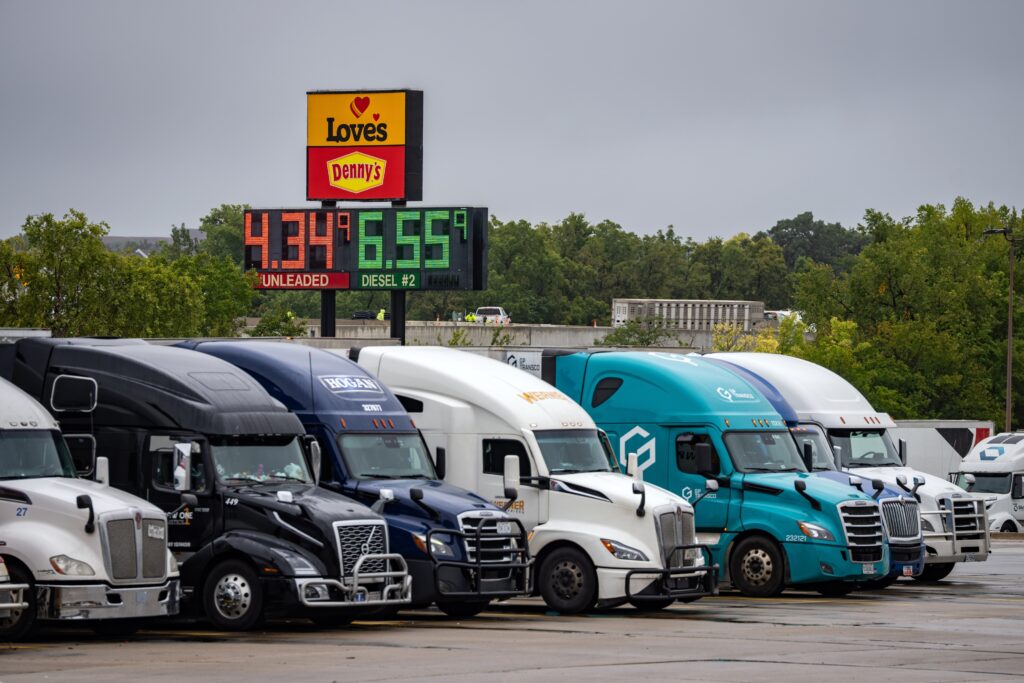
Farmers and truckers are paying more for diesel than ever before. The national average hit $6.53 per gallon this week, according to the Energy Information Administration, well above the previous record of $5.81 set in June 2022 after Russia’s invasion of Ukraine.
Continued attacks in that region, as well as the U.S.-Israeli war in Iran, have compromised oil infrastructure globally, sending the price of diesel soaring.
That’s making it more expensive to produce food and move groceries, clothing and other items around the country, pressuring farmers and consumers. Politicians are looking for a way to lower those prices.
A ban might initially lower diesel prices in the U.S., analysts say. But the relief likely wouldn’t last long.
“It’s very, very temporary,” said Debnil Chowdhury, head of Americas and Europe fuels and refining at S&P Global Energy. “It would lead to higher gasoline prices for everyone.”
How would a ban affect oil production in the U.S.?
Diesel and gasoline are made partially in a combined process. U.S. refineries produce far more diesel than is needed for domestic usage. If the companies were no longer able to export, they would likely reduce their production to avoid having to store all that excess diesel, and to keep profits in check.
Producing less diesel means also producing less gasoline and jet fuel, and could send prices for those products even higher. Americans are already paying significantly more at the pump now than they were a year ago.
“Everything you do is a little bit like robbing Peter to pay Paul,” said Rebecca Babin, a senior equity trader at CIBC Private Wealth. “The whole system is super tight right now.”
It’s not clear how quickly refiners would reduce production, or how much they would cut.
“The longer any export controls are in place, the more impactful it becomes,” said Patrick De Haan, head of petroleum analysis at the price-tracking platform GasBuddy. “The longer this goes on, the more refiners are going to look to evade the huge impacts this will deliver.”
And not all regions of the country are equal. Diesel prices tend to be lower in the Gulf Coast region, where the fuel is refined. But some areas of the country, such as the Northeast, import some of their supply because it is logistically easier to do so.
If an export ban is put in place, it would send global diesel prices up because the U.S. would be removing a large chunk of the product from the global market.
“You can’t fence off a globally traded commodity by executive order and expect the global price to stop applying to it,” De Haan wrote in a GasBuddy newsletter on the topic.
Which trading partners would feel the pinch?
A ban on diesel would fall first on countries with no other supplier close at hand, whose truckers, farmers and power plants run on fuel that arrives by tanker from the Gulf Coast.
Mexico, the U.S.’s biggest customer, took 96 percent of its imported diesel from American refineries in the year ending in June. And Ecuador and Costa Rica relied on the U.S. for roughly 90 percent of their imported diesel, according to a Washington Post analysis of national customs data compiled by Trade Data Monitor.
Europe and the United Kingdom have also become key importers of U.S. diesel, turning increasingly to the U.S. as supplies from the Middle East are disrupted.
A year ago, the U.K. received 18 percent of its imported diesel and heating oil from the U.S.; in the first half of 2026 it had grown to 30 percent of its imported diesel and heating oil. Supplies to the Netherlands have also spiked, due in part to its massive Port of Rotterdam, which serves as a hub to export diesel to other European nations.
“We would be hurting some of our allies in the global economy,” said Babin of CIBC Private Wealth. “It would drastically increase diesel prices to Europe and Latin America.”
When would a ban take place?
Trump said Tuesday that the administration would make a decision about a potential export ban “fast.”
It’s far from certain the U.S. will put a ban in place. On Wednesday, Energy Secretary Chris Wright came out in opposition of the idea, according to Reuters, saying a ban “definitely doesn’t work,” and would push up gas and jet fuel prices.
The plan also has faced significant pushback from the oil and gas industry. Trade organization American Fuel & Petrochemical Manufacturers said a ban would “backfire.”
“If exports are banned, refiners cannot simply stockpile unlimited diesel,” the organization wrote in a blog last week. “They would have to reduce production. Because gasoline and diesel are produced together, producing less diesel also means producing less gasoline.”
A White House official said the president wants to see gas prices fall and “is evaluating all the options on the table.”
The post How a ban of diesel exports could lead to higher prices — even in the U.S. appeared first on Washington Post.