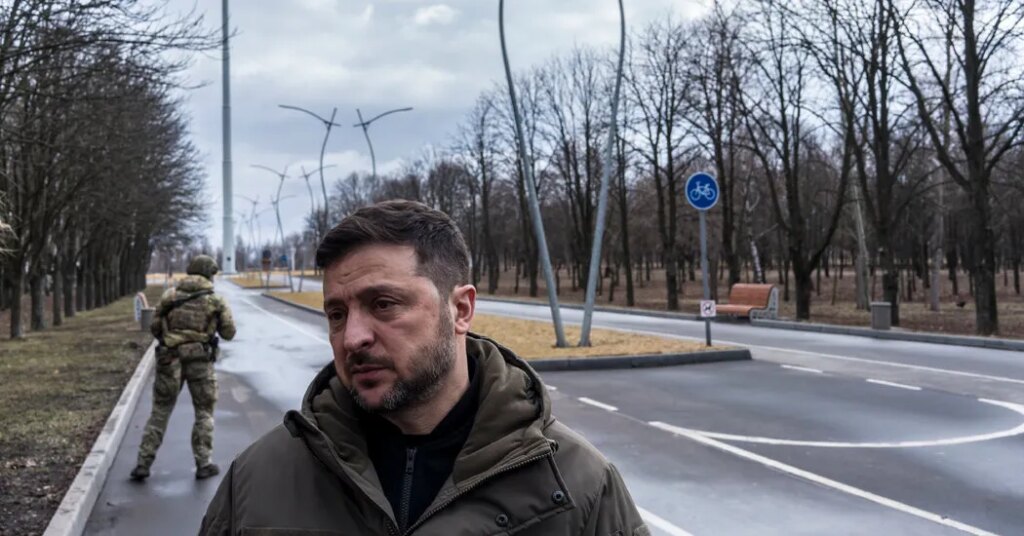
When President Volodymyr Zelensky of Ukraine addressed the United Nations General Assembly for the first time after Russia’s full-scale invasion in 2022, his appeal for international support was fueled by raw moral indignation.
Mass graves in the newly liberated Ukrainian city of Izium had just been uncovered, and the atrocities in Bucha and other reclaimed towns continued to shock the international community. “A crime has been committed against Ukraine, and we demand just punishment,” he declared in a prerecorded video address.
When Mr. Zelensky takes the stage on Wednesday, he will no longer be pleading merely to awaken the world to the war’s horrors, but also demanding the means for his nation to survive and warning that the violence will not remain confined to Ukraine.
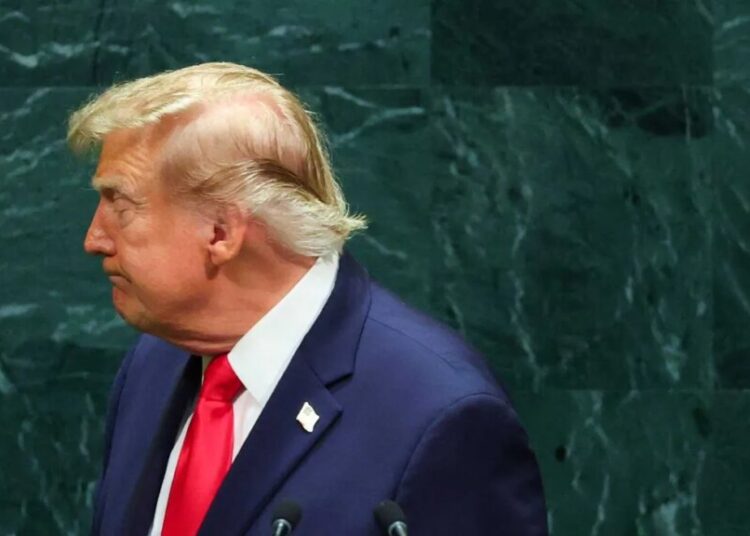
On Tuesday, he met with President Trump on the sidelines of the United Nations General Assembly in New York and said that he hoped Russia’s war in his country would end “before winter” and that the Trump administration would help Kyiv do it.
“I think we need to do this as quick as possible — before winter,” Mr. Zelensky said. Mr. Trump nodded and repeated his words with approval.
Mr. Zelensky’s speech will most likely revisit core themes from his previous addresses, including global food security, the urgent need for advanced air defenses, and warnings about the proliferation of artificial intelligence and autonomous weapons systems in warfare.
“We are now living through the most destructive arms race in human history,” he told the General Assembly last year.
The early consequences of that race are already clear. Escalating destructive capabilities on both sides can been seen in brutal frontline combat that kills or wounds thousands of soldiers every month and in relentless long-range bombardment campaigns.
Mr. Zelensky is also expected to reinforce his consistent message that Russia’s aggression will not stop at Ukraine’s borders.
Moscow is already testing how far it can push abroad, analysts say, strangling global grain routes to pressure the developing world while waging a brazen campaign of arson, sabotage, and cyberattacks across Europe.
Mr. Zelensky has frequently argued that Russia and its key partners — North Korea and Iran — seek to dismantle the American-led security architecture established after World War II and are the primary agents of chaos in a world beset by crises.
His diplomacy faces added complexity, however, given Mr. Trump’s disdain for the traditional alliances that served as the backbone of global stability.
Mr. Zelensky must navigate a delicate political line: invoking what were once the foundational values of American foreign policy without alienating an administration pursuing an approach starkly different from its predecessors.
As America has pulled back from its traditional role, European democracies have struggled to fill the void.
Mr. Zelensky is expected to argue once more that securing the continent requires defeating Russian forces in Ukraine and degrading Moscow’s capacity to wage war.
Four years after the invasion, civilian casualties from Russian strikes have surged. through a relentless daily toll: a family killed when a missile hit its home at midnight; two people killed in a drone strike at a gas station; five dead after a public bus is struck.
As Ukraine prepares for what may be the most challenging winter of the war, Mr. Zelensky must convey the critical urgency of his nation’s plight to world leaders increasingly distracted by competing global crises and domestic political pressures.
The post Zelensky Is Expected to Warn Russia’s Aggression Won’t Stop at Ukraine’s Borders appeared first on New York Times.