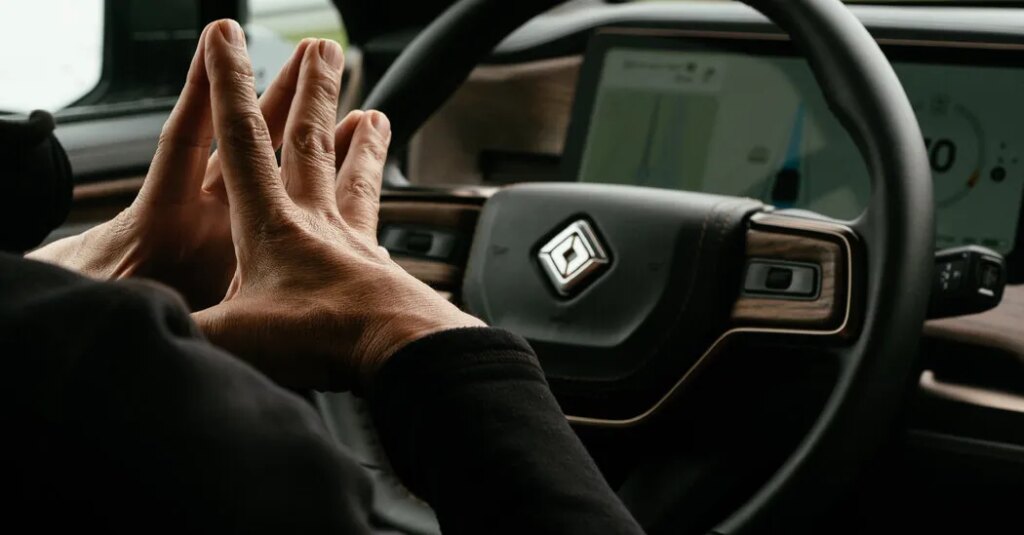
Car software that does much of the work of driving is becoming more capable by the week. But, strangely enough, the better the technology becomes at steering, braking and navigating, the riskier it may be at least some of the time.
Experts call it automation complacency. In other words, drivers may overestimate what the technology can do and become so reliant on it that they stop paying attention and are unprepared when something goes wrong.
That happened recently to Kyle Shanahan, the head coach of the San Francisco 49ers, who has used the self-driving features of his Tesla for years. He dropped his cellphone while driving in Palo Alto, Calif., and bent over to pick it up, thinking that the technology would keep the car on a safe path.
But apparently the system, which relies on cameras, was not engaged, Mr. Shanahan told reporters in August. His car veered into oncoming traffic, causing a crash that left him with broken bones and a concussion.
One lesson Mr. Shanahan learned was that driving “is a partnership,” he told the reporters. “You don’t just turn it over to a computer.”
Most automakers are working on systems that, under certain conditions, steer and brake. Their ultimate aim is to sell fully autonomous vehicles that can act as robot chauffeurs so good that passengers will be able to read, work or fall asleep.
This month, Tesla began offering paid rides in a vehicle it calls the Cybercab, which has no steering wheel or brake pedals. Tesla says the Cybercab can operate without a driver. But it is not yet legal for carmakers to sell such vehicles to individuals.
Self-driving technology has won support from the Trump administration, in part because Chinese companies are also working on autonomous cars. Administration officials have said they are working on new rules to allow models like the Cybercab to hit the roads in large numbers.
Automated driving features have become sought-after options and a significant source of revenue for carmakers. Tesla charges $99 a month for its Full Self-Driving (Supervised) service. The company said it had 1.5 million active subscriptions in the second quarter, up from fewer than one million a year earlier.
Rivian, General Motors, Ford Motor, Hyundai and others are developing their own technology in what Ann Carlson, a former federal auto safety regulator, called an “arms race.”
But none of these systems available are designed to drive cars fully on their own. Unlike driverless taxis operated by Waymo and other companies, they require drivers to be ready to intervene if the software makes a mistake. In most circumstances, drivers, not car companies, are liable for accidents. And no comprehensive studies have shown that cars with automated features are safer than conventional vehicles, experts say.
“There is this irony,” said Ms. Carlson, who is now a professor at the U.C.L.A. School of Law. “The better it gets, in some respects the more dangerous it gets, unless it’s so good that it doesn’t cause problems, which is not true at this point.”
Guy Mangiamele, director of AMCI Testing, a research firm that evaluates vehicle technology, said Tesla had made “amazing” progress with its software, which is designed to guide vehicles to their destination with little or no human intervention.
Even so, “maybe it will take 500 miles or 1,000 miles, but at some point it’s going to get something wrong,” Mr. Mangiamele added. “If you’re not 100 percent aware and ready to take control, you’re going to be a danger to yourself and others around you.”
Notwithstanding those concerns, many people are embracing the technology.
Carolyn McBride of Oceanside, Calif., bought a Tesla Model Y last year after being wowed by the company’s self-driving technology. She did so, she said, despite her antipathy toward the right-wing views of the company’s chief executive, Elon Musk.
Ms. McBride, 72, said that she has trouble seeing in darkness and that her husband has Parkinson’s disease. The Tesla once prevented her from hitting a pedestrian, she said.
“It’s just such a game changer with people our age,” Ms. McBride said. The system is quick to warn her if she stops paying attention, she added.
Tesla recently described its self-driving technology as “a guardian angel for you & others on the road” in a post on X, Mr. Musk’s social media site. The company reposted a testimonial by a man who has cerebral palsy and said Full Self-Driving (Supervised) allowed him to go wherever he wanted, whenever he wanted.
Experts say claims like that are dangerous. “Partial automation requires a fully competent driver at all times,” said Alexandra Mueller, a senior research scientist at the Insurance Institute for Highway Safety, a research organization created by insurance companies. “Partial automation is not meant to compensate for impairments.”
Tesla did not respond to a request for comment.
People who rely on driver-assistance systems may not understand that they are usually liable for damage or injuries even when the vehicle was steering itself. Except in a few cases, the legal system has not penalized carmakers if something goes wrong, said Matthew Wansley, a professor at Cardozo School of Law in New York who studies automated driving.
Other automakers, including Ford, G.M. and Rivian, offer systems that are more cautious than Tesla’s. Such systems allow drivers to take their hands off the steering wheel on certain highways. The cars use cameras to monitor drivers and may sound alerts or automatically pull over if drivers are not attentive and responsive enough.
But it’s not clear how driver-assistance systems affect safety. Crash reports and statistics often do not contain information about whether such systems were engaged. Even the data that does exist may be misleading. That’s because cars with driver assistance systems tend to be more expensive, which means their owners are generally older, affluent people who are less accident prone.
Systems that clearly prevent injuries and fatalities tend to aid drivers by, among other things, sounding alarms or automatically braking a vehicle, rather than taking control from drivers, safety experts said. These experts consider hands-free driving systems and Tesla’s technology as more of a convenience than a safety feature.
“I have yet to see independent analyses confirming these significant benefit claims,” Dr. Mueller said.
Auto executives disagree, asserting that their systems make driving safer by making it less taxing.
“The biggest danger is actually drivers getting tired,” said James Philbin, senior vice president for autonomy and artificial intelligence at Rivian. “These systems can dramatically improve that.”
Rivian’s system allows drivers to take their hands off steering wheels on any road with clearly marked lanes. By the end of the year, the company plans to roll out technology that will allow cars to drive autonomously from point to point, similar to Tesla’s system. Drivers will still need to pay attention.
“Over time, the consumer expectation of what their vehicle can do is going to go up and up,” Mr. Philbin said. “And we want Rivian to be one of those top players.”
Other automakers have similar systems. Ford’s Blue Cruise and G.M.’s Super Cruise allow drivers to take their hands off the wheel on divided highways. The next step is cars that drive themselves from onramp to offramp.
“Basically you can get on the highway, you press a button and it’s going to do all the lane changes for you, all the interchanges, etc., all autonomously,” said Sammy Omari, executive director at Ford for advanced driver-assist systems.
In 2028, G.M. will begin equipping some vehicles with systems that allow drivers to take their eyes off the road. “Our goal is to get to full autonomy,” said Rashed Haq, vice president of autonomous vehicles at G.M.
But it is not clear when consumers will be able to buy cars that are so capable of driving that the person behind the wheel can completely check out.
Waymo has shown that driverless transportation is possible. But its vehicles operate in carefully mapped urban areas and are monitored by technicians.
Even when the technology is ready, not all consumers will be, said Olabisi Boyle, senior vice president of product planning for Hyundai Motor North America. “There’s still a significant majority that’s saying, ‘I need to trust this,’” she said, adding that acceptance will grow.
Mr. Musk has been predicting for more than a decade that fully autonomous vehicles were just around the corner. Mr. Philbin of Rivian estimates five years before consumers can buy a fully driverless vehicle, maybe less.
But Bryan Reimer, a research scientist in the M.I.T. Center for Transportation and Logistics, contends that those predictions are way too optimistic. “It’s decades,” he said, “not years.”
The post Self-Driving Cars Are Getting Better. The Risks Are Getting Bigger. appeared first on New York Times.