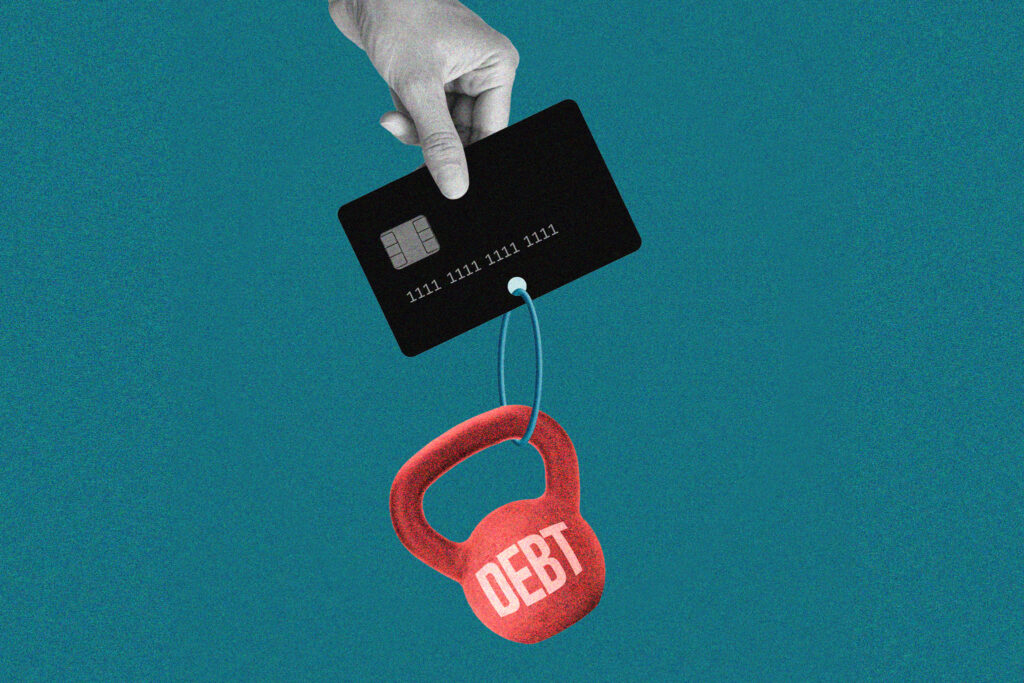
Imagine your existing credit card debt is a 20-pound dumbbell that you have to carry around all day, every day.
Now, think about that given the Federal Reserve’s recent decision to raise interest rates by a quarter of a percentage point for the first time in three years.
The average American with credit card debt carries a balance of roughly $6,600, according to TransUnion. The average interest rate is punishingly high at just under 21 percent.
If the base weight is a 20-pound dumbbell, a 0.25 percent increase adds 0.05 pounds — less than an ounce. Applying this analogy to credit card debt, you may not be too worried about the hike.
But you can’t put down the dumbbell. It’s with you all the time. And it becomes an even heavier burden when you only pay the minimum due. The standard minimum payment is 1 percent of principal, plus monthly interest.
The issue isn’t the few extra dollars you may have to pay on your credit card because of the Fed rate hike. It’s the cumulative effect of inflation and the resulting rise in consumer prices, said Ted Rossman, principal consumer finance analyst for Money Management International, a nonprofit credit counseling agency.
Gas prices have jumped again. Two-thirds of Americans say their groceries have become unaffordable since the start of the conflict in Iran, according to a Washington Post-Ipsos poll.
Inflation remains stubbornly above the Fed’s target, signaling that the Fed might approve further rate increases to tame it. Higher interest rates eventually push up borrowing costs.
“This quarter-point hike in isolation is not going to break anybody but the broader trend is really significant,” Rossman said.
Managing a household budget is only getting harder. If you’re able, now is the time to reduce your debt load to free up money you’ll need to cover higher costs. Here’s how to lighten that load.
Stop adding to the balance. When expenses outpace your paycheck, you may feel you have no choice but to rely on credit. But you have to freeze new spending.
If you’re an impulsive spender, take the credit cards out of your wallet. I also recommend deleting your stored card number from all the online sites and retail apps that you use.
Stay away from “quick-fix” debt settlement companies. I’ve seen contracts where borrowers were charged thousands of dollars in fees.
These programs often direct consumers to stop paying creditors in an effort to force a settlement. That can severely damage a borrower’s credit history and prompt the credit issuer to impose a much higher penalty interest rate because you violated your card terms.
Call your credit card company. Ask for a lower rate or check whether the issuer has a hardship program. Lenders will often work with you if you have a history of on-time payments.
Do a balance transfer. With good credit, you may be able to find a super-low or zero-percent rate that gives you up to 21 months to pay off the debt.
However, qualifying can be tough. Less than 12 percent of accounts had a promotional rate in 2025, according to the Federal Reserve Bank of Philadelphia, the lowest level since 2021.
Even at a zero percent rate, transferring the debt isn’t free. Most issuers charge an up-front balance transfer fee, which typically ranges between 3 percent and 5 percent of the transferred amount.
You may also not be able to transfer all the debt, Rossman said, since lenders often have a ceiling.
Still, if you can make a balance transfer for even a portion of the debt, it provides some financial relief.
A balance transfer requires discipline. If you don’t pay off the debt by the end of the promotional window, the remaining balance may be subject to a much higher rate than the original amount.
“It is a little risky to pay off debt with more debt,” Rossman said. “What often happens is people transfer the old balance or pay it off with a personal loan, and then run the cards right back up. Now you have the old debt and the new debt, and you’re worse off than before.”
Consider a personal consolidation loan. This type of loan can carry an interest rate of about 7 percent if you have a good credit history, compared with the 20 percent to 30 percent credit cards usually charge. The key is that the loan rate is fixed, making the payment predictable. Bankrate has a loan calculator you can use to see how much you can save.
But before applying, ask yourself one big question: Have you actually fixed the spending issue that got you into debt in the first place?
Take a DIY approach. If you owe money on a few cards, you can create your own payoff plan using one of two basic strategies.
The first is the avalanche method. You list your cards from the highest interest rate to the lowest. You throw whatever extra cash you have at the first debt while making the minimum payments on the other cards. Once you pay off the top card, move to the next one.
I favor a different approach, which I call the “debt dash,” though you might know it as the “snowball plan.”
With the debt dash, you start with your smallest balance first. This method recognizes that the logical path doesn’t account for human behavior.
In my work with debtors, I find that when people pay off an account quickly, they get excited about their progress. That emotional win creates momentum. Because they pay off the debt sooner, they often end up saving just as much in interest as they would with the avalanche method.
Work with a nonprofit credit counseling agency. You can find one through the National Foundation for Credit Counseling at nfcc.org, or by calling 844-865-2828.
Look into a debt management plan. You’ll have to close the cards in the plan so you don’t run up additional charges. The benefit of this strategy is that the agency will help negotiate lower rates with creditors.
With a debt management plan, most people can expect an average activation or setup fee of $35 to $55, and an average monthly maintenance fee of $25 to $40. Fees can be reduced or waived based on hardship or income.
Getting help from a credit counseling agency often succeeds where a consolidation loan or balance transfer doesn’t, because of built-in accountability. A counselor helps you budget and ensures you stay on track.
I know the weight of credit card debt can be overwhelming. But if you’ve been carrying it around for years, the question I have for you is: Aren’t you exhausted?
The post What to do about your credit card debt as interest rates climb appeared first on Washington Post.