Here’s what happened under the Trump administration this week that you may have missed.
Get The 5-Minute Fix in your inbox
The Federal Reserve raised interest rates
Stubborn inflation has been a defining feature of the economy under President Donald Trump’s second term, and many economists say the Iran war, tariffs and mass deportations have all played a role in keeping it high. Inflation recently hit its highest point since the end of the pandemic in 2023.
When inflation becomes concerning, the Federal Reserve usually raises interest rates. That slows down spending by making borrowing money more expensive.
Trump is intensely opposed to this. Earlier this year, he put an ally at the head of the Federal Reserve who expressed skepticism at raising interest rates. But this week the influential central bank did slightly raise interest rates. Most Americans will notice that holding credit card debt gets more expensive, The Washington Post’s Rachel Lerman reports.
Federal Reserve policymakers appeared to specifically cite the war in Iran for their reasoning. And the ongoing war is starting to ripple even more intensely through the U.S. economy: Already-high gas prices from the war are about to spike even more, analysts predict, after a major pipeline in the Middle East appeared significantly damaged from fighting.
While the costs of some groceries, gas and borrowing money are going up, there are signs that the labor market is hanging in there. That’s a small silver lining for Republicans who are on the ballot this fall in midterm elections for control of Congress.
Trump and his administration continue to push vaccine skepticism
Trump has been trying for months to fill the position of the nation’s top doctor, the surgeon general. His latest nominee, Nicole Saphier, is a former Fox News contributor and radiologist who equivocated on the safety of vaccines until pressed this week by a Republican senator: “I do not believe childhood vaccines cause autism,” she said at her confirmation hearing this week.
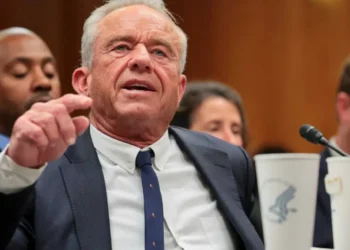
That stands in contrast with Trump and his administration’s leaders on health. His administration has tried to reduce the number and frequency of vaccines that children get, and revived debunked claims that vaccines do play a role in autism. Much of this has been stopped in courts. But the Trump administration’s public opinion campaign on vaccines continues. Trump has said without evidence that the measles vaccine could be “quite lethal,” and this week, Health Secretary Robert F. Kennedy Jr. spoke extensively in front of an anti-vaccine group he founded, where he told vaccine skeptics they have a “strong and steadfast friend at the White House.”
The U.S. is experiencing the highest measles cases since 1991, and the year isn’t over. Sen. Bill Cassidy (R-Louisiana), a doctor who voted to confirm Kennedy, said this week that the nation’s measles outbreak is “going to be a terrible legacy for this administration.”
Trump’s ICE nominee is out
Immigration and Customs Enforcement’s leadership is also in the spotlight this week. There isn’t a leader, and there actually hasn’t been a Senate-confirmed leader for the immigration agency in a decade, The Washington Post’s Maria Sacchetti reports. She reports that this week that the White House withdrew without explanation its nomination for an ICE leader.
ICE appears caught between two strong political factions: Trump and his base — who want the agency to significantly ramp up its arrests of undocumented immigrants in the country — and public opinion — which has turned against Trump’s mass deportations as they have become increasingly invasive and violent.
Republicans candidates in primaries didn’t mention immigration nearly as much as in years past. Republican strategists say they hope Trump can focus on deporting only those accused of criminal activity. And in a new reelection ad, one Republican member of Congress from Florida looks at the camera and says: “Mr. President, some of your immigration enforcement efforts have gone too far.”
This week, a court ruled that ICE likely violated the First Amendment. Agents showed up at the door of a man who had sent them an angry email. They delivered a letter saying his comments could be a crime and tracked him to a hotel in New York City where he was staying with his 7-year-old daughter after returning from an overseas trip.
ICE’s warning notice “practically shouts” that the man “may be prosecuted if he continues to engage in his political speech,” U.S. District Judge Rudolph Contreras wrote in his opinion.
Amber Phillips writes The 5-Minute Fix newsletter, a quick analysis of the day’s biggest political news. Send her an email here, or ask a question that could be featured in an upcoming newsletter.
The post What happened under the Trump administration this week appeared first on Washington Post.