Morgan Bazilian is the director of the Payne Institute for Public Policy at the Colorado School of Mines and former lead energy specialist at the World Bank.
The economic effects of the U.S. war with Iran are often gauged by what the International Energy Agency has called the largest supply disruption in the history of the global oil market. Cumulative losses exceeded 1.3 billion barrels as of June, and this spring prompted a global emergency oil reserve release that was more than double what the agency ordered after Russia invaded Ukraine in 2022. Oil and diesel prices jumped after attacks on a key Saudi Arabian pipeline last week.
But the fallout goes far beyond that: The war has caused a commodities crisis running several markets deep — and most of these markets have no reserves to rely on.
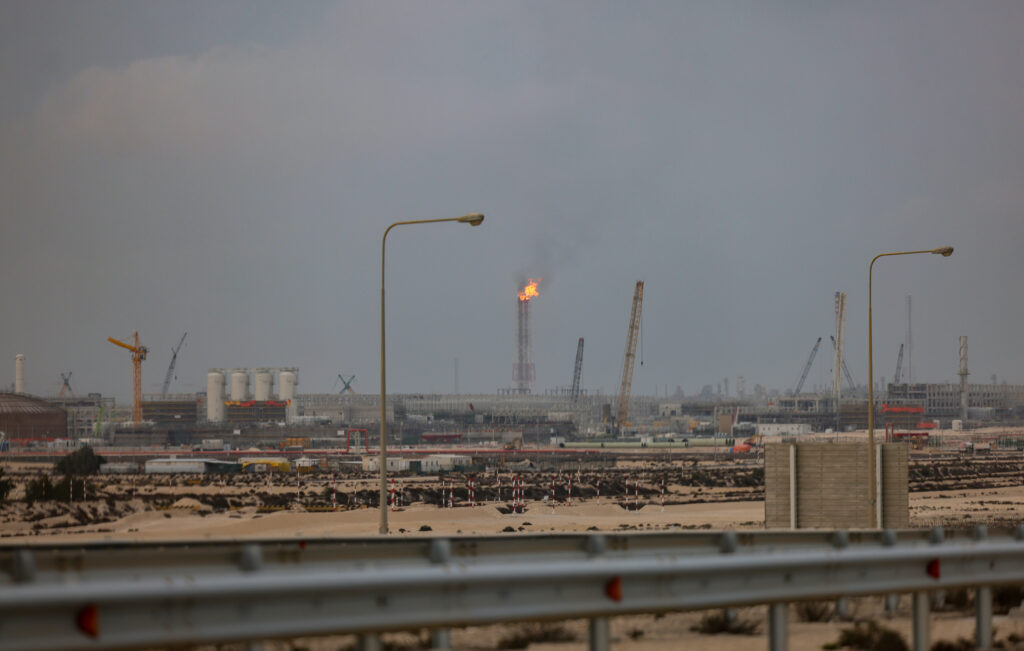
Consider the attack on Qatar’s Ras Laffan liquefied natural gas facility in March. After Iranian missiles damaged two LNG production trains, QatarEnergy — the state-owned company that operates Ras Laffan — predicted that exports of condensate would fall by 24 percent, helium by 14 percent, liquefied petroleum gas by 13 percent, and naphtha and sulfur by 6 percent. That was in addition to the 17 percent hit to LNG capacity that made headlines. One strike on one facility and six global commodity markets were knocked simultaneously off balance, with a repair timeline of three to five years. Qatar’s energy minister put the annual revenue loss at $20 billion.
This is what a multi-commodity crisis looks like, and it’s why the usual instruments for managing an energy shock are proving inadequate. The World Bank has cut its global growth forecast for 2026 to the lowest level since the covid pandemic, with developing countries hit the hardest. The International Monetary Fund’s downgrade, issued in July after the United States launched renewed strikes on Iran, put global inflation at 4.7 percent for the year.
Meanwhile, natural gas prices have remained low in the U.S. That makes sense for the world’s largest producer, but it reinforces the perception that things are more or less okay. That is not the case, and countries are reacting to the shock in ways that will have long-term consequences.
The Strait of Hormuz closure and Ras Laffan strike together removed roughly a fifth of the world’s LNG supply. Unlike oil, LNG cannot be rerouted through pipelines to bypass a closed shipping lane. Asian spot prices soared, and South Korea and Japan responded by lifting caps on coal-fired power, which they had spent years trying to phase out. South Korea’s coal generation rose nearly 40 percent year over year in April, while Japan’s climbed 11 percent. Thailand, which relies on natural gas for well over half of its electricity, is doubling its renewable energy target and embracing nuclear power for the first time, a decision its energy minister has tied directly to the war.
Other industrial inputs are integrated in critical ways throughout the economy. Helium cannot be stockpiled the way oil can (once liquefied, it boils off within weeks), so a production outage means scarcity for MRI machines, semiconductor factories and aerospace manufacturers. Prices of sulfur, the unglamorous precursor to the acid used to leach copper ore and etch silicon wafers, have skyrocketed, tightening a chemical input the Pentagon needs to rebuild copper-intensive radar systems in the Persian Gulf and keep chip fabrication running domestically. Aluminum prices jumped to a four-year high after strikes hit two of the Gulf’s largest smelters.
The war’s effects on supplies of cooking fuel and fertilizer are being felt in households and on farms. When the benchmark Asian propane price rose by more than half in the first three weeks of the conflict, the IEA estimated that billions of people may have felt the shock. Families in South Asia and Africa who had switched to gas stoves went back to charcoal and open fires, reversing years of public health progress within weeks. Prices of urea, the nitrogen fertilizer that much of the world’s grain depends on, climbed to $700 per metric ton, up from around $450. Fertilizer plants in India, Bangladesh, and Pakistan have had to curtail or shut down production.
One government has fared better than most. Before the start of the war, China held roughly 1.4 billion barrels of crude in reserve, some of it discounted Iranian, Russian and Venezuelan oil bought while Western sanctions were trying to keep it off the market. The country has used those reserves to cushion its exposure while cutting Hormuz-linked imports by millions of barrels a day. A war intended to pressure Iran and reassure American allies is, in country after country, becoming an argument for buying energy security from Beijing instead of Washington. Pakistan imported roughly 50 gigawatts of Chinese solar equipment through August 2025, helping to insulate its power grid from the same LNG shock hitting its neighbors.
The energy map that existed before Feb. 28 rested on a weak assumption that the Strait of Hormuz would carry gas, chemicals and fuel on a predictable schedule indefinitely. That assumption is gone, and countries are having to adjust to a world without it. The lessons the United States is drawing need to become less insular and acknowledge the interconnected nature of supply chains. The war in Iran will end, but its effects on the global economy will last longer.
The post The Iran war has disrupted oil markets. The fallout goes beyond that. appeared first on Washington Post.